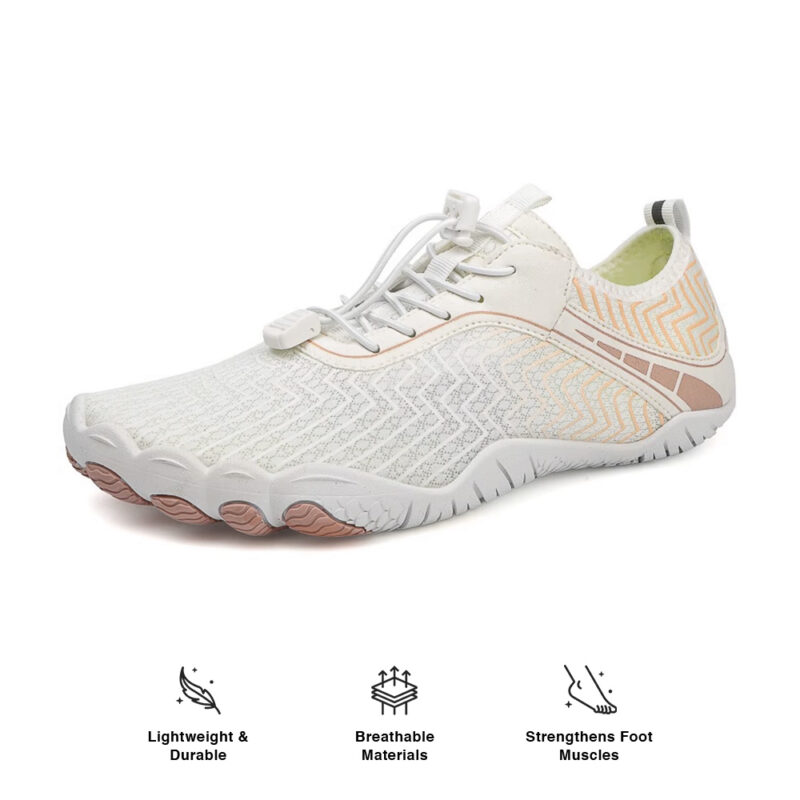
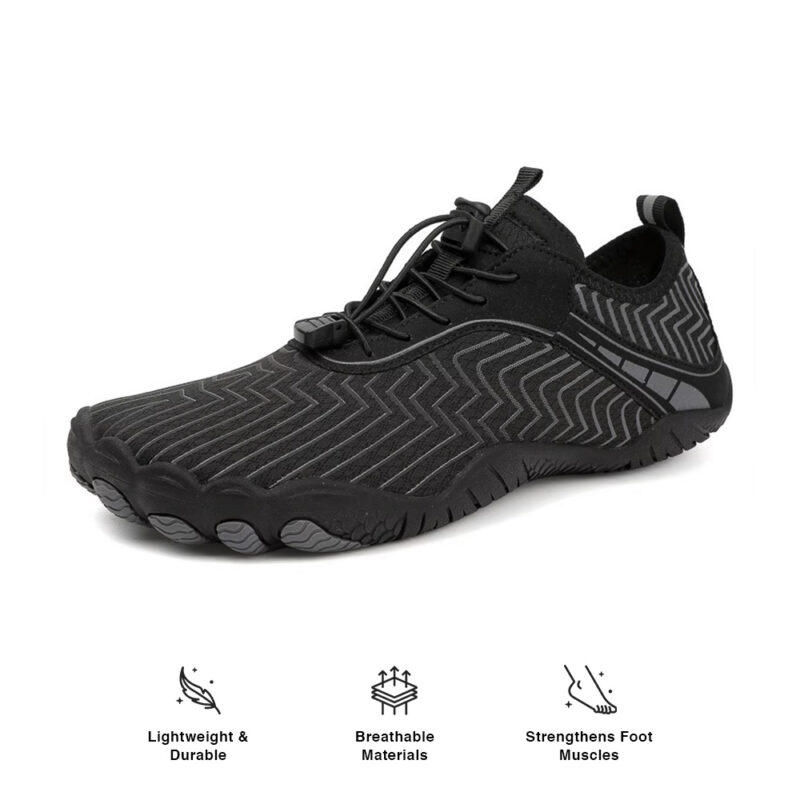
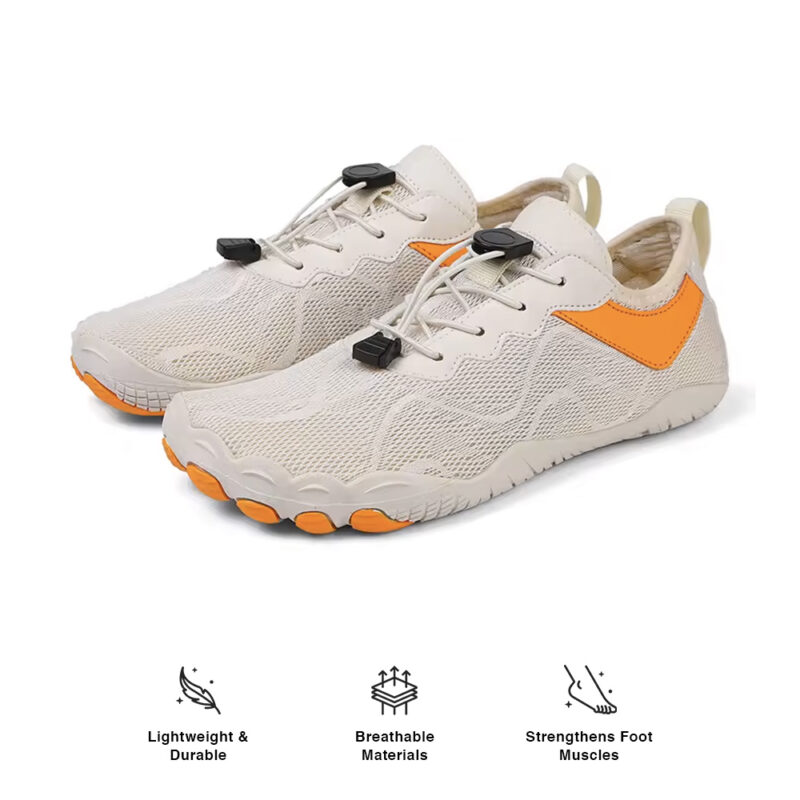
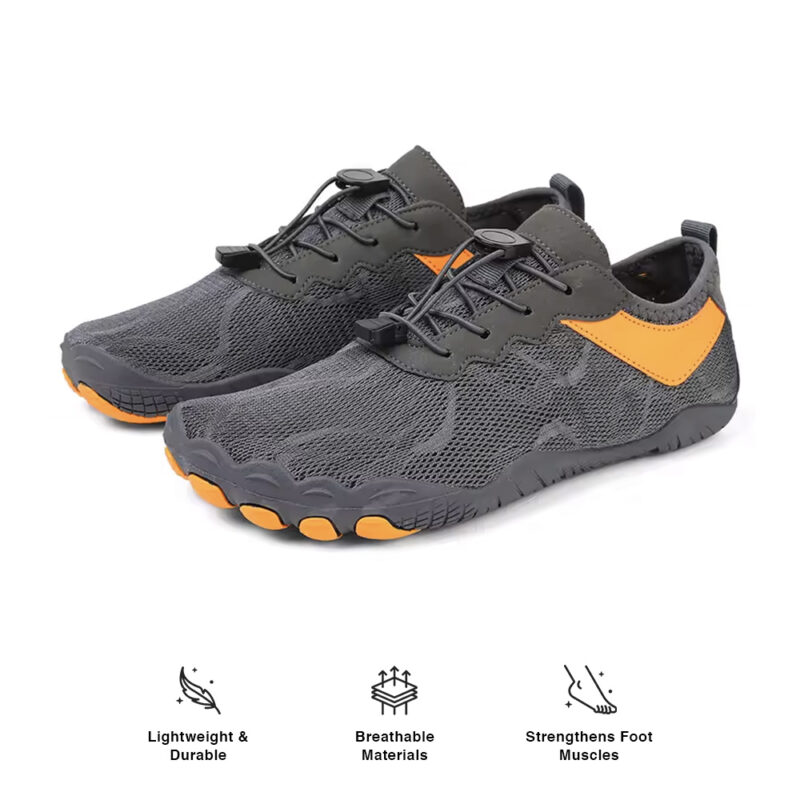
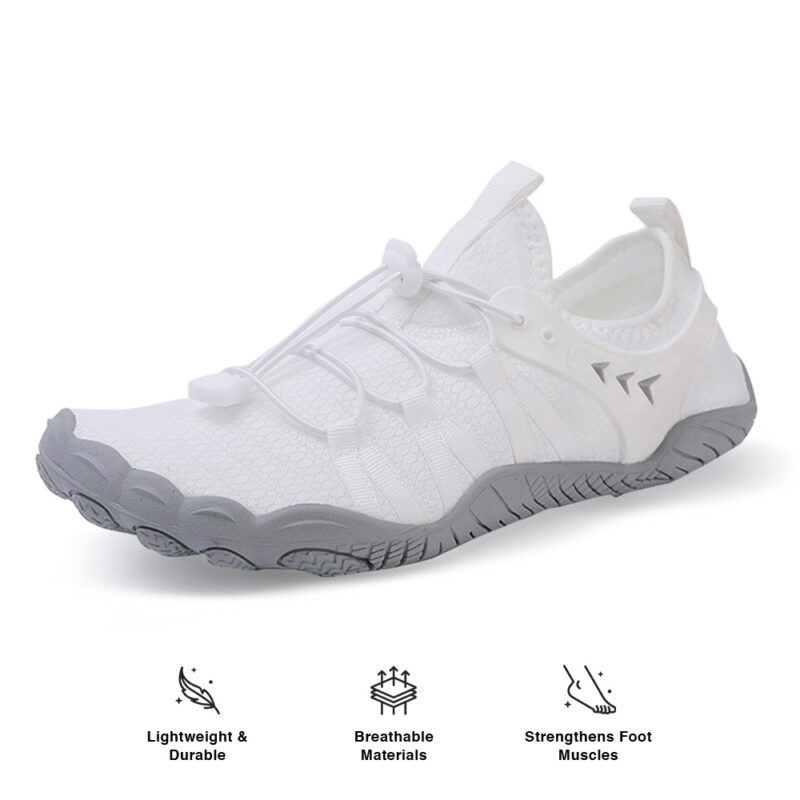
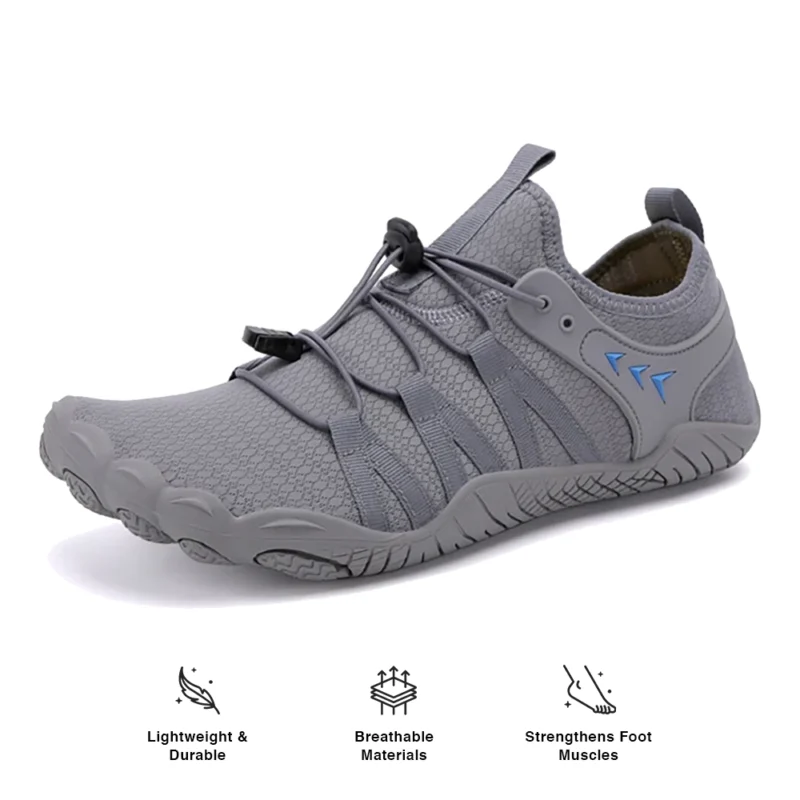
Why Traditional Shoes Often Make Plantar Fasciitis Worse
You've probably noticed that heavily cushioned shoes provide temporary relief but never seem to solve your plantar fasciitis long-term. This happens because thick soles and rigid arch supports actually weaken the muscles that should be supporting your feet naturally. When your feet can't feel the ground or move freely, they lose the strength and flexibility needed for proper healing. The best shoe for plantar fasciitis allows ground feedback that helps your brain coordinate better foot placement and muscle activation. Start by gradually reducing the amount of artificial support in your daily footwear.
How Foot Shape Changes in Restrictive Footwear
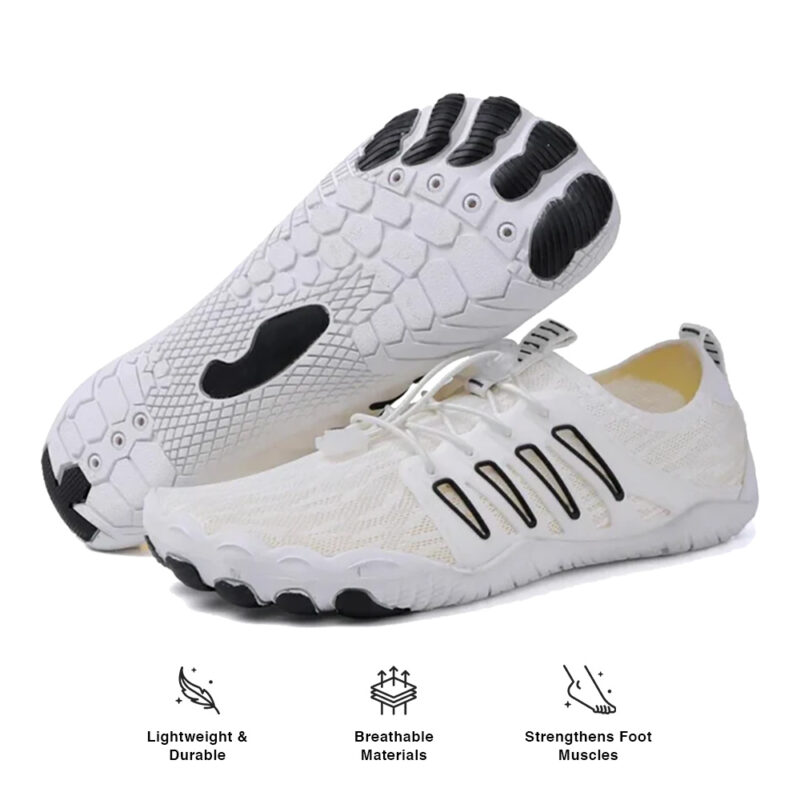
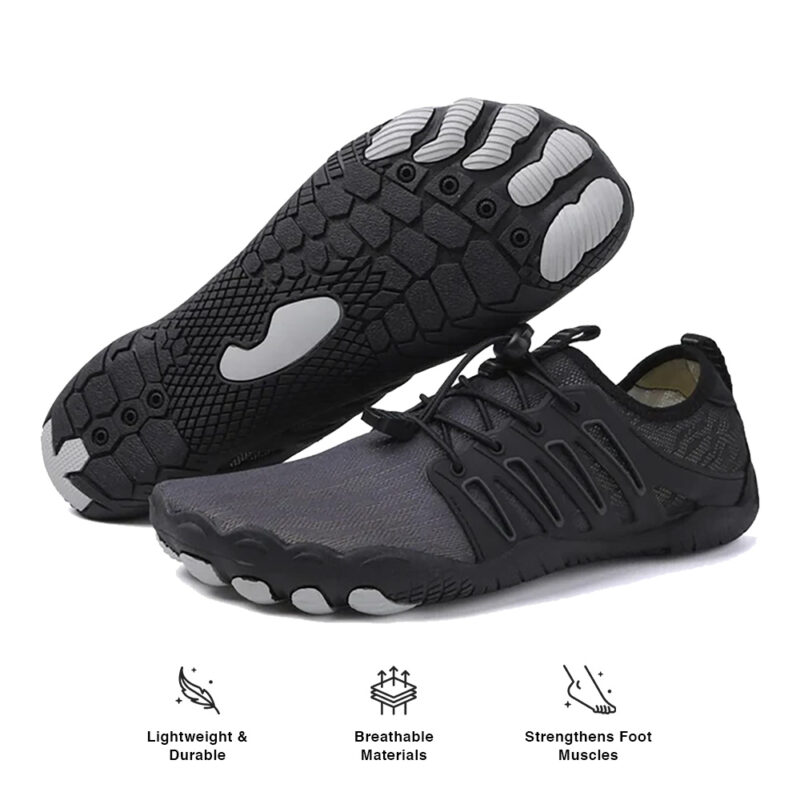
Your toes have likely become cramped and your arches have weakened from years of wearing narrow, restrictive shoes. Plantar fasciitis often develops when your feet can't spread naturally to distribute weight evenly across your entire foot surface. Minimalist shoes with wide toe boxes allow your toes to splay and grip the ground as they were meant to do. This natural toe spread reduces pressure on your plantar fascia by distributing forces more effectively. Look for shoes that match the actual shape of your feet, not the pointed shape of traditional footwear.
The Connection Between Heel Strike and Plantar Fascia Stress
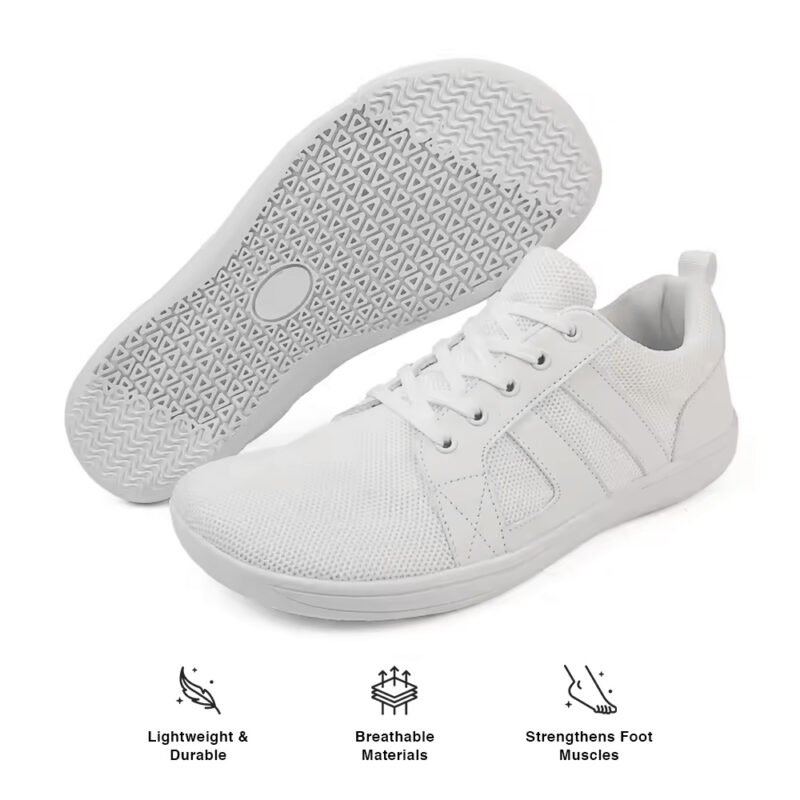
Heavy heel striking creates shock waves that travel directly through your plantar fascia with each step. Thick-heeled shoes encourage this damaging heel-first landing pattern that puts maximum stress on already inflamed tissue. The best shoe for plantar fasciitis has a zero-drop sole that encourages midfoot or forefoot landing, dramatically reducing impact forces. This gentler landing pattern allows your foot's natural arch to spring back and absorb shock efficiently. Practice taking shorter, lighter steps to retrain your walking pattern.
Why Toe Mobility Matters for Plantar Fascia Health
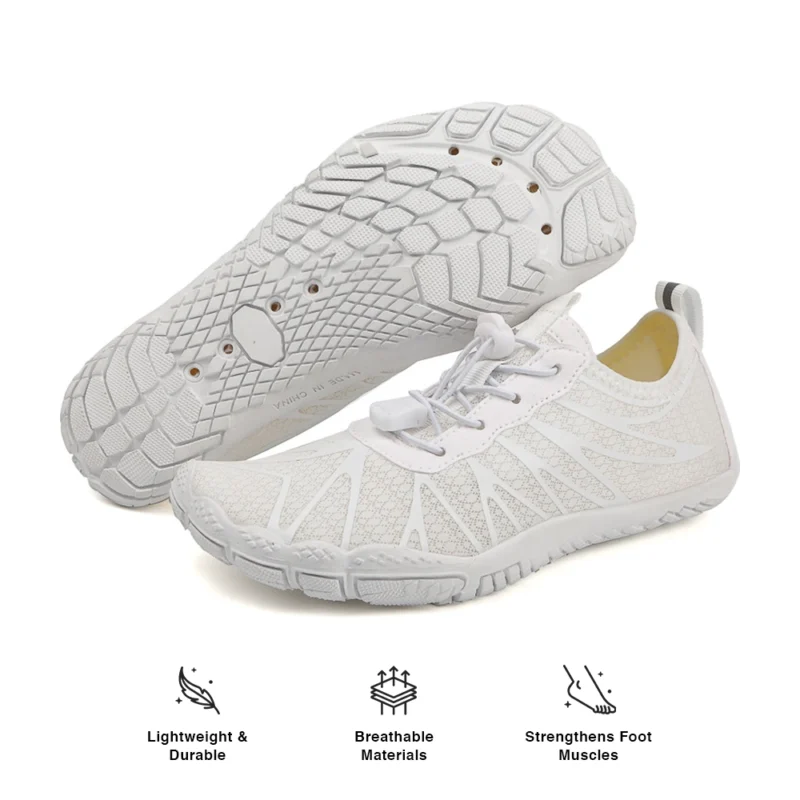
Your big toe plays a crucial role in supporting your arch through something called the windlass mechanism. When your big toe can bend upward freely during push-off, it naturally tightens your plantar fascia in a healthy, supportive way. Stiff shoes that restrict toe movement disrupt this natural mechanism and can contribute to chronic inflammation. Flexible soles allow your toes to bend and grip naturally with each step, activating the muscles that support your arch. Choose shoes that bend easily at the ball of your foot.
Building Foot Strength While Managing Pain
Your feet need to gradually build strength without being overwhelmed during the healing process. Starting with barefoot walking on soft surfaces like grass or sand helps your feet adapt to natural movement patterns without excessive stress. The best shoe for plantar fasciitis provides just enough protection while allowing maximum foot function and strength development. As your feet grow stronger, you'll find that your natural shock absorption improves and pain decreases. Begin with short periods in minimal footwear and gradually increase as your comfort improves.
Ground Feedback and Proprioception for Better Balance
When your feet can actually feel the ground beneath them, your brain receives important information about balance and body position. This ground feedback helps you make subtle adjustments to your posture and gait that can reduce stress on your plantar fascia. Thick-soled shoes block this vital sensory input and can lead to compensatory movement patterns that worsen your condition. Thin, flexible soles restore your natural balance reflexes and improve your overall movement quality. Pay attention to how different surfaces feel beneath your feet as you walk.
Making the Transition Safely and Effectively
Moving to minimalist footwear requires patience and gradual progression to avoid setbacks in your healing journey. Your feet have adapted to artificial support and need time to redevelop their natural strength and resilience. Start by wearing the best shoe for plantar fasciitis for short periods each day, gradually increasing duration as your feet adapt. Listen to your body and reduce activity if you experience increased pain or soreness. Consider working with a healthcare provider who understands natural foot function to guide your transition safely.