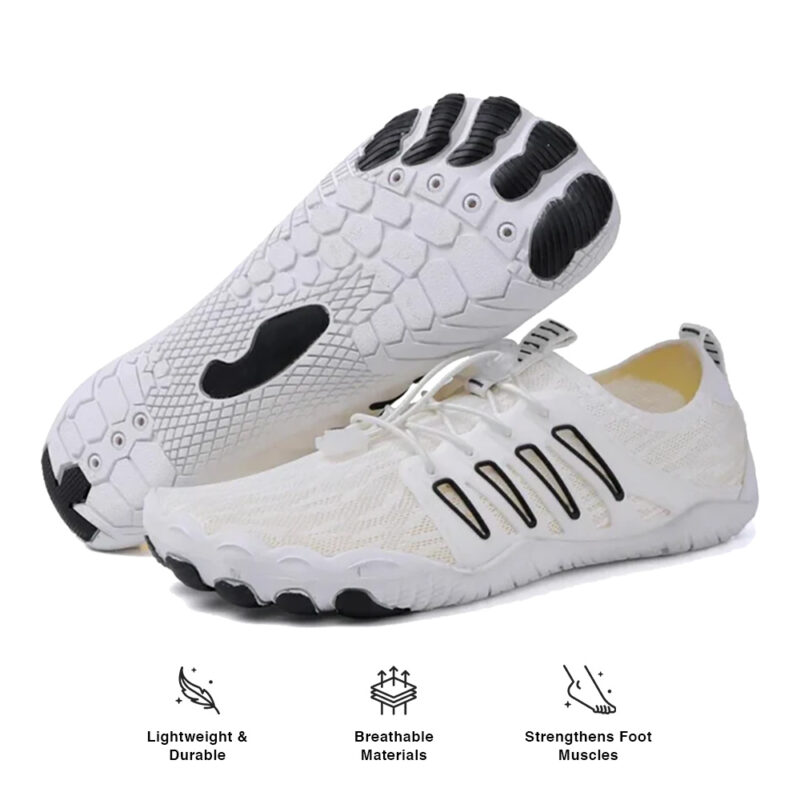
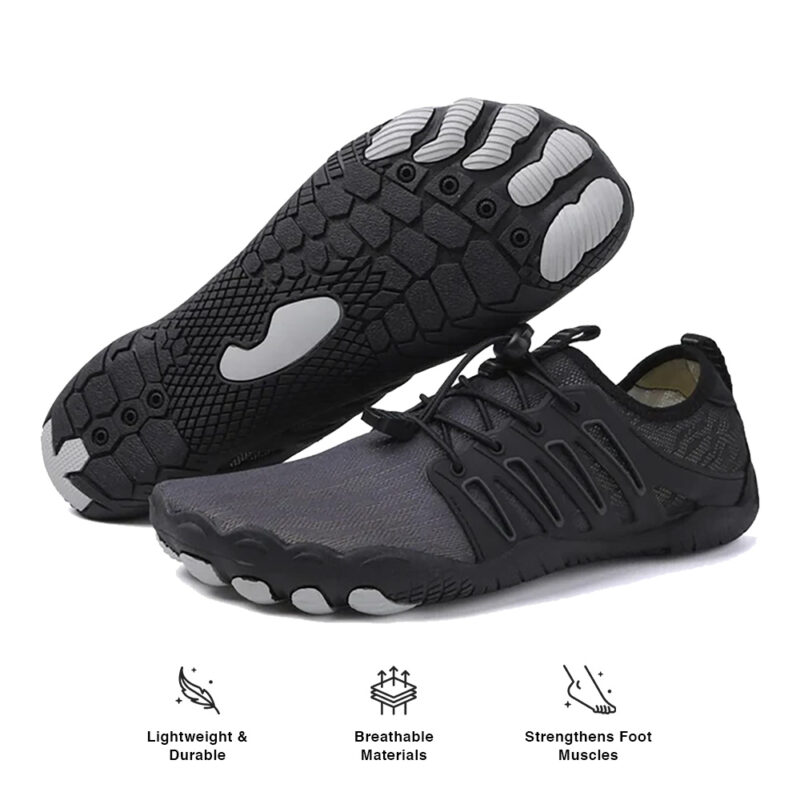
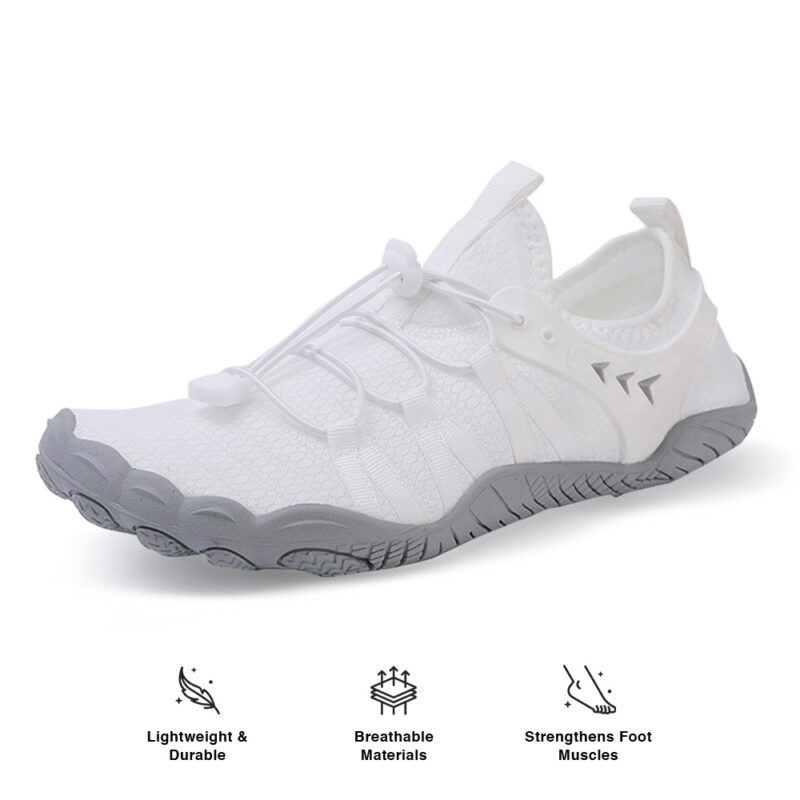
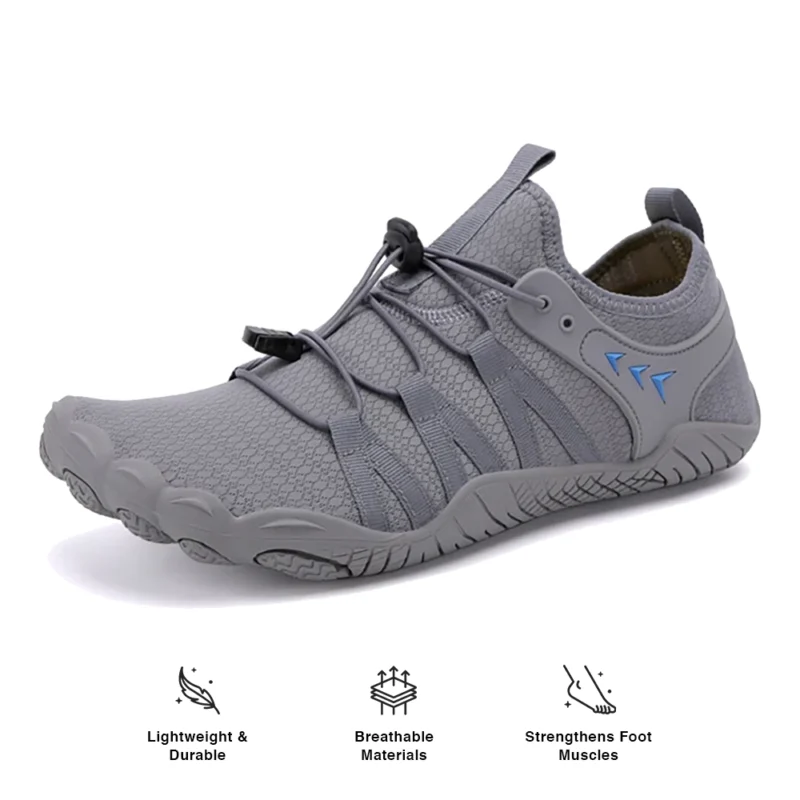
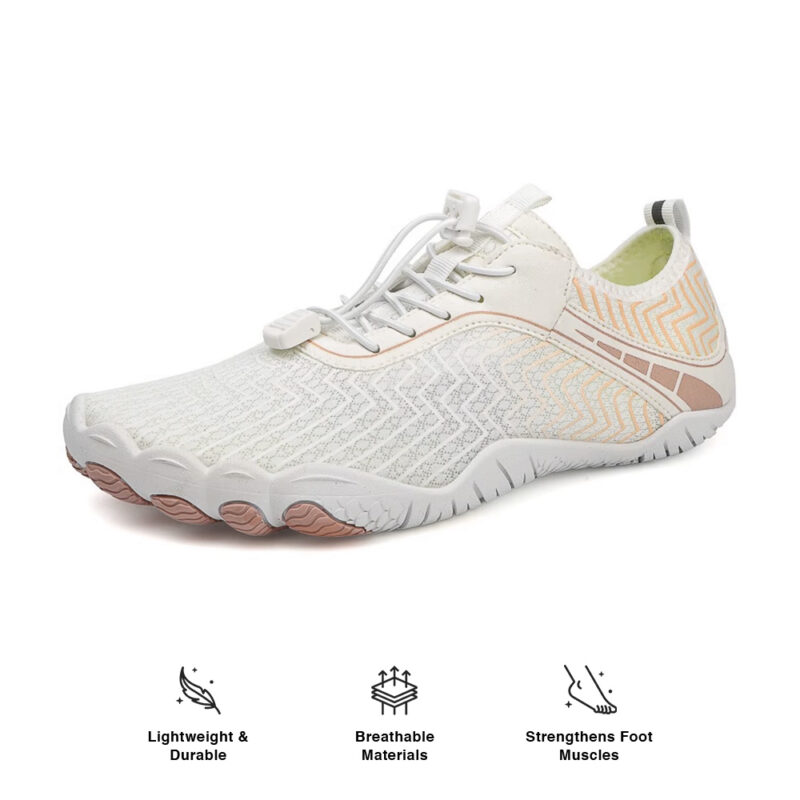
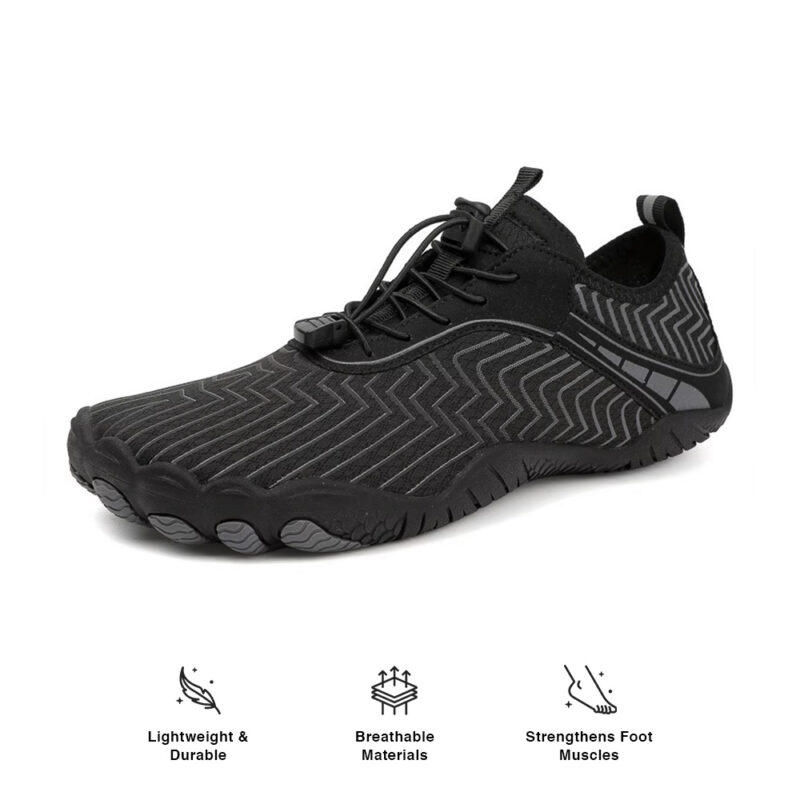
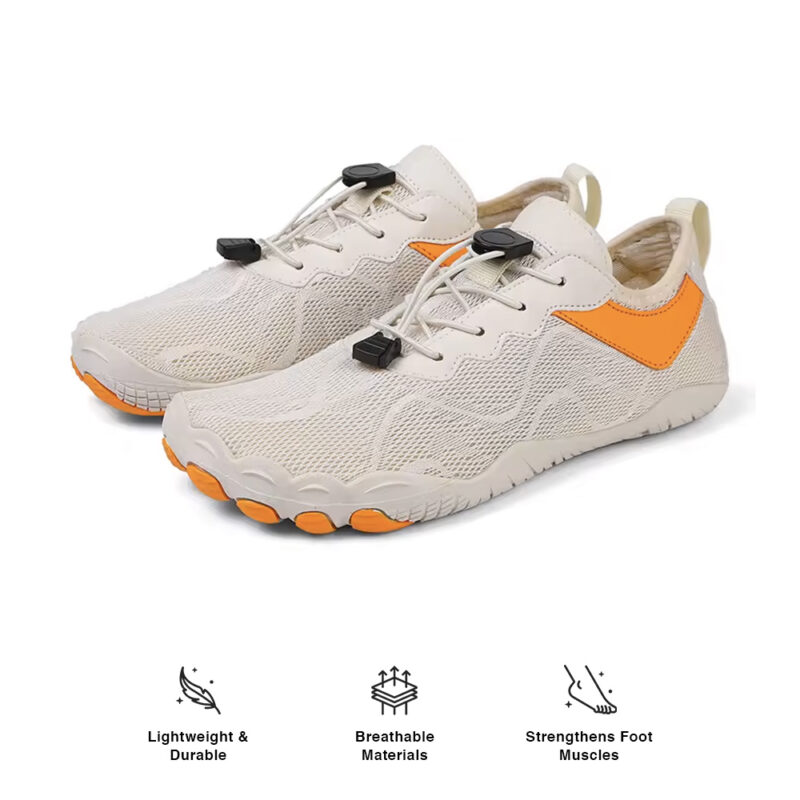
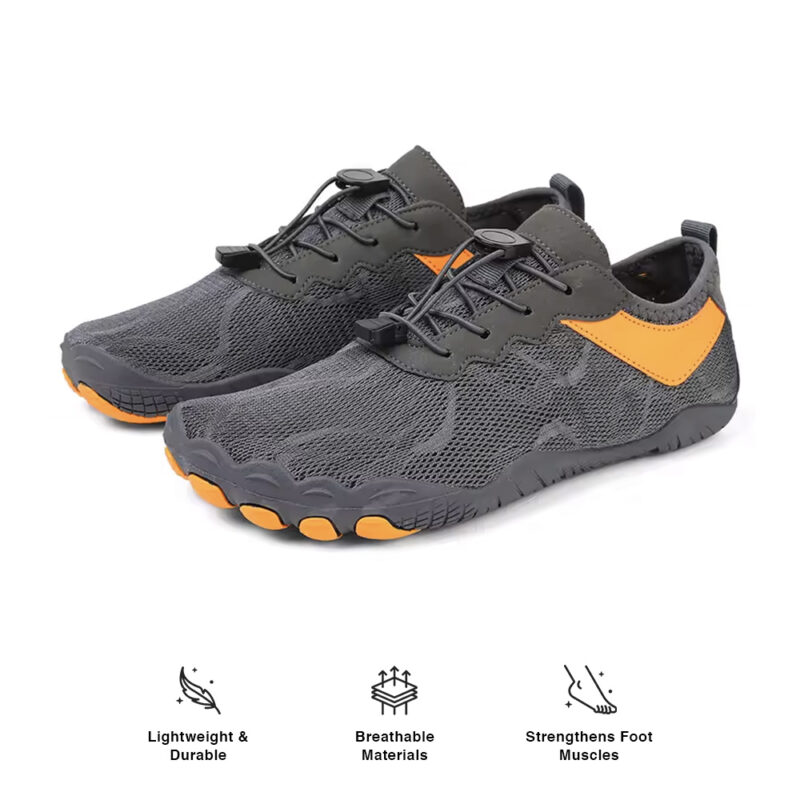
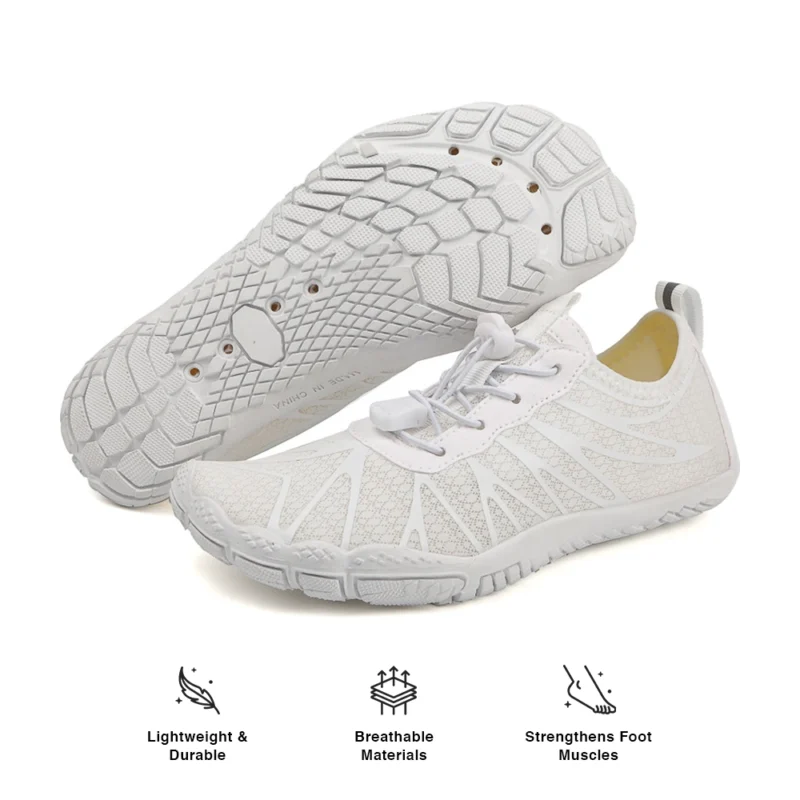
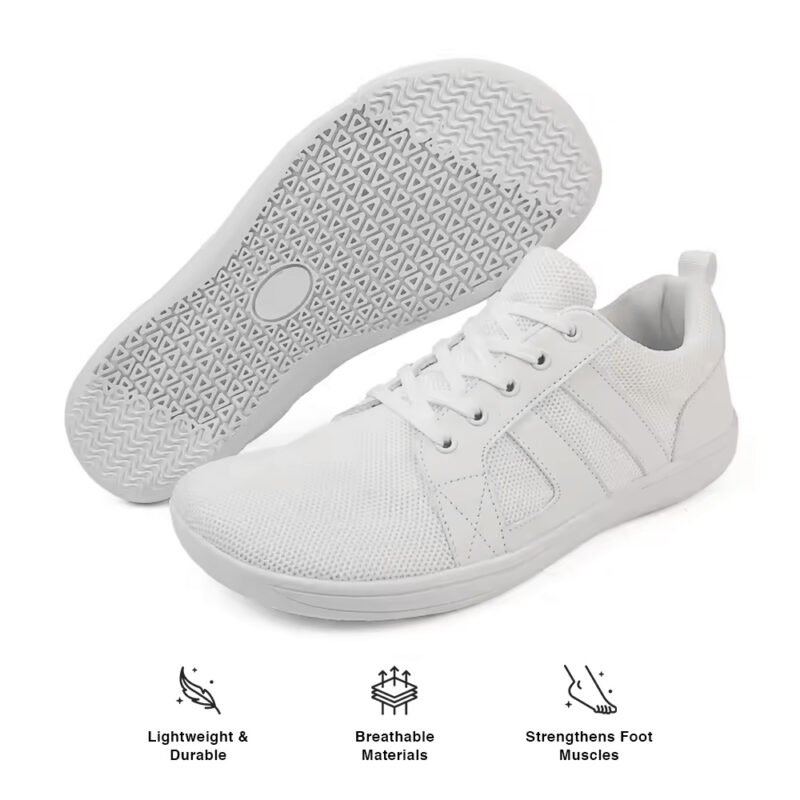
Toe Box Freedom Eliminates Pressure Points
When you're dealing with metatarsalgia, every step can feel like walking on sharp stones. Your metatarsal bones bear the brunt of narrow, pointed toe boxes that force your toes into unnatural positions and create concentrated pressure points. What you need is footwear that gives your toes room to spread naturally, allowing your foot to distribute weight evenly across the entire forefoot. Minimalist shoes with wide, anatomically shaped toe boxes let your feet return to their natural width, reducing the compression that triggers metatarsal pain. Start by measuring your foot's natural width when standing and look for shoes that match or exceed this measurement.
Zero Drop Design Restores Natural Foot Function
The elevated heels in conventional shoes throw your body weight forward onto your metatarsals, creating the exact pressure that intensifies your pain. Your feet evolved to function on level ground, and when you restore this natural positioning, your weight distributes more evenly across your entire foot. The best shoes for metatarsalgia feature zero drop construction, where your heel and forefoot sit at the same level, allowing your body to stack properly over your feet. This alignment reduces the forward pressure on your metatarsals while engaging your posterior chain muscles to support your body weight more effectively.
Flexible Soles Allow Natural Shock Absorption
Rigid shoe soles prevent your foot from adapting to ground surfaces and force impact energy directly into your metatarsal area. Your foot contains 26 bones and 33 joints designed to work together as a sophisticated shock absorption system, but stiff footwear locks this mechanism in place. Flexible, thin soles in minimalist footwear allow your foot's natural spring mechanism to function, dispersing impact forces through your entire foot structure rather than concentrating them at the metatarsal heads. Choose shoes with soles thin enough that you can feel the ground beneath your feet while still providing protection from sharp objects.
Lightweight Construction Reduces Impact Forces
Heavy, clunky shoes increase the impact forces with every step, amplifying the stress on your already sensitive metatarsals. Your gait naturally becomes more jarring when your feet carry extra weight, creating a harder landing with each footfall. Lightweight minimalist shoes encourage a gentler, more natural gait pattern where you land on your midfoot or forefoot rather than striking hard with your heel. This softer landing reduces the shock waves that travel through your metatarsals and helps retrain your walking pattern to be more foot-friendly.
Breathable Materials Support Foot Health
Poor ventilation in traditional shoes creates a warm, moist environment that can worsen inflammation and discomfort in your metatarsal area. Your feet need to breathe, especially when dealing with any type of inflammation or sensitivity. Natural materials like leather, canvas, or breathable synthetic meshes in quality minimalist shoes help maintain proper foot temperature and moisture levels. This improved environment supports your foot's natural healing processes while preventing additional irritation that could complicate your recovery from metatarsalgia.
Ground Feel Improves Proprioception and Balance
Thick, cushioned soles disconnect you from the ground and impair your foot's ability to sense and respond to surface changes, leading to poor balance and inefficient movement patterns that can worsen metatarsal stress. Your feet contain thousands of nerve endings designed to provide feedback about your environment, and when you can feel the ground beneath you, your body naturally adjusts to create more stable, efficient movement. Thin-soled shoes restore this ground connection, improving your proprioception and allowing your body to make the subtle adjustments that reduce harmful impact on your metatarsals.
Gradual Transition Prevents Further Injury
Moving to the best shoes for metatarsalgia requires patience and progressive adaptation, especially if your feet have become accustomed to conventional footwear. Your foot muscles, tendons, and ligaments need time to strengthen and adjust to their new freedom of movement. Start by wearing minimalist shoes for short periods during low-impact activities, gradually increasing duration and intensity as your feet adapt. This careful transition allows your metatarsals to experience reduced pressure while your feet build the strength needed to support your body weight naturally and comfortably.