
Best Barefoot Shoes for Plantar Fasciitis

"Across every heel strike on a hard floor, the plantar fascia absorbs a decision most people never think about — how much shock one thin band of tissue is asked to carry alone. Barefoot shoes, with their flat sole and natural flex, change that math with every step. The right pair doesn't cushion the pain away; it changes the mechanics that caused it."
Plantar fasciitis causes sharp heel pain, usually worst with the first steps in the morning. It affects the thick band of tissue running along the bottom of the foot — the plantar fascia — which absorbs shock with every step. Overuse, tight calf muscles, and poor foot mechanics can strain this tissue past its limit, and pain often builds gradually before it becomes hard to ignore.
Barefoot shoes have become one of the more consistent responses for people managing this pain, thanks to a flat, zero-drop sole and a design that lets the foot work the way it was built to. Unlike thick, cushioned footwear, barefoot shoes let foot muscles re-engage instead of sitting idle, easing the load that lands on the fascia with each stride.
Zero-Drop Sole
Levels the foot instead of tipping weight forward
Muscle Re-Engagement
Rebuilds arch support from the inside out
Wide Toe Box
Improves balance and weight distribution
Footwear built around cushioning has dominated the market for decades, but a growing body of podiatric opinion has shifted toward shoes that let the foot rebuild its own support system rather than outsource it to foam. This guide walks through what causes plantar fasciitis, how barefoot shoes address it, and how to choose and transition into the right pair safely.
Our Top Pick
Best Overall for Plantar Fasciitis Relief
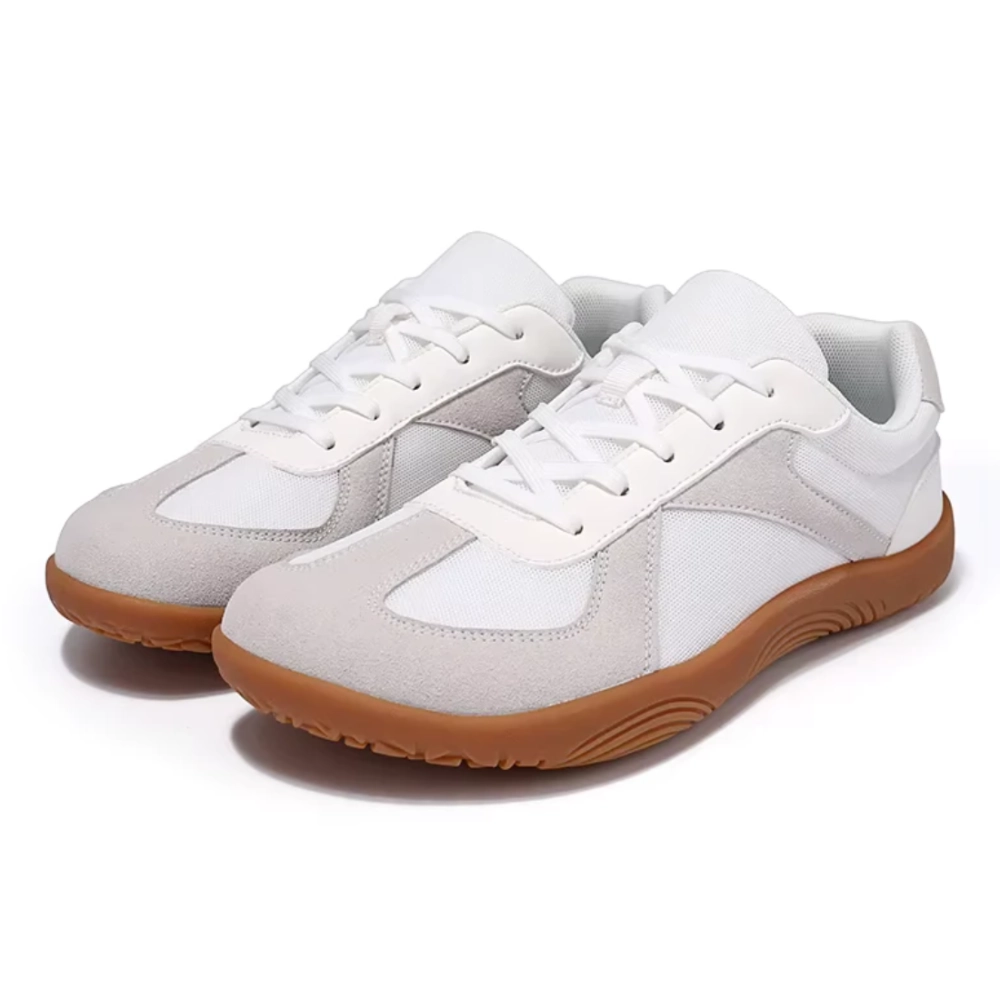
The HYKES Origin combines a thin, zero-drop sole with a wide, foot-shaped toe box, giving an overworked plantar fascia room to recover its natural mechanics instead of fighting a raised heel.
★★★★★
HYKES — Origin Zero Drop Barefoot Shoes
WIDE TOE BOX · ZERO-DROP · UNISEX
The HYKES Origin is a flexible, foot-shaped shoe built around a wide toe box and a zero-drop sole, so your foot can spread and roll the way it's meant to. An ultra-light 4mm sole keeps you close to the ground for a natural, connected stride, whether you're commuting, working, or out on the trail.
- Wide toe box for natural splay
- Zero-drop, foot-aligned sole
- Ultra-light 4mm sole
- Flexible, foot-shaped design
- Breathable everyday material
- Lightweight and flexible
WHY THE MECHANICS MATTER
The Anatomy Behind Barefoot Shoe Relief
Plantar fasciitis is inflammation of the plantar fascia, the tissue connecting the heel bone to the toes. It absorbs shock with each step, but overuse, tight calf muscles, and poor foot mechanics can strain it until it produces stabbing pain near the heel — often at its worst with the first steps in the morning.
Common causes include:
- Prolonged standing on hard surfaces
- Sudden increases in physical activity
- Worn-out or unsupportive shoes
- Tight calves and Achilles tendons
- Flat feet or high arches
Certain groups face higher risk. Runners who increase mileage too fast strain the fascia repeatedly. Workers who stand for long shifts, such as nurses and retail staff, place steady pressure on the heel. People with a higher body weight carry extra load through the arch, and age plays a role too — the fascia loses elasticity over time, raising injury risk in people over 40.
Foot shape matters as well. Flat feet let the arch collapse under load, while high arches transfer more shock into the heel. Both patterns strain the plantar fascia differently, but both benefit from proper foot mechanics and gradual muscle strengthening.
Barefoot shoes mimic the feel of walking without shoes: thin, flexible soles, no thick cushioning, no built-in arch support, and a design that lets the foot move and flex naturally. Many podiatrists now recommend this approach for plantar fasciitis when it's paired with a proper transition and supporting exercises.
Humans walked barefoot or in thin sandals for most of history, using simple leather wraps or woven soles that protected the foot without restricting motion. Modern cushioned running shoes appeared in the 1970s, adding foam midsoles and raised heels meant to reduce impact — changes some experts argue weakened foot muscles and altered natural gait over time. The barefoot movement gained wider attention in the late 2000s after a popular running book highlighted foot strength and natural movement, and minimalist shoe sales grew quickly as brands developed thinner soles and wider toe boxes. Today, barefoot shoes serve runners, hikers, and people managing foot pain alike.
HOW BAREFOOT SHOES PERFORM WHERE IT MATTERS MOST
Everyday Comfort and Real-World Wear
Thick, supportive shoes limit foot muscle activity, and those muscles weaken over time. Barefoot shoes let the foot's own muscles work with each step, and stronger muscles support the arch — a supported arch takes strain off the plantar fascia.
A wide toe box lets toes spread naturally, improving balance and weight distribution. Even weight distribution lowers the pressure concentrated at the heel.
Cushioned shoes often promote heel striking, which sends shock straight into the plantar fascia. Barefoot shoes encourage a midfoot or forefoot landing instead, spreading impact more evenly across the foot. Thin soles also let the wearer feel the ground, and that feedback helps the stride adjust in real time — better stride control means less repetitive strain.
"I ignored my heel pain for almost a year and just kept buying shoes with more and more cushioning. It wasn't until I switched to a barefoot pair that things actually changed — no more stabbing pain when I get out of bed. It took a few weeks to get used to, but my feet feel stronger than they have in years."
— Marcy T.
WHAT TO KNOW BEFORE YOU BUY AND HOW TO TRANSITION SAFELY
Buying Factors and a Safe Transition Plan
Choose barefoot shoes with these features in mind:
Zero drop. The heel and forefoot sit at the same height. Standard shoes raise the heel, shifting weight forward and changing gait; zero-drop shoes keep the foot level and support natural alignment of the ankle, knee, and hip.
Wide toe box. Toes need room to spread — narrow shoes squeeze them together and reduce balance and stability. Look for a toe box shaped like the actual foot, not a pointed shoe last.
Thin, flexible sole. The sole should bend easily in all directions; a good barefoot shoe folds in half without resistance. Sole thickness typically ranges from 3mm to 8mm.
Lightweight construction. Barefoot shoes weigh less than standard athletic shoes, which reduces fatigue during walks and runs. Most models weigh between 150 and 300 grams per shoe.
Breathable materials. Mesh uppers or breathable leather keep feet dry and comfortable during longer wear.
A rushed transition can worsen plantar fasciitis, so a gradual approach matters:
- Start with short walks — 20 to 30 minutes per day in the first week.
- Increase time gradually, adding 10 to 15 minutes every few days.
- Stretch the calves and feet daily, since tight calves strain the plantar fascia.
- Strengthen the feet with toe curls, marble pickups, and calf raises.
- Monitor pain levels — stop and rest if pain increases, and consult a podiatrist if symptoms persist.
- Alternate with older shoes at first, switching back for longer activities until the feet adapt.
Common mistakes to avoid along the way: skipping the transition period and jumping straight into all-day wear, ignoring calf tightness that limits ankle motion, choosing a cramped toe box that defeats the point of the design, wearing barefoot shoes on rough terrain too soon, and ignoring pain that persists rather than easing with time.
Our Top Pick
Best Overall for Plantar Fasciitis Relief
The HYKES Origin combines a thin, zero-drop sole with a wide, foot-shaped toe box, giving an overworked plantar fascia room to recover its natural mechanics instead of fighting a raised heel.
★★★★★
HYKES — Origin Zero Drop Barefoot Shoes
WIDE TOE BOX · ZERO-DROP · UNISEX
The HYKES Origin is a flexible, foot-shaped shoe built around a wide toe box and a zero-drop sole, so your foot can spread and roll the way it's meant to. An ultra-light 4mm sole keeps you close to the ground for a natural, connected stride, whether you're commuting, working, or out on the trail.
- Wide toe box for natural splay
- Zero-drop, foot-aligned sole
- Ultra-light 4mm sole
- Flexible, foot-shaped design
- Breathable everyday material
- Lightweight and flexible
Barefoot Shoe Types
|
Shoe Type |
Best For |
Sole Thickness |
Break-In Time |
|---|---|---|---|
|
Minimalist Running Shoes |
Running and speed workouts |
3-5mm |
4-8 weeks |
|
Everyday Barefoot Sneakers |
Daily wear and walking |
5-8mm |
2-4 weeks |
|
Barefoot Hiking Shoes |
Trail walking and hiking |
6-10mm |
3-6 weeks |
|
Barefoot Dress Shoes |
Office and formal settings |
4-6mm |
2-3 weeks |
|
Barefoot Sandals |
Warm weather and recovery |
3-5mm |
1-2 weeks |
Better Posture
A level foot position improves alignment up the leg and spine.
Improved Balance
Foot muscles engage more actively, sharpening stability.
Stronger Feet Over Time
Regular use builds muscle tone in the arch and toes.
Increased Ground Awareness
Thin soles improve proprioception, or body position sense.
Reduced Shoe Weight Fatigue
Lighter shoes require less energy per step.
Relief Beyond the Heel
Better mechanics ease strain that would otherwise build elsewhere.
CARE THAT KEEPS THEM PERFORMING
Maintenance Tips for Plantar-Fasciitis-Friendly Barefoot Shoes
Remove insoles and wash them separately, using a soft brush and mild soap on the upper material, then air dry away from direct heat, which can warp thin soles. Store shoes in a cool, dry place and avoid stacking heavy items on top, since that can crease the flexible sole. Check the sole every few months for wear patterns — uneven wear can signal a gait issue worth a podiatrist visit. Replace insoles every 6 to 12 months depending on use, since fresh insoles maintain proper cushioning feedback and hygiene.
STRENGTHENING WORK THAT PAIRS WITH THE SHOES
Exercises That Support Barefoot Shoe Use
Pair barefoot shoes with targeted exercises — strong feet and flexible calves reduce strain on the plantar fascia.
Calf stretch. Stand facing a wall, step one foot back, keep the back heel on the floor, lean forward and hold for 30 seconds. Repeat on each side.
Toe curls. Sit in a chair with a small towel on the floor. Curl the toes to pull the towel closer. Repeat 10 times per foot.
Marble pickups. Scatter marbles on the floor and pick them up one at a time with the toes, building fine motor control in the foot.
Calf raises. Stand on a flat surface, rise onto the toes slowly, then lower back down with control. Repeat 15 times.
Arch doming. Sit with the foot flat on the floor, pull the toes back slightly while keeping them flat, then lift the arch without curling the toes. Hold for 5 seconds.
Do these exercises three to four times per week, combined with the barefoot shoe transition, for the best results.
WHEN PROFESSIONAL INPUT MATTERS
When to See a Professional
Barefoot shoes help many people manage plantar fasciitis, but they're not a cure for every case. See a podiatrist if pain lasts more than a few weeks, swelling appears around the heel, pain disrupts sleep, or there's numbness or tingling in the foot. A professional can also check for other conditions, such as tarsal tunnel syndrome or a heel spur, that need separate treatment.
Our Top Pick
Best Overall for Plantar Fasciitis Relief
The HYKES Origin combines a thin, zero-drop sole with a wide, foot-shaped toe box, giving an overworked plantar fascia room to recover its natural mechanics instead of fighting a raised heel.
★★★★★
HYKES — Origin Zero Drop Barefoot Shoes
WIDE TOE BOX · ZERO-DROP · UNISEX
The HYKES Origin is a flexible, foot-shaped shoe built around a wide toe box and a zero-drop sole, so your foot can spread and roll the way it's meant to. An ultra-light 4mm sole keeps you close to the ground for a natural, connected stride, whether you're commuting, working, or out on the trail.
- Wide toe box for natural splay
- Zero-drop, foot-aligned sole
- Ultra-light 4mm sole
- Flexible, foot-shaped design
- Breathable everyday material
- Lightweight and flexible
FAQ
Barefoot shoes can strain the plantar fascia if the switch happens too fast. A sudden change in stride or a lack of preparation raises risk, but a slow transition paired with foot exercises lowers that risk significantly.
Opinions vary. Some recommend barefoot shoes for foot strengthening, others prefer supportive shoes during acute pain, and many suggest a middle path — supportive shoes during flare-ups, barefoot shoes once pain settles.
Most people need four to eight weeks to adjust fully, since foot muscles need time to build strength. Rushing the process can trigger new pain or worsen existing symptoms.
They can work well for standing jobs, but only after a full transition. A thin, supportive insole can add extra cushioning during long shifts, alongside short breaks to stretch the feet and calves.
Yes. Many experts recommend them for children, since a wide toe box supports natural foot development and growing feet benefit from unrestricted movement inside a shoe.
Skipping the transition period and switching to all-day wear too soon — the fascia needs time to adapt to a new set of mechanics.
FINAL VERDICT
Plantar fasciitis responds well to footwear that restores natural mechanics rather than masking pain with cushioning. A zero-drop sole, a wide toe box, and a thin, flexible build work together to shift load away from an overworked fascia — not by numbing the discomfort, but by giving the foot's own muscles room to do the job cushioning had taken over.
Choosing the right pair starts with confirming a genuine zero-drop sole and a toe box that matches the actual shape of the foot, then testing the sole for flexibility — it should fold and twist with ease. Match the shoe type to the activity using the comparison table above, plan a transition period of several weeks, and pair the shoes with the foot-strengthening exercises outlined earlier. Track pain levels along the way and adjust wear time as needed.
When comparing brands, focus on fit first, not reputation — try shoes in person when possible, walk around for several minutes, and check for toe splay and heel slip. Read return policies carefully too, since barefoot shoes often need a break-in period at home, and a flexible return window allows real walks and short runs before committing.
For mild to moderate plantar fasciitis, and for anyone focused on long-term prevention, a well-fitted barefoot shoe is one of the more reliable upgrades available. Combine it with stretching, strengthening exercises, and a slow transition, and consult a podiatrist for pain that persists or worsens.
Small Steps, Big Impact. Your Stride, Your Health, Your Legacy. 🦶