
Best Barefoot Shoes for Bunions

"Across every well-worn pair of shoes, the toe box becomes more than a shape—it becomes a quiet decision about how a foot is allowed to live. Barefoot shoes, with their natural width and flat sole, turn everyday walking into something less restrictive, less painful, and more aligned with how feet were built to move. The right pair doesn't just fit; it stops fighting the foot."
Shoes are often judged by looks, brand, or price, yet one of the most consequential design choices sits quietly at the front of every pair: the toe box. It is the space where toes spread, joints align, and pressure either builds or releases with every step. Many people only notice this once a problem appears — a bony ache at the base of the big toe, redness after a long day, a shoe that no longer fits the way it used to.
Barefoot shoes have emerged as a preferred response for people managing bunions, thanks to their wide, foot-shaped toe box and flat, zero-drop sole. Unlike tapered, structured footwear, barefoot shoes let the big toe sit straight instead of angling inward, reducing the daily pressure that speeds up bunion progression.
In modern footwear, demand has shifted toward shoes that respect the foot's actual shape rather than forcing it into one. Barefoot designs meet that demand with a flat, flexible platform that lets foot muscles do the work cushioning used to do for them.
Zero-Drop Sole System
Distributes weight evenly, front to heel
Muscle Engagement Design
Builds foot strength instead of masking pain
Foot-Shaped Toe Box
Lets the big toe sit straight
Barefoot footwear's value for bunion sufferers becomes clearest when examined through its shape, its daily behavior, and how it compares to the alternatives.
This guide explores what makes barefoot shoes effective for bunion relief, how they perform in daily wear, and why podiatrists increasingly recommend them alongside — or instead of — traditional orthopedic footwear.
Our Top Pick
Best Overall for Bunion Relief
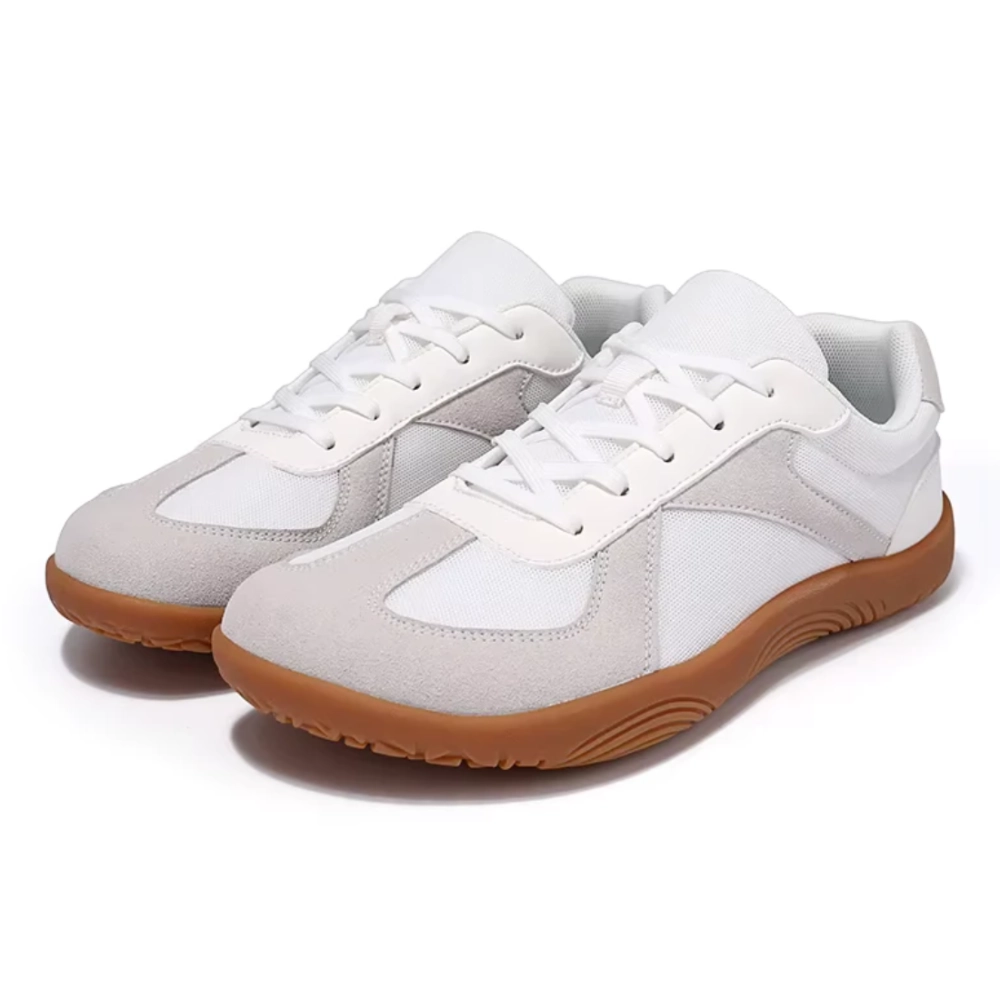
The HYKES Origin pairs a wide, foot-shaped toe box with an ultra-thin zero-drop sole, giving bunion-prone feet the room and alignment that standard shoes take away.
★★★★★
HYKES — Origin Zero Drop Barefoot Shoes
WIDE TOE BOX · ZERO-DROP · UNISEX
The HYKES Origin is a flexible, foot-shaped shoe built around a wide toe box and a zero-drop sole, so your foot can spread and roll the way it's meant to. An ultra-light 4mm sole keeps you close to the ground for a natural, connected stride, whether you're commuting, working, or out on the trail.
- Wide toe box for natural splay
- Zero-drop, foot-aligned sole
- Ultra-light 4mm sole
- Flexible, foot-shaped design
- Breathable everyday material
- Lightweight and flexible
WHY SHAPE CHANGES EVERYTHING
The Anatomy Behind Barefoot Shoe Relief
A bunion is a bony bump that forms at the base of the big toe, usually because the toe is pushed inward against the others. Standard shoes, with their narrow, tapered fronts, accelerate this shift by squeezing the toes together at every step. Barefoot shoes are built around the opposite premise: a wide, foot-shaped outline that gives each toe room to sit in its natural position.
This guide explores what makes barefoot shoes effective for bunion relief, how they perform in daily wear, and why podiatrists increasingly recommend them alongside — or instead of — traditional orthopedic footwear.
This wide toe box matters most at the widest part of the foot, where the bunion joint typically presses hardest against a shoe's inner wall. Soft materials and seamless construction near that area reduce friction and swelling, while a foot-shaped — rather than tapered — silhouette keeps the big toe from being pushed toward the others in the first place.
The second structural piece is the zero-drop sole, which keeps the heel and forefoot level with each other. Traditional shoes raise the heel, tipping body weight forward onto the toes and adding pressure exactly where a bunion already hurts. A flat sole spreads that weight evenly across the whole foot, easing forward pressure on the big toe joint and, over time, supporting better posture and balance.
Together, these two features don't reshape the bone, but they remove the daily mechanical pressure that keeps making the problem worse.
HOW BAREFOOT SHOES PERFORM WHERE IT MATTERS MOST
Everyday Comfort and Real-World Wear
In daily use, performance isn't measured in a lab — it's measured in how a foot feels by the end of the day. Most bunion sufferers report noticeably less pressure pain within one to two weeks of switching to a wide, foot-shaped shoe, well before full muscle adaptation sets in.
Sole flexibility plays a major role here. A good barefoot shoe folds easily at the ball of the foot, letting foot muscles move and engage the way they would unshod. Stiffer soles, by contrast, restrict that movement and can leave the joint working against the shoe rather than with it.
Material choice also shows up quickly in daily wear. Soft leather that stretches with use, knit fabric with stretch panels near the toe, and breathable mesh all reduce direct pressure on the bunion. Stiff synthetic uppers hold their shape and press back against the joint — often the opposite of what a bunion needs.
Closure type rounds out the daily-comfort picture. Laces allow the most adjustment across foot width, straps accommodate swelling that shifts through the day, and slip-ons suit anyone who needs to avoid bending down. None of these choices are cosmetic; each one changes how much pressure sits on the joint by evening.
"Foot health rarely improves through more support — it improves through more room. Barefoot shoes remain one of the few designs that let a bunion-prone foot recover its own alignment rather than depend on a shoe to hold it in place."
— Elena M.
WHAT TO KNOW BEFORE YOU BUY AND HOW TO TRANSITION SAFELY
Buying Factors and a Safe Transition Plan
Choosing the right barefoot shoe starts with measurement, not size number. Sizing varies significantly by brand, so measuring the foot at its widest point and comparing it to a shoe's actual toe box width matters more than the label inside. A shoe marketed as "wide" can still taper at the front and pinch the big toe if the outline isn't truly foot-shaped.
Sole thickness is a secondary but meaningful factor. Thinner soles increase ground feel and sensory feedback; thicker soles add protection on rough terrain. Most bunion sufferers do well with a medium thickness that balances the two.
Switching to barefoot shoes cold can strain muscles that have been under-used for years, so a gradual transition matters:
- Wear the shoes one to two hours a day at first.
- Add about 30 minutes of wear every few days.
- Stretch the calves and feet daily, since barefoot shoes activate muscles tight shoes leave dormant.
- Walk on varied surfaces — grass, sand, pavement — to train the foot differently.
- Watch for sharp pain rather than mild soreness; soreness is normal, pain is a signal to slow down.
- Check in with a podiatrist if bunion pain increases during the transition.
Our Top Pick
Best Overall for Bunion Relief
The HYKES Origin pairs a wide, foot-shaped toe box with an ultra-thin zero-drop sole, giving bunion-prone feet the room and alignment that standard shoes take away.
★★★★★
HYKES — Origin Zero Drop Barefoot Shoes
WIDE TOE BOX · ZERO-DROP · UNISEX
The HYKES Origin is a flexible, foot-shaped shoe built around a wide toe box and a zero-drop sole, so your foot can spread and roll the way it's meant to. An ultra-light 4mm sole keeps you close to the ground for a natural, connected stride, whether you're commuting, working, or out on the trail.
- Wide toe box for natural splay
- Zero-drop, foot-aligned sole
- Ultra-light 4mm sole
- Flexible, foot-shaped design
- Breathable everyday material
- Lightweight and flexible
WHAT TO KNOW BEFORE YOU BUY AND HOW TO TRANSITION SAFELY
Buying Factors and a Safe Transition Plan
|
Shoe Type |
Toe Box Width |
Sole Flexibility |
Best Use |
Bunion Comfort Rating |
|---|---|---|---|---|
|
Barefoot Running Shoe |
Wide |
High |
Exercise, running |
High |
|
Barefoot Casual Sneaker |
Wide |
Medium-High |
Daily walking |
High |
|
Barefoot Work Boot |
Moderate-Wide |
Medium |
Standing jobs, outdoor work |
Medium |
|
Barefoot Sandal |
Wide |
High |
Warm weather, home wear |
High |
|
Barefoot Dress Shoe |
Moderate |
Medium |
Office, formal events |
Medium |
Running shoes and sandals score highest for bunion comfort, pairing the widest toe box with the most flexible sole. Dress shoes score lowest simply because formal design limits how wide a toe box can go.
BAREFOOT VERSUS ORTHOPEDIC
How Barefoot Shoes Stack Up Against Orthopedic Footwear
|
Feature |
Orthopedic Shoes |
Barefoot Shoes |
|---|---|---|
|
Sole Structure |
Cushioned, raised heel |
Flat, zero-drop |
|
Toe Box |
Often narrow, structured |
Wide, foot-shaped |
|
Foot Muscle Engagement |
Low |
High |
|
Break-In Period |
Short |
Moderate to long |
|
Long-Term Foot Strength |
Neutral or reduced |
Improved |
Orthopedic shoes use built-in arch support and a stiff structure to hold the foot in a fixed position — useful for severe bunions or post-surgical recovery, but limiting to natural movement over time. Barefoot shoes take the opposite approach, using a flat sole and wide toe box so foot muscles do the adjusting themselves, building strength rather than relying on external support. Many people use both, depending on the activity and the stage of bunion care they're in.
Wide, Foot-Shaped Fit
Gives the big toe room to sit straight instead of angling inward.
Even Weight Distribution
Zero-drop soles reduce forward pressure on the bunion joint.
Soft, Flexible Uppers
Leather, knit, and mesh reduce friction directly over the joint.
Stronger Foot Muscles
Unsupported movement builds strength the foot had lost.
Better Balance and Posture
Ground feel sharpens signals sent to the brain, improving coordination.
Lower Risk of New Deformities
A wide toe box helps prevent crowding-related problems from forming.
CARE THAT KEEPS THEM PERFORMING
Maintenance Tips for Bunion-Friendly Barefoot Shoes
Barefoot shoes need consistent care to keep protecting a bunion-prone foot. Clean the upper weekly with a soft brush and mild soap, since dirt buildup stiffens flexible materials. Air dry after wet use rather than using a dryer, which can warp thin soles. Rotating between two pairs lets material recover its shape between wears, and checking the sole for uneven wear points can flag a fit or gait issue early. Flattened insoles should be replaced, since they reduce ground feel and comfort, and shoes are best stored away from direct sunlight, which breaks down natural materials like leather over time. Re-lacing or adjusting straps regularly keeps the fit snug and even, reducing friction right where the bunion sits.
Our Top Pick
Best Overall for Bunion Relief
The HYKES Origin pairs a wide, foot-shaped toe box with an ultra-thin zero-drop sole, giving bunion-prone feet the room and alignment that standard shoes take away.
★★★★★
HYKES — Origin Zero Drop Barefoot Shoes
WIDE TOE BOX · ZERO-DROP · UNISEX
The HYKES Origin is a flexible, foot-shaped shoe built around a wide toe box and a zero-drop sole, so your foot can spread and roll the way it's meant to. An ultra-light 4mm sole keeps you close to the ground for a natural, connected stride, whether you're commuting, working, or out on the trail.
- Wide toe box for natural splay
- Zero-drop, foot-aligned sole
- Ultra-light 4mm sole
- Flexible, foot-shaped design
- Breathable everyday material
- Lightweight and flexible
FAQ
No. They don't reverse bone shape, but they can slow bunion growth and lower daily pain. Severe bunions may still need medical treatment or surgery.
Yes, in most cases, though older adults should transition more slowly than younger wearers. Balance work and short wear periods help the feet adjust safely.
Yes. Wearing them on both feet keeps gait even; an uneven fit between feet can cause new strain on the hips and knees.
Many wearers notice less pressure pain within one to two weeks, with full muscle adaptation taking one to three months.
Many podiatrists recommend wide, flexible shoes for children at any stage of foot development, since a wide toe box supports healthy toe alignment while bones are still growing.
A sudden switch can strain unused calf and foot muscles, which is why a gradual increase in wear time matters more than the shoe itself.
Buying based on size number alone. Sizing varies by brand, so the actual toe box width matters more than the label.
FINAL VERDICT
Bunions respond well to shoes that respect the foot's natural shape rather than fight it. A wide toe box, a flat zero-drop sole, and soft, seamless materials work together to remove the daily pressure that keeps a bunion progressing — not by masking discomfort, but by giving the joint room it was never given before.
From a value perspective, barefoot shoes tend to reward patience: the transition period asks more of the wearer up front, but the payoff is a foot that gets stronger rather than more dependent on structure. Compared to orthopedic shoes, they trade a shorter break-in period for meaningfully better long-term foot strength.
For mild to moderate bunions, and for anyone focused on long-term prevention, a well-fitted barefoot shoe is one of the more reliable upgrades available — not a trend, but a shift back toward how feet were meant to move.
Pick a pair that matches your foot width and daily activity, transition slowly, and care for the shoes well. These steps protect your feet now and support their health for years ahead.
Room to move. Pressure that eases. Feet built to last. 🦶