
Best Barefoot Hiking Shoes

"Your foot knows the trail better than any cushioned sole. This guide shows you why barefoot hiking shoes let your feet move, grip, and feel the ground the way nature intended, and how to pick the right pair for your next hike."
Your feet do more work on a trail than most hikers realize. Every root, rock, and slope sends signals through your soles. Traditional hiking boots block those signals with thick padding and a narrow toe box. Barefoot hiking shoes remove that barrier and let your foot function as it should.
This shift in footwear design has changed how hikers think about stability and comfort. A wide, foot-shaped shoe with a thin sole helps your toes spread, grip, and adjust to uneven ground in real time.
Wide Toe Box
NATURAL TOE SPREAD
Zero-Drop Sole
LEVEL FOOT PLACEMENT
Ground Feel
REAL TRAIL FEEDBACK
This guide covers the history, technical specs, benefits, care steps, and buying advice for barefoot hiking shoes, so you can choose a pair that fits your feet and your trail.
Our Top Pick
The Nomad Sets the Standard for Barefoot Hiking
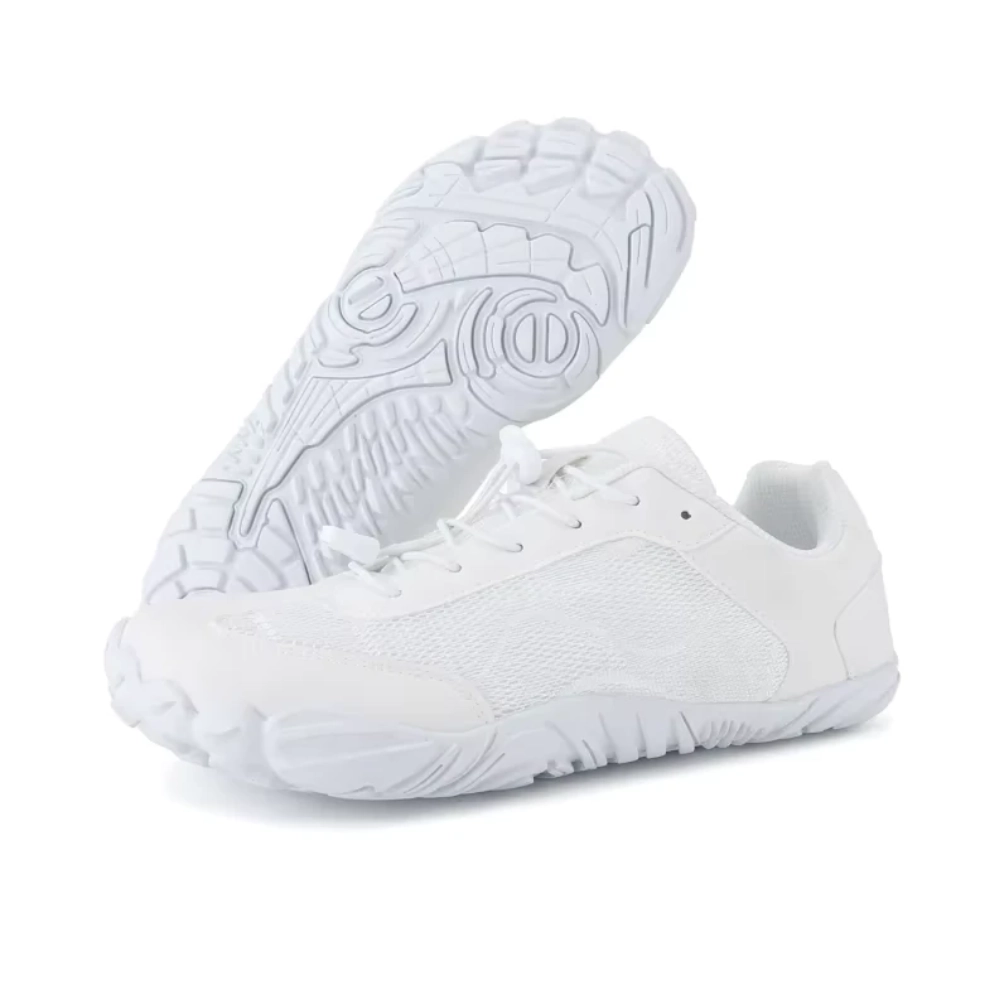
The HYKES Nomad is a flexible, foot-shaped hiking shoe with a wide toe box that lets your toes splay and grip naturally over uneven terrain. Its thin, zero-drop sole keeps your foot close to the ground for real trail feedback and a balanced, connected stride, whether you're covering rocky paths or logging easy miles.
★★★★★
HYKES Nomad — Zero-Drop Barefoot Shoes
WIDE TOE BOX · ZERO-DROP · TRAIL-READY
The HYKES Nomad is a flexible, foot-shaped hiking shoe with a wide toe box that lets your toes splay and grip naturally over uneven terrain. Its thin, zero-drop sole keeps your foot close to the ground for real trail feedback and a balanced, connected stride, whether you're covering rocky paths or logging easy miles.
- Wide toe box for natural toe spread
- Zero-drop sole for balanced alignment
- Thin, flexible sole for ground feel
- Foot-shaped design that moves with you
- Breathable material for all-day wear
- Goes anywhere — trail, work, or errands
WHAT MAKES A SHOE BAREFOOT
What Is a Barefoot Hiking Shoe?
A barefoot hiking shoe copies the shape and function of a bare foot. It uses a wide toe box, a thin sole, and zero heel-to-toe drop. This design lets your foot flex, spread, and sense the ground the way it would without any shoe at all.
Standard hiking boots do the opposite. They raise the heel, narrow the toe area, and add thick padding between your foot and the trail. Barefoot shoes strip that padding away and let your foot muscles do the work they were built to do. Many hikers assume a thin sole means less protection, but a good barefoot shoe still uses a puncture-resistant layer under the foot. The difference is where the protection sits and how much it changes your natural foot shape.
Wide Toe Box
Lets toes spread and grip naturally.
Zero-Drop Design
Keeps heel and forefoot level for balance.
Ground Feedback
Thin soles send real trail data to your brain.
Flexible Sole
Bends with your foot for a natural stride.
Breathable Build
Keeps feet cool and dry on long hikes.
Trail-Ready Grip
Traction patterns grip rock, mud, and root.
I switched to barefoot hiking shoes last spring and my feet stopped cramping on long descents. My stride feels steadier on rocky terrain now."
— Tomás H.
FROM MINIMALIST RUNNING TO THE TRAIL
The History of Barefoot Hiking Shoes
Early observations. Runners and podiatrists in the 1990s and early 2000s began questioning why cushioned shoes correlated with certain foot problems. Studies on populations who walked and ran without shoes showed strong arches and wide, spread toes.
The first wave. Around 2009, minimalist running shoes entered the mainstream market. Brands built thin-soled shoes with almost no drop. Runners adopted them fast, but many switched too quickly and strained calves and Achilles tendons that had adapted to cushioned heels.
The shift to hiking. Hikers noticed the same benefits applied on the trail. A wide toe box helped with balance on uneven ground. A thin sole gave hikers direct feedback about rock, root, and slope. Barefoot hiking shoes grew from that crossover.
Where the category stands now. Today's barefoot hiking shoes use better materials than early models. Modern rubber compounds resist punctures while staying thin. Foot-shaped lasts have replaced the narrow, pointed shapes that once defined hiking footwear. Brands now test tread patterns on wet rock, loose gravel, and packed dirt to match real trail conditions, not just pavement.
Our Top Pick
A Shoe Built for Real Trail Conditions
Hikers who log long miles need a shoe that holds up on rough ground without sacrificing ground feel. The Nomad delivers both in one pair.
★★★★★
HYKES Nomad — Zero-Drop Barefoot Shoes
WIDE TOE BOX · ZERO-DROP · TRAIL-READY
The HYKES Nomad is a flexible, foot-shaped hiking shoe with a wide toe box that lets your toes splay and grip naturally over uneven terrain. Its thin, zero-drop sole keeps your foot close to the ground for real trail feedback and a balanced, connected stride, whether you're covering rocky paths or logging easy miles.
- Wide toe box for natural toe spread
- Zero-drop sole for balanced alignment
- Thin, flexible sole for ground feel
- Foot-shaped design that moves with you
- Breathable material for all-day wear
- Goes anywhere — trail, work, or errands
BAREFOOT VS. TRADITIONAL BOOTS
Barefoot vs. Traditional Hiking Shoes
Barefoot and traditional hiking shoes solve the same trail problems in opposite ways. One lets your foot move and feel the ground. The other locks your foot down and cushions it from the ground. Here's how the two compare across the features that matter most on a hike.
|
Feature |
Barefoot Hiking Shoe |
Traditional Hiking Shoe |
|---|---|---|
|
Toe box width |
Wide, lets toes spread |
Narrow, tapers at the front |
|
Heel-to-toe drop |
Zero-drop, level foot |
Raised heel, often 8–12mm |
|
Sole thickness |
Thin, close to the ground |
Thick, cushioned midsole |
|
Ground feedback |
High, direct trail feel |
Low, muffled by padding |
|
Ankle support |
Relies on foot and ankle strength |
Relies on stiff boot structure |
|
Break-in period |
Short, foot adapts fast |
Often long, stiff materials soften slowly |
Neither shoe type suits every hiker. A wide, flexible shoe rewards hikers who want feedback and freedom of motion. A stiff, cushioned boot suits hikers who prefer a firm platform underfoot. Knowing the trade-offs helps you match the shoe to your feet and your trail.
SPECS, FIT, AND CARE
Choosing, Fitting, and Maintaining Your Pair
Beyond toe box width and sole thickness, a few other specs shape how a barefoot hiking shoe performs. Puncture resistance determines whether a thin sole holds up against sharp rock and root. Sole flexibility determines how easily the shoe bends and twists with your foot's natural motion. Upper material determines how well the shoe breathes on long, warm hikes. Traction pattern determines how the tread grips loose dirt, wet rock, and mud.
Fit matters as much as specs. Follow these steps to get it right:
- Measure both feet at the end of the day, when feet are at their largest.
- Check toe box width by pressing your foot flat against the shoe's outline.
- Stand and flex your toes inside the shoe to confirm they spread without hitting the sides.
- Walk on a slope or incline in the store or at home to test balance and grip.
- Break in gradually by wearing the shoe for short walks before longer hikes.
- Recheck fit after a week, since your foot may spread further once muscles adjust.
Different hikers get different value from a barefoot shoe. Trail runners often notice less foot fatigue on long descents, since their feet spread and grip instead of sliding into a narrow toe box. Hikers with wide feet find more room and less pinching in a foot-shaped design. Minimalist backpackers switch because thin soles weigh less than padded boots. Hikers coming out of years in stiff, narrow boots often use barefoot shoes to rebuild foot strength gradually, starting with shorter, easier trails.
Once you've broken in a pair, keep it in shape with basic care:
- Rinse mud and debris off the sole after each hike.
- Air-dry shoes away from direct heat to protect the sole material.
- Remove insoles between hikes to let them dry fully.
- Brush the upper with a soft brush to clear dirt from mesh panels.
- Check the sole tread monthly for wear or embedded debris.
- Store shoes in a dry, ventilated spot, not a sealed bag.
Our Top Pick
One Shoe for Trail, Work, and Everyday Miles
Hikers who want one pair that handles the trail and daily errands should look at the Nomad. Its build works across terrain types without extra bulk.
★★★★★
HYKES Nomad — Zero-Drop Barefoot Shoes
WIDE TOE BOX · ZERO-DROP · TRAIL-READY
The HYKES Nomad is a flexible, foot-shaped hiking shoe with a wide toe box that lets your toes splay and grip naturally over uneven terrain. Its thin, zero-drop sole keeps your foot close to the ground for real trail feedback and a balanced, connected stride, whether you're covering rocky paths or logging easy miles.
- Wide toe box for natural toe spread
- Zero-drop sole for balanced alignment
- Thin, flexible sole for ground feel
- Foot-shaped design that moves with you
- Breathable material for all-day wear
- Goes anywhere — trail, work, or errands
FAQ
Yes. Start with short, easy trails and let your feet adjust before tackling longer or rougher routes.
A good barefoot hiking shoe uses a traction pattern built for wet and loose surfaces, so grip stays strong without a thick sole.
Some hikers feel new sensations at first as foot muscles activate. A gradual break-in period reduces this adjustment.
Yes. Choose a size that keeps the toe box roomy even with thicker socks on cold-weather hikes.
Modern soles use puncture-resistant rubber that holds up on rocky, root-covered terrain despite a thin profile.
Most hikers adjust within two to four weeks of regular, gradual wear.
Final Verdict
Barefoot hiking shoes give your feet room to spread, grip, and sense the trail. A wide toe box, a zero-drop sole, and a flexible build work together to support a natural stride on any terrain.
The HYKES Nomad brings these features into one shoe built for the trail and everyday wear. It fits hikers who want strength, balance, and ground feel without a narrow toe box holding them back.
Let your feet lead the way, one trail at a time. 🦶