
Best Barefoot Shoes for Weightlifting

"A lifter loads the bar. Her heels sink into soft foam. Her ankles wobble. She switches to a flat, firm sole. The bar path straightens. Her back stays tight. Her lifts go up. This is the story of every lifter who finds barefoot shoes."
Weightlifting shoes fall into two camps. Raised-heel shoes lift your heel for deep squats. Flat, zero-drop shoes keep your foot level with the ground. Barefoot weightlifting shoes belong to the second camp.
A thick, soft midsole absorbs energy. That energy should travel into the bar, not into foam. A barefoot shoe uses a thin, firm sole instead. Your foot presses the ground. The ground pushes back. That force drives the bar up.
Foot Contact
GROUND FEEL, NOT FOAM
Stable Base
NO SIDE-TO-SIDE SHIFT
Natural Alignment
KNEES, HIPS, SPINE
A stable base changes more than comfort. It changes bar path, joint alignment, and lift consistency. Lifters who switch to a flat, wide sole often report straighter squats and stronger deadlift lockouts within a few sessions.
Our Top Pick
Built for the Platform
The HYKES Nomad gives lifters a wide toe box and a thin, zero-drop sole. Your foot spreads under load. Your heel stays level with your forefoot. Every rep starts from a stable base.
★★★★★
HYKES Nomad — Zero-Drop Barefoot Shoes
WIDE TOE BOX · ZERO-DROP · TRAIL-READY
The HYKES Nomad is a flexible, foot-shaped hiking shoe with a wide toe box that lets your toes splay and grip naturally over uneven terrain. Its thin, zero-drop sole keeps your foot close to the ground for real trail feedback and a balanced, connected stride, whether you're covering rocky paths or logging easy miles.
- Wide toe box for natural toe spread
- Zero-drop sole for balanced alignment
- Thin, flexible sole for ground feel
- Foot-shaped design that moves with you
- Breathable material for all-day wear
- Goes anywhere — trail, work, or errands
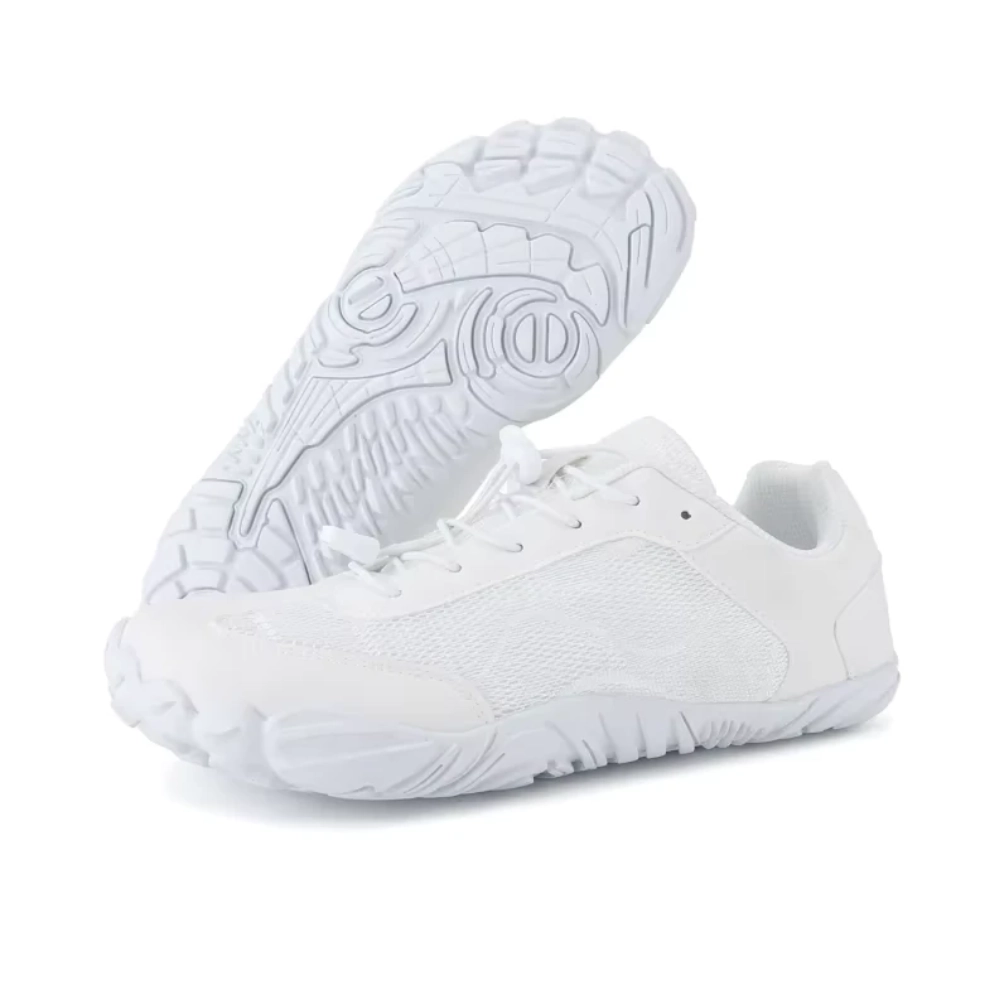
ZERO-DROP, DEFINED
What Is a Barefoot Weightlifting Shoe?
A barefoot weightlifting shoe has a thin, firm, flat sole. It has zero heel-to-toe drop. Your heel and forefoot sit at the same height. The shoe has a wide toe box. Your toes spread out under load instead of squeezing together.
The sole does not compress under weight. It transfers force instead of absorbing it. This design suits deadlifts, squats, presses, and any lift where a stable base matters more than cushioning.
FROM STRONGMEN TO ZERO-DROP
The History of Flat Lifting Shoes
Early lifting. Strongmen and early Olympic lifters trained in flat leather shoes or bare feet. No raised heel existed. Lifters relied on ankle mobility and foot strength.
The raised-heel era. In the 1960s and 1970s, weightlifting shoe makers added a raised heel. A raised heel let lifters with tight ankles reach deeper squat depth without leaning forward. The design spread fast through Olympic lifting gyms.
The cushioning shift. Athletic shoe brands added foam midsoles through the 1980s and 1990s. Running shoes and cross-trainers grew thicker soles. Many lifters trained in these shoes by default, even though foam works against a stable lifting base.
The correction. Researchers and coaches in the 2000s and 2010s pointed out a problem. Soft foam compresses under a loaded bar. That compression wastes force and shifts your balance. A flat, firm sole solves this. Barefoot and minimalist shoe brands built shoes around this finding.
Where it stands now. Today, lifters split between raised-heel shoes for deep squats and flat, zero-drop shoes for deadlifts, general strength work, and lifters with good ankle mobility. Barefoot shoes now hold a permanent place in strength training.
SOLE, BOX, AND LACING
Key Technical Features to Look For
- Zero-drop sole: The heel and forefoot sit at the same height. This keeps your shins vertical and your weight centered over your midfoot.
- Wide toe box: Your toes spread and grip the floor. A narrow toe box limits this and reduces stability.
- Thin, firm outsole: A sole under 8mm thick transfers force well. Anything thicker starts to compress and absorb energy meant for the bar.
- Flexible forefoot: Your foot needs to flex naturally at the ball of the foot during unracking and walkouts.
- Secure lacing: A snug midfoot lockdown keeps your foot from sliding inside the shoe during heavy pulls.
- Grippy, flat outsole: A flat rubber sole grips a lifting platform or gym floor without any wedge shape.
- Breathable upper: Training sessions run long. A breathable upper keeps your foot cool and reduces sweat buildup.
Stronger Grip
A wide toe box lets your toes spread and press into the floor, building real grip strength over time.
Straighter Bar Path
A flat, zero-drop sole keeps your weight centered, so the bar travels a shorter, straighter line.
Better Lockout
Your glutes fire fully when your feet sit flat and level, instead of tilted forward on a wedge.
Fewer Wobbles
A wide, unshifting base keeps your ankles steady under heavy load, so your stance stays locked in.
All-Day Comfort
A roomy toe box and breathable upper make the shoe easy to wear well past your training session.
One Shoe, Two Jobs
The same flat, stable base that works on the platform carries over to errands, walking, and daily wear.
"I deadlift twice my body weight, and I felt the difference the first session. My feet stayed planted, and my lower back stopped rounding at lockout."
— Marcus T.
POWERLIFTERS AND BEGINNERS ALIKE
Who Sees the Biggest Difference
Powerlifters. Deadlifts and low-bar squats reward a flat, unmoving base. A barefoot shoe removes the heel wedge that pushes your weight forward.
Strongman athletes. Farmer carries benefit from full ground contact and a wide, stable stance.
Lifters with mobile ankles. If your ankles already bend deep enough for a full squat, a raised heel adds nothing. A flat sole keeps your natural mechanics intact.
Beginners building foot strength. New lifters often have weak, underused foot muscles from years in cushioned shoes. A wide toe box and thin sole rebuild that strength over time.
Our Top Pick
Choosing Your Everyday Trainer
Many lifters want one shoe for the platform and the parking lot. A barefoot shoe built for daily wear can handle both jobs if it keeps the same flat, wide, zero-drop base.
★★★★★
HYKES Nomad — Zero-Drop Barefoot Shoes
WIDE TOE BOX · ZERO-DROP · TRAIL-READY
The HYKES Nomad is a flexible, foot-shaped hiking shoe with a wide toe box that lets your toes splay and grip naturally over uneven terrain. Its thin, zero-drop sole keeps your foot close to the ground for real trail feedback and a balanced, connected stride, whether you're covering rocky paths or logging easy miles.
- Wide toe box for natural toe spread
- Zero-drop sole for balanced alignment
- Thin, flexible sole for ground feel
- Foot-shaped design that moves with you
- Breathable material for all-day wear
- Goes anywhere — trail, work, or errands
SQUAT DEPTH VS. GROUND FEEL
Flat Sole vs. Raised Heel
A raised-heel shoe still has a place in strength training. Squat depth and ankle mobility decide which sole suits your lifts best.
|
Feature |
Barefoot / Flat Sole |
Raised-Heel Shoe |
|---|---|---|
|
Heel-to-toe drop |
Zero |
Usually 0.5–1 inch |
|
Best lift |
Deadlifts, presses, general strength |
Deep back and front squats |
|
Ankle mobility needed |
Low to moderate |
Can compensate for tight ankles |
|
Ground feel |
High |
Low |
|
Base stability |
Wide, firm, unshifting |
Narrower, elevated |
|
Everyday wear |
Comfortable, walkable |
Awkward outside the gym |
A raised heel is not a wrong choice. It is a tool for a specific mobility gap. Pick your sole based on the lift and your own ankle range, not on trend.
THE RUSHED TRANSITION
Signs You Switched Too Fast
A sudden jump from thick cushioning to a flat, zero-drop sole stresses tissue that has not worked this way before. Watch for these signs in your first two weeks:
- Sore calves or a tight Achilles the day after training
- Squat depth drops below your normal range as ankles adjust
- Balance feels off during unracking or walkouts
- General foot fatigue by the end of a session
None of these signs mean the shoe is wrong. They mean your pace is too fast.
WEEK BY WEEK
Your Transition Timeline
- Weeks 1–2: Wear the shoes for warm-ups and light accessory lifts. Keep main lifts in your old shoes.
- Weeks 3–4: Move main lifts into the barefoot shoes at 80% load. Track squat depth each session.
- Weeks 5–6: Return to full training load. Balance should feel automatic by now.
- Ongoing: Keep a cushioned pair for running. Save the flat, zero-drop pair for lifting.
SHOE CARE BASICS
Care and Maintenance
- Wipe the upper down after every sweaty session to stop odor before it starts
- Air dry away from direct heat — a heat source can warp or crack the sole material
- Pull the insoles out once a week so both layers dry fully between sessions
- Rotate between two pairs if you train five or more days a week
- Check the outsole tread monthly and replace the shoes once it loses grip on the platform
- Loosen the laces fully before removing the shoe to protect the heel counter from stretching
- Store the pair somewhere dry and ventilated, never sealed inside a gym bag
Our Top Pick
Ready to Rebuild Your Base?
A stable, flat, wide-toe shoe changes how your next training block feels. The right pair pays off on every heavy set.
★★★★★
HYKES Nomad — Zero-Drop Barefoot Shoes
WIDE TOE BOX · ZERO-DROP · TRAIL-READY
The HYKES Nomad is a flexible, foot-shaped hiking shoe with a wide toe box that lets your toes splay and grip naturally over uneven terrain. Its thin, zero-drop sole keeps your foot close to the ground for real trail feedback and a balanced, connected stride, whether you're covering rocky paths or logging easy miles.
- Wide toe box for natural toe spread
- Zero-drop sole for balanced alignment
- Thin, flexible sole for ground feel
- Foot-shaped design that moves with you
- Breathable material for all-day wear
- Goes anywhere — trail, work, or errands
FAQ
Yes, if your ankles have enough mobility to reach depth without a raised heel. Lifters with tight ankles may prefer a raised-heel shoe for deep squats.
Yes. A flat, zero-drop sole suits deadlifts well. It keeps your weight over your midfoot and shortens the bar's travel distance.
Yes. A wide toe box and thin sole let your foot sense the floor and adjust in real time, which improves balance during heavy lifts.
Most lifters need two to six weeks. Start with light sessions and build up load gradually.
Yes. Beginners often benefit the most, since barefoot shoes help rebuild foot strength that cushioned shoes have weakened over time.
No. A well-built barefoot shoe like the HYKES Nomad works for lifting, walking, hiking, and daily wear.
Final Verdict
Barefoot weightlifting shoes give your foot a flat, wide, stable base for every lift. That base keeps force moving into the bar instead of into foam. Lifters chasing a straighter bar path, a stronger lockout, and a more stable stance benefit from the switch.
Pick a shoe with a zero-drop sole, a wide toe box, and a thin, firm outsole. Transition gradually, and your feet will handle the rest.
A flat sole, a wide toe box, and a stable base turn every lift into a stronger one. 🦶