
Best Shoes for Retail Workers

"A retail shift means hours on hard floors, quick turns between aisles, and no real break for tired feet. The right shoe changes that. It supports every step, protects the joints, and lets a worker finish a ten-hour shift without pain. This guide breaks down what actually matters in a work shoe, from sole design to toe space, so retail workers can choose shoes that hold up to the job."
Retail work puts constant stress on the feet. Workers stand for long shifts. They walk miles across sales floors each day. They carry boxes, climb ladders, and move fast during rush hours. A poor shoe choice turns a normal shift into a painful one.
Foot pain from retail work is common. Studies link long standing hours to plantar fasciitis, swelling, and lower back strain. Proper footwear reduces this strain and keeps workers moving through their shift without slowing down. This guide covers the history of work footwear, the technical features that matter most, and clear steps for picking the right pair.
Full-Day Support
STANDS UP TO LONG SHIFTS
Grip & Traction
HOLDS FIRM ON SPILLS
Flexible Fit
MOVES WITH YOUR FOOT
These three factors decide how a shoe performs on a retail floor. A shoe that fails any one of them slows a worker down and raises injury risk over time.
Our Top Pick
Our Pick for All-Day Retail Shifts
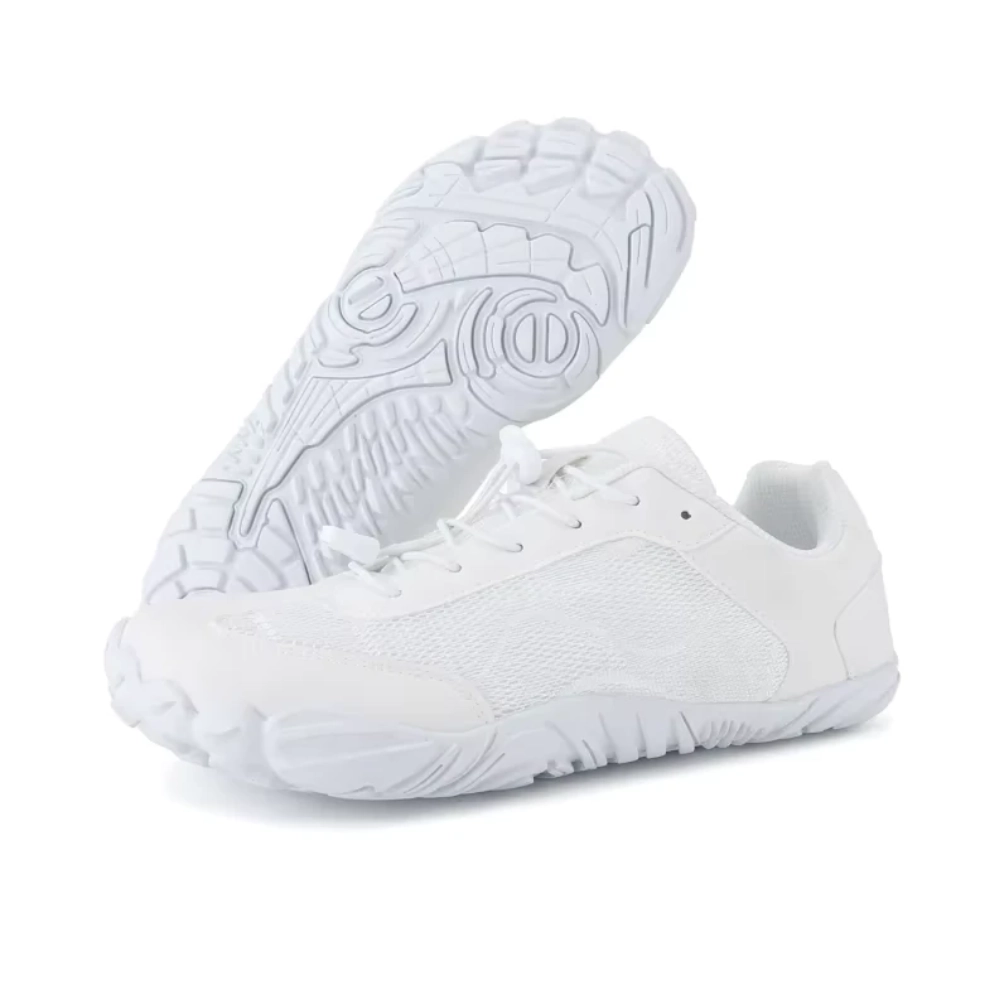
The HYKES Nomad gives retail workers a wide toe box and a thin, flexible sole built for hours on hard floors. It handles stockroom trips, sales-floor walking, and quick counter moves without slowing anyone down.
★★★★★
HYKES Nomad — Zero-Drop Barefoot Shoes
WIDE TOE BOX · ZERO-DROP · TRAIL-READY
The HYKES Nomad is a flexible, foot-shaped hiking shoe with a wide toe box that lets your toes splay and grip naturally over uneven terrain. Its thin, zero-drop sole keeps your foot close to the ground for real trail feedback and a balanced, connected stride, whether you're covering rocky paths or logging easy miles.
- Wide toe box for natural toe spread
- Zero-drop sole for balanced alignment
- Thin, flexible sole for ground feel
- Foot-shaped design that moves with you
- Breathable material for all-day wear
- Goes anywhere — trail, work, or errands
WORK SHOE ORIGINS
A Short History of Work Footwear
Work shoes started as simple leather boots. Factory workers and shopkeepers wore stiff, heavy soles built to last, not to support the foot. Comfort was not a design goal. Durability was the only priority.
By the mid-1900s, cushioned soles entered the market. Brands added foam padding and arch support to reduce fatigue. This shift helped some workers but also raised the heel above the toes. That raised heel, called a heel-to-toe drop, changed how the foot strikes the ground and how weight moves through the leg.
WHY RETAIL FEET HURT
Why Retail Shifts Wear Down Your Feet
Retail work differs from office work in one key way: constant motion on hard surfaces. A worker stands at a register, walks to the stockroom, climbs a step stool, and repeats this pattern for eight hours or more.
Three forces cause most of the pain:
- Compression — Standing still for long periods reduces blood flow and adds pressure to the heel and arch.
- Impact — Walking on concrete or tile sends shock up through the ankle and knee with every step.
- Restriction — A narrow toe box squeezes the toes together and blocks natural balance.
A shoe with a wide toe box lets the toes spread and grip the floor. This improves balance and reduces the chance of blisters or bunions forming over time.
Toe Freedom
Room for toes to spread naturally.
Ground Feel
Thin sole for real floor contact.
Floor Grip
Outsole grips tile and concrete.
Breathability
Mesh panels keep feet cool.
Balanced Stance
Zero-drop sole levels the foot.
All-Shift Durability
Built to handle repeat 8-hour shifts.
Retail workers need shoes that hold up under daily wear. A shoe that breaks down after a few months forces a worker to spend more money and go back to sore feet in the meantime.
"I work register and stock shifts back to back. My old sneakers left my feet aching by noon. I switched to a wide-toe-box shoe and the difference showed up in the first week. My feet stopped cramping, and I stopped dreading closing shifts."
— Tasha M.
KEY FEATURES
Features That Matter Most
A retail work shoe needs a few core features. Skip shoes that miss these basics, no matter how the marketing describes them.
- Wide toe box — Toes need room to spread. A narrow toe box forces toes together and raises the risk of bunions.
- Zero-drop sole — A flat sole keeps the heel and forefoot at the same height. This spreads weight evenly across the foot.
- Thin, flexible sole — A thin sole lets the foot feel the ground and react to uneven surfaces. A stiff sole blocks natural foot movement.
- Breathable upper — Mesh or knit material keeps air moving and reduces sweat buildup during long shifts.
- Non-slip outsole — Retail floors get wet from spills, mopping, and weather. A grippy outsole prevents slips.
- Lightweight build — Heavy shoes tire the legs faster. A lighter shoe reduces fatigue over an eight-hour shift.
Workers should try shoes on with the socks they plan to wear at work. Fit changes with sock thickness, and a shoe that feels right in the store can feel tight after a full shift.
Our Top Pick
The Shoe Built for Standing All Day
Retail workers need a shoe that supports natural movement without weighing them down. The HYKES Nomad fits that need with a flexible, foot-shaped build made for long hours on your feet.
★★★★★
HYKES Nomad — Zero-Drop Barefoot Shoes
WIDE TOE BOX · ZERO-DROP · TRAIL-READY
The HYKES Nomad is a flexible, foot-shaped hiking shoe with a wide toe box that lets your toes splay and grip naturally over uneven terrain. Its thin, zero-drop sole keeps your foot close to the ground for real trail feedback and a balanced, connected stride, whether you're covering rocky paths or logging easy miles.
- Wide toe box for natural toe spread
- Zero-drop sole for balanced alignment
- Thin, flexible sole for ground feel
- Foot-shaped design that moves with you
- Breathable material for all-day wear
- Goes anywhere — trail, work, or errands
COMPARING SHOE STYLES
Barefoot vs. Cushioned vs. Standard Work Shoes
Retail workers usually choose between three shoe types. Each type handles the demands of a shift differently.
Cushioned shoes add foam padding under the heel and arch. This padding feels soft at first, but it also raises the heel and can reduce foot strength over time. Standard work shoes focus on durability and slip resistance but often use a narrow toe box that restricts natural foot shape. Barefoot-style shoes like the HYKES Nomad use a thin sole and wide toe box to let the foot move as it naturally would.
|
Feature |
Barefoot Style |
Cushioned |
Standard Work Shoe |
|---|---|---|---|
|
Toe Box Width |
Wide |
Narrow to Medium |
Narrow |
|
Heel-to-Toe Drop |
Zero-drop |
8–12mm |
4–8mm |
|
Ground Feel |
High |
Low |
Low to Medium |
|
Weight |
Light |
Medium to Heavy |
Heavy |
|
Break-In Time |
Short |
Short |
Medium to Long |
|
Best For |
All-day standing and walking |
Short shifts, high-impact days |
Heavy-duty or hazardous floors |
No single style fits every job. Warehouse workers handling heavy loads may need reinforced toes. Sales-floor workers benefit more from a light, wide-toe-box shoe built for natural movement.
CARE & UPKEEP
Maintenance Tips for Work Shoes
A well-kept shoe lasts longer and performs better on shift. Follow these steps:
- Clean the outsole weekly. Dirt and grime reduce grip on tile and concrete floors.
- Air out shoes after each shift. Moisture buildup breaks down materials faster and causes odor.
- Rotate between two pairs. This gives each pair time to dry and recover shape.
- Check the tread monthly. Worn tread increases slip risk on wet or polished floors.
- Replace insoles every six months. Insoles lose cushioning faster than the shoe itself.
- Store shoes away from direct heat. Heat breaks down glue and rubber over time.
Workers who rotate and clean their shoes regularly buy fewer replacements per year.
Our Top Pick
Ready for Your Next Shift
A shift on hard floors demands a shoe built for real movement. The HYKES Nomad delivers the wide toe box, flexible sole, and all-day comfort retail work requires.
★★★★★
HYKES Nomad — Zero-Drop Barefoot Shoes
WIDE TOE BOX · ZERO-DROP · TRAIL-READY
The HYKES Nomad is a flexible, foot-shaped hiking shoe with a wide toe box that lets your toes splay and grip naturally over uneven terrain. Its thin, zero-drop sole keeps your foot close to the ground for real trail feedback and a balanced, connected stride, whether you're covering rocky paths or logging easy miles.
- Wide toe box for natural toe spread
- Zero-drop sole for balanced alignment
- Thin, flexible sole for ground feel
- Foot-shaped design that moves with you
- Breathable material for all-day wear
- Goes anywhere — trail, work, or errands
FAQ
A lightweight shoe with a wide toe box and a flat, zero-drop sole works best. It spreads weight evenly and lets the foot move naturally through a full shift.
Cushioned shoes offer short-term softness but often raise the heel and limit natural foot movement. Many workers find more lasting relief from a flatter, wider-fitting shoe.
Most workers should replace shoes every six to twelve months, depending on shift frequency and floor type. Worn tread and flattened insoles signal it's time for a new pair.
Yes. A wide toe box lets toes spread and grip the floor, which improves balance and reduces pressure points that cause pain over long shifts.
A zero-drop sole keeps the heel and forefoot level. This spreads body weight evenly and reduces strain on the ankles and lower back during long standing periods.
Look for a wide toe box, a flexible and thin sole, a non-slip outsole, and a breathable upper. Try shoes on with work socks to check real fit.
Final Verdict
Retail work asks a lot from the feet. Long shifts, hard floors, and constant motion add up fast without the right support. A shoe with a wide toe box, a flat sole, and a lightweight build handles that demand better than a stiff, narrow, heavily cushioned shoe.
The HYKES Nomad checks every box that matters for retail work: room for the toes, a flexible sole for real ground feel, and a build light enough for a full shift. Workers who switch to a shoe like this often notice less pain within the first few weeks.
Comfortable feet make every shift easier. 🦶