
Best Barefoot Shoes for Men

"Men who switch to barefoot shoes notice one thing first: their feet finally have room to move. A wide toe box lets toes spread. A thin, flexible sole lets the ground talk back. This guide covers the history, the specs, and the shoe that gets the formula right."
Barefoot shoes strip away thick cushioning and narrow toe boxes. They let your foot move the way it was built to move. Men who stand all day, hike rough trails, or train at the gym ask the same question: which barefoot shoe actually works? This guide answers that question with facts, not guesswork.
Traditional running shoes raise the heel and squeeze the toes. That design changes your gait and weakens foot muscles over time. A true zero-drop sole keeps your heel and forefoot at the same height. Your foot lands the way your body intended, not the way a shoe factory intended.
Wide Toe Box
ROOM TO SPREAD
Zero-Drop Sole
LEVEL HEEL AND FOREFOOT
Ground Feel
THIN FLEXIBLE MATERIAL
Picking the right pair takes more than a spec sheet. It takes knowing what each feature does for your foot. The sections below cover the history of barefoot footwear, the technical specs that matter, and the exact steps to pick a shoe that fits your feet and your life.
Our Top Pick
The Shoe We Recommend First
Men who want a wide toe box and a true zero-drop platform in one shoe should start here. This pick handles trails, errands, and long days on your feet without forcing your toes into a narrow mold.
★★★★★
HYKES Nomad — Zero-Drop Barefoot Shoes
WIDE TOE BOX · ZERO-DROP · TRAIL-READY
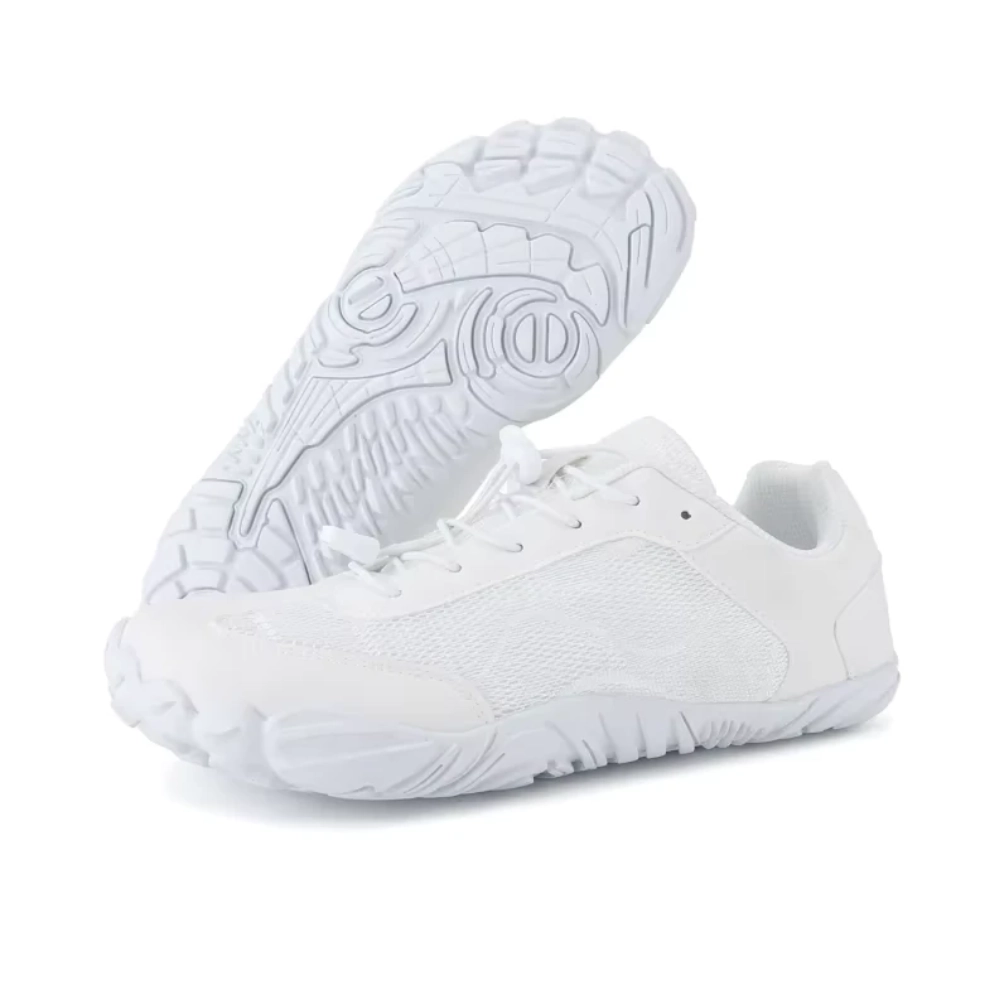
The HYKES Nomad is a flexible, foot-shaped hiking shoe with a wide toe box that lets your toes splay and grip naturally over uneven terrain. Its thin, zero-drop sole keeps your foot close to the ground for real trail feedback and a balanced, connected stride, whether you're covering rocky paths or logging easy miles.
- Wide toe box for natural toe spread
- Zero-drop sole for balanced alignment
- Thin, flexible sole for ground feel
- Foot-shaped design that moves with you
- Breathable material for all-day wear
- Goes anywhere — trail, work, or errands
FROM ANCIENT SANDALS TO MODERN SOLES
A Short History of Barefoot Shoes
Humans walked in thin, flexible footwear for thousands of years before rubber and foam entered the picture. Ancient huaraches, moccasins, and simple leather wraps protected the sole of the foot while keeping it flat and mobile. These early designs let the foot flex, grip, and sense the ground with each step.
The modern running shoe changed that pattern in the 1970s. Brands added thick heel cushioning to reduce impact, but the added height and narrow toe shape altered natural foot mechanics. In the 2000s, minimalist shoes returned to the market as runners and hikers rediscovered the benefits of a flat, flexible sole. Today's barefoot shoe brands build on that shift with better materials, more durable outsoles, and designs made for daily wear, not just running.
Muscle Strength
Builds foot and ankle muscles over time.
Better Balance
Improves stability on uneven surfaces.
All-Day Comfort
Breathable materials keep feet cool for long days.
Toe Spread
Lets toes spread and grip with each step.
Ground Feedback
Sends real terrain data straight to your brain.
Natural Gait
Supports a stride your body already knows.
"I stood on concrete floors for ten-hour shifts before I switched. My feet stopped aching within a month, and my toes finally have room to move."
— Jason W.
SOLE THICKNESS, DROP, AND FIT
Key Specs That Matter
Not every shoe labeled "barefoot" delivers the same result. Check these specs before you buy:
- Toe box width: Measure across the widest part of your foot. The shoe should match that width, not squeeze it.
- Heel-to-toe drop: A zero-drop sole keeps your heel and forefoot level. Anything above 4mm changes your natural stance.
- Sole thickness: Thinner soles improve ground feel. Most barefoot shoes stay under 8mm.
- Flexibility: Twist the shoe in your hands. It should bend and fold with little resistance.
- Weight: Lighter shoes reduce fatigue on long hikes or shifts on your feet.
- Upper material: Breathable mesh or knit fabric keeps feet cool and dry during extended wear.
These six specs decide how a shoe performs, not the marketing on the box.
Our Top Pick
The Pick That Balances Trail and Town
The HYKES Nomad checks every spec above. Its wide toe box, zero-drop sole, and thin, flexible build work for hikers and everyday wearers alike.
★★★★★
HYKES Nomad — Zero-Drop Barefoot Shoes
WIDE TOE BOX · ZERO-DROP · TRAIL-READY
The HYKES Nomad is a flexible, foot-shaped hiking shoe with a wide toe box that lets your toes splay and grip naturally over uneven terrain. Its thin, zero-drop sole keeps your foot close to the ground for real trail feedback and a balanced, connected stride, whether you're covering rocky paths or logging easy miles.
- Wide toe box for natural toe spread
- Zero-drop sole for balanced alignment
- Thin, flexible sole for ground feel
- Foot-shaped design that moves with you
- Breathable material for all-day wear
- Goes anywhere — trail, work, or errands
TWO DESIGNS, TWO OUTCOMES
Barefoot Shoes vs Traditional Shoes
The two shoe types differ in almost every measurable way. The table below breaks down the core differences men should weigh before they buy.
|
Feature |
Barefoot Shoes |
Traditional Shoes |
|---|---|---|
|
Toe box |
Wide, matches natural foot shape |
Narrow, tapers toward the toes |
|
Heel-to-toe drop |
Zero-drop (0mm) |
8mm to 12mm |
|
Sole thickness |
Thin, under 8mm |
Thick, 20mm or more |
|
Ground feel |
High |
Low |
|
Muscle engagement |
High, foot works naturally |
Low, cushioning does the work |
|
Break-in time |
Gradual, 2 to 4 weeks |
Minimal |
Traditional shoes offer more cushioning out of the box. Barefoot shoes trade that cushioning for muscle engagement and a natural gait. Men who transition gradually report stronger feet and fewer complaints about arch or heel pain within a few months.
CLEANING, DRYING, STORAGE
Maintenance and Care
Barefoot shoes need less maintenance than heavily cushioned shoes, but a few habits extend their life.
- Brush off dirt and debris after each wear.
- Hand wash the upper with mild soap and cool water.
- Air dry the shoes away from direct heat or sunlight.
- Remove insoles between wears to let moisture escape.
- Store shoes in a dry, ventilated space, not a sealed bag.
- Rotate between two pairs if you wear them daily.
Direct heat warps soles and cracks flexible materials. Cool, open-air drying keeps the shoe's shape and flexibility intact for years of wear.
A SIMPLE FIVE-STEP CHECK
How to Choose the Right Pair
Follow these steps to pick a barefoot shoe that fits your foot and your routine.
- Measure your foot at its widest point, standing, not sitting.
- Match the toe box to that measurement. Do not size down for a "snug" fit.
- Confirm zero-drop construction on the product spec sheet.
- Test the flex by bending the shoe in your hands before you buy.
- Break in gradually. Wear the shoes for short periods over two to four weeks before long hikes or full shifts.
Skip the break-in period and your calves and arches will feel it. Give your feet time to adjust, and the transition stays comfortable.
Our Top Pick
Ready to Make the Switch
Men who follow the five steps above and want a shoe that already meets every spec should look at the Nomad. It removes the guesswork from the buying process.
★★★★★
HYKES Nomad — Zero-Drop Barefoot Shoes
WIDE TOE BOX · ZERO-DROP · TRAIL-READY
The HYKES Nomad is a flexible, foot-shaped hiking shoe with a wide toe box that lets your toes splay and grip naturally over uneven terrain. Its thin, zero-drop sole keeps your foot close to the ground for real trail feedback and a balanced, connected stride, whether you're covering rocky paths or logging easy miles.
- Wide toe box for natural toe spread
- Zero-drop sole for balanced alignment
- Thin, flexible sole for ground feel
- Foot-shaped design that moves with you
- Breathable material for all-day wear
- Goes anywhere — trail, work, or errands
FAQ
Yes. A wide toe box gives extra room for toes to spread, which helps men with wide feet avoid pinching and pressure points.
Most men adjust within two to four weeks of gradual wear. Start with short walks and add distance each week.
Yes. A thin, flexible sole like the one on the HYKES Nomad gives strong ground feel on trails while still protecting the foot from rocks and roots.
Many men report less foot and arch strain after switching, since the wide toe box and zero-drop sole let the foot move naturally. Individual results vary, and persistent pain should be checked by a professional.
Minimalist shoes reduce cushioning but may keep some heel lift. True barefoot shoes use a zero-drop sole with no heel elevation at all.
Most pairs last 6 to 12 months with regular wear, depending on terrain and frequency of use. Check the outsole for wear patterns and replace once tread flattens.
Final Verdict
Barefoot shoes give men a footwear option built around how the foot actually works. A wide toe box, a zero-drop sole, and a thin, flexible build let your feet move, grip, and sense the ground the way they were designed to.
The HYKES Nomad delivers all three in one shoe built for trail and daily wear alike. Measure your foot, check the specs from this guide, and give your feet the room they need.
Your feet were built to move freely. Give them the room they deserve. 🦶