
Best Barefoot Shoes for Women

"Women look for barefoot shoes that fit real feet, not narrow molds built for someone else's foot shape. This guide compares wide toe boxes, zero-drop soles, and trail-ready builds. It covers history, specs, and care. It ends with clear steps to help you choose the right pair for hikes, work, or everyday miles."
Barefoot shoes work differently than standard footwear. A barefoot shoe has a wide toe box, a thin flexible sole, and no raised heel. It lets your foot move the way it moves without shoes. Women often choose barefoot shoes for a roomier fit, better ground feel, and a more natural stride. This guide explains the specs behind that fit and shows how to pick a pair that matches your feet.
Most standard shoes narrow toward the toes. This shape pushes toes together and limits natural spread. A wide toe box solves that problem. It gives each toe room to sit flat and grip the ground. This design supports balance on uneven trails and long days on your feet. Over time, cramped shoes can shift how your toes sit at rest, while a wide toe box lets them return to their natural position.
Wide Toe Box
ROOM TO SPREAD NATURALLY
Zero-Drop Sole
BALANCED, EVEN ALIGNMENT
Ground Feel
THIN SOLE, MORE FEEDBACK
These three features work together. A wide toe box lets toes spread. A zero-drop sole keeps hips, knees, and ankles in line. A thin sole lets your foot sense the ground below it. The combination changes how you walk, stand, and hike.
Our Top Pick
The Nomad Advantage
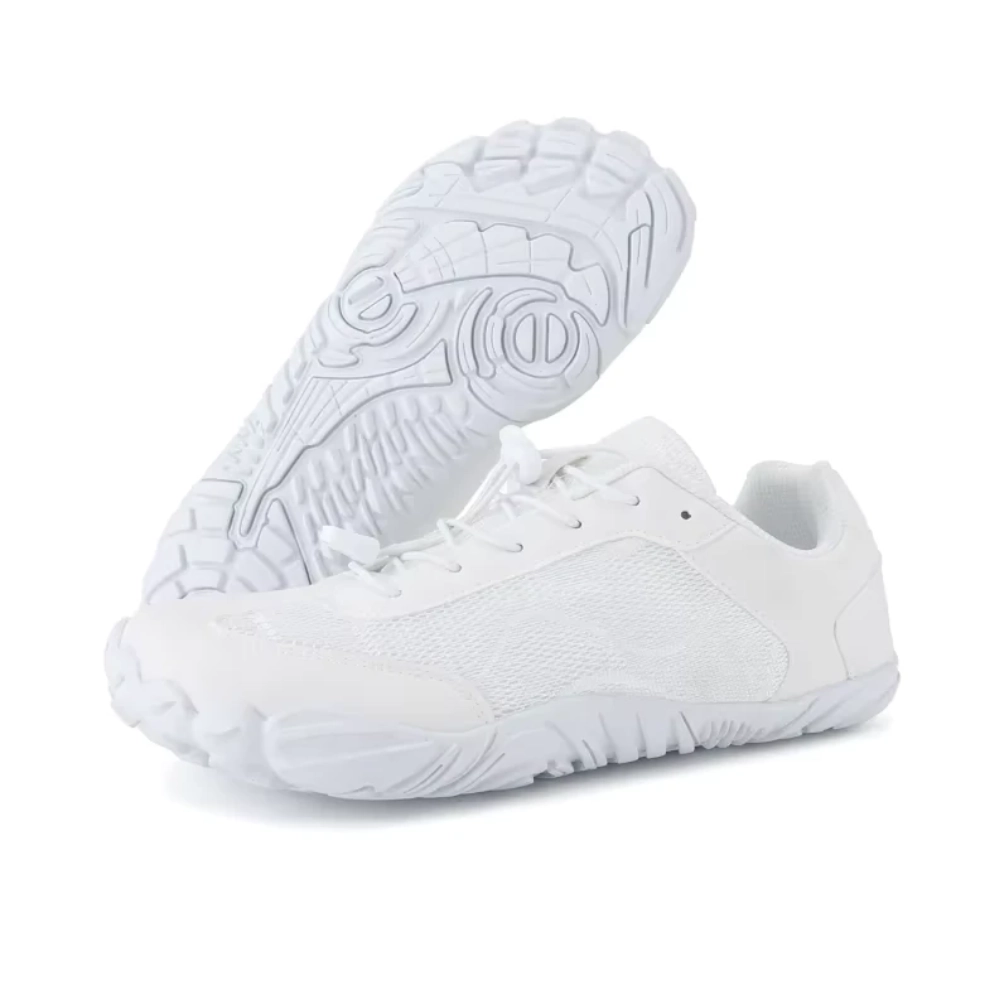
The HYKES Nomad brings all three features into one hiking-ready shoe. It fits women who want trail support without a narrow, stiff build.
★★★★★
HYKES Nomad — Zero-Drop Barefoot Shoes
WIDE TOE BOX · ZERO-DROP · TRAIL-READY
The HYKES Nomad is a flexible, foot-shaped hiking shoe with a wide toe box that lets your toes splay and grip naturally over uneven terrain. Its thin, zero-drop sole keeps your foot close to the ground for real trail feedback and a balanced, connected stride, whether you're covering rocky paths or logging easy miles.
- Wide toe box for natural toe spread
- Zero-drop sole for balanced alignment
- Thin, flexible sole for ground feel
- Foot-shaped design that moves with you
- Breathable material for all-day wear
- Goes anywhere — trail, work, or errands
WHERE BAREFOOT SHOES CAME FROM
A Short History of Barefoot Footwear
Humans walked without shoes for most of history. Early footwear stayed thin and flexible. Moccasins, sandals, and wrapped hides protected the sole without changing foot shape. These designs let feet flex and toes spread.
Modern shoes changed that pattern. Cushioned soles and narrow toe boxes became standard in the 20th century. Raised heels became common too. Researchers began studying foot function in bare feet during the 1990s and 2000s. Their findings pushed brands to build shoes that copy a bare foot's shape instead of reshaping it. That research created the barefoot shoe category women see today.
Early barefoot models focused mainly on running. Hiking-specific versions came later, once brands added trail-ready soles without losing the wide, flexible fit that defines the category. Today, women can choose barefoot shoes built for trails, work, and daily errands, all built on the same core idea: let the foot move the way it was built to move.
Sensation
A thin sole lets you feel the ground and adjust footing fast.
Toe Spread
A wide box lets toes splay and grip like they do barefoot.
Alignment
A zero-drop sole keeps hips and knees stacked over the foot.
Strength
Daily wear can help build strength in foot and lower-leg muscles over time.
Breathability
Open, lightweight materials keep feet cool during long wear.
Versatility
One pair can move from trail to errands to daily commutes.
"I switched to barefoot hiking shoes for a trip through rocky terrain, and my feet felt steadier by day two. The wide toe box made the biggest difference."
— Grace L.
KEY FEATURES AND SPECS
What to Check Before You Buy
Barefoot shoes vary by brand and model. Check these specs before you buy:
- Toe box width — Measure across the widest part of the shoe. A wide toe box lets all five toes sit flat.
- Sole drop — Zero-drop means the heel and forefoot sit at the same height.
- Sole thickness — Thinner soles give more ground feel. Thicker soles add light cushioning while staying flexible.
- Flex — Bend the shoe in your hands. A barefoot shoe should fold and twist with little resistance.
- Weight — Lightweight materials reduce fatigue on long hikes or long shifts on your feet.
- Closure type — Laces, straps, or slip-on styles all work. Pick the closure that holds your foot snug without pinching.
Our Top Pick
Built for the Trail, Ready for Anything
Long trail days demand a shoe that handles rocks, roots, and mud without losing flexibility. The HYKES Nomad covers that need.
★★★★★
HYKES Nomad — Zero-Drop Barefoot Shoes
WIDE TOE BOX · ZERO-DROP · TRAIL-READY
The HYKES Nomad is a flexible, foot-shaped hiking shoe with a wide toe box that lets your toes splay and grip naturally over uneven terrain. Its thin, zero-drop sole keeps your foot close to the ground for real trail feedback and a balanced, connected stride, whether you're covering rocky paths or logging easy miles.
- Wide toe box for natural toe spread
- Zero-drop sole for balanced alignment
- Thin, flexible sole for ground feel
- Foot-shaped design that moves with you
- Breathable material for all-day wear
- Goes anywhere — trail, work, or errands
COMPARING YOUR OPTIONS
Barefoot Shoes vs. Other Footwear Styles
Women weighing a switch to barefoot shoes often compare them against three other common styles. The table below lines up the key differences.
|
Feature |
Barefoot Shoe |
Traditional Hiking Boot |
Cushioned Running Shoe |
Minimalist Sandal |
|---|---|---|---|---|
|
Toe box |
Wide, foot-shaped |
Narrow, tapered |
Narrow to moderate |
Wide, open |
|
Sole drop |
Zero-drop |
8–12mm raised heel |
8–12mm raised heel |
Zero-drop |
|
Sole thickness |
Thin, flexible |
Thick, rigid |
Thick, cushioned |
Very thin |
|
Ground feel |
High |
Low |
Low |
High |
|
Ankle/foot protection |
Moderate |
High |
Moderate |
Low |
|
Best use |
Trail, work, daily wear |
Heavy backpacking |
Road running |
Warm-weather casual wear |
Traditional hiking boots protect the foot but restrict natural movement. Cushioned running shoes absorb shock but hide ground feedback. Sandals give toe freedom but skip trail protection. A barefoot hiking shoe like the HYKES Nomad sits between these styles. It keeps the wide toe box and ground feel while adding enough structure for trail use. This balance matters most on mixed terrain, where a rigid boot slows your stride and an open sandal leaves your foot exposed.
CARE AND UPKEEP
How to Maintain Barefoot Shoes
Barefoot shoes need regular care to last through trail and daily use. Follow these steps:
- Remove dirt and debris after each hike. Tap soles together and brush off mud.
- Air dry shoes away from direct heat. Heat can warp thin soles and glued seams.
- Hand wash uppers with mild soap and a soft brush. Skip harsh detergents.
- Remove insoles between wears to let moisture escape and reduce odor.
- Check the sole monthly for wear spots, especially at the ball of the foot.
- Store shoes in a cool, dry spot, away from direct sunlight.
CHOOSING YOUR PAIR
Steps to Pick the Right Fit
Use this short process to choose your barefoot shoes:
- Measure both feet at the end of the day, when feet sit at their largest.
- Check the toe box width against your foot's widest point, not just its length.
- Confirm zero-drop construction on the product page or spec sheet.
- Match the sole to your use — thinner for ground feel, slightly thicker for rocky trails.
- Read the sizing chart for that specific model, since barefoot sizing often runs differently than standard shoes.
- Break the shoes in gradually over one to two weeks before a long hike.
Our Top Pick
Ready for Your Next Hike
Once you know your size and fit, a trail-ready barefoot shoe rounds out the choice. The HYKES Nomad fits that final step.
★★★★★
HYKES Nomad — Zero-Drop Barefoot Shoes
WIDE TOE BOX · ZERO-DROP · TRAIL-READY
The HYKES Nomad is a flexible, foot-shaped hiking shoe with a wide toe box that lets your toes splay and grip naturally over uneven terrain. Its thin, zero-drop sole keeps your foot close to the ground for real trail feedback and a balanced, connected stride, whether you're covering rocky paths or logging easy miles.
- Wide toe box for natural toe spread
- Zero-drop sole for balanced alignment
- Thin, flexible sole for ground feel
- Foot-shaped design that moves with you
- Breathable material for all-day wear
- Goes anywhere — trail, work, or errands
FAQ
Yes. A wide toe box gives extra room for toes to spread, which helps feet that need more width than standard shoes offer.
Most feet adjust within one to two weeks. Start with short walks and add distance gradually.
Yes. Trail-ready models like the HYKES Nomad handle rocky paths and also work for errands or commutes.
Measure your foot length and width, then check the specific brand's size chart, since barefoot sizing can run differently than standard shoe sizing.
They support natural foot movement rather than restricting it. Choose a model with a slightly thicker, textured sole for extra trail grip on long routes.
Lifespan depends on use and terrain, but regular cleaning, proper drying, and rotating pairs extend the life of most models.
Final Verdict
Barefoot shoes give women a footwear option built around the foot's real shape. A wide toe box, zero-drop sole, and thin flexible base work together to support natural movement, whether on a trail or during a full day of standing.
The HYKES Nomad brings these features into one hiking-ready shoe. It fits women who want trail support, daily comfort, and room for their toes to move.
Before you buy, measure your feet, check the toe box width, and confirm the sole is zero-drop. These three checks apply to any barefoot shoe, not just the Nomad, and they give you a reliable way to compare models across brands.
Your feet were built to move freely — give them shoes that let them. 🦶