
Best Barefoot Shoes Under $100

"A hiker stands at a trailhead. Her old shoes squeeze her toes and lift her heel. She switches to a barefoot shoe. Her foot spreads flat. Her stride feels light. She walks the trail again, and this time her feet feel free."
Barefoot shoes cost less than most people expect. You do not need a $200 pair to get a wide toe box and a zero-drop sole. Several brands build solid barefoot shoes for under $100, with the same core specs as premium models.
A wide toe box lets your toes spread and grip the ground. A thin, flexible sole lets you feel the terrain under your feet. Most budget barefoot shoes deliver both. A few cut corners on sole material or stitching to hit a lower price, so the spec sheet matters more than the price tag.
Room to Spread
TOES MOVE FREELY
Thin, Ground-Level
TRUE ZERO-DROP SOLE
Bends With Your Foot
FOLDS IN HALF EASILY
A narrow toe box forces your toes into a point. A stiff sole blocks ground feel. Both defeat the purpose of a barefoot shoe, even at a low price.
Our Top Pick
A Budget Pick That Delivers
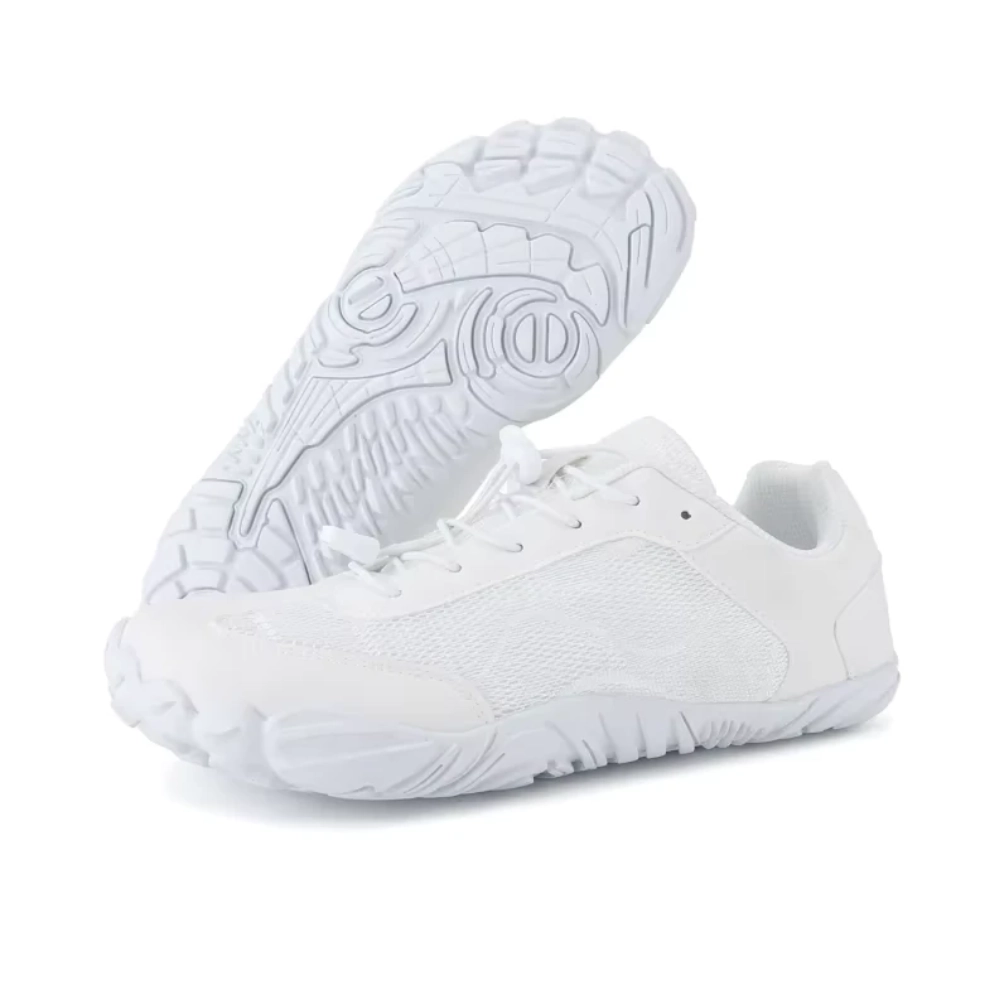
The HYKES Nomad gives you a wide toe box and a zero-drop sole for less than $100. It handles trails, city streets, and daily errands without a break-in period.
★★★★★
HYKES Nomad — Zero-Drop Barefoot Shoes
WIDE TOE BOX · ZERO-DROP · TRAIL-READY
The HYKES Nomad is a flexible, foot-shaped hiking shoe with a wide toe box that lets your toes splay and grip naturally over uneven terrain. Its thin, zero-drop sole keeps your foot close to the ground for real trail feedback and a balanced, connected stride, whether you're covering rocky paths or logging easy miles.
- Wide toe box for natural toe spread
- Zero-drop sole for balanced alignment
- Thin, flexible sole for ground feel
- Foot-shaped design that moves with you
- Breathable material for all-day wear
- Goes anywhere — trail, work, or errands
A SHORT HISTORY
Where Barefoot Shoes Came From
Humans walked barefoot or in thin sandals for most of history. Padded, raised-heel running shoes did not exist until the 1970s. Shoe brands added foam cushioning and a raised heel to reduce impact. Researchers later found that thick cushioning changes how a foot strikes the ground and how the leg absorbs force.
Barefoot shoe brands returned to the older model. They dropped the heel lift. They widened the toe box. They cut the sole down to a thin layer that still protects your foot from sharp objects. This shift built a market that now includes budget options, not just premium ones.
Small running clubs and physical therapists drove early demand for barefoot shoes. Runners wanted a shoe that let their foot land the way it lands when bare. Physical therapists wanted a shoe that did not force a heel-first landing. Larger brands noticed the demand and built barefoot lines at lower price points. That expansion is why you can now find solid barefoot shoes under $100 instead of only in the premium tier.
THE ZERO-DROP STANDARD
What Zero-Drop Actually Means
Zero-drop means the heel and the forefoot sit at the same height off the ground. A standard running shoe raises the heel 8 to 12 millimeters above the toe. That lift shortens your calf muscles over time and pushes your weight forward onto your toes.
A zero-drop sole keeps your foot level. Your ankle, knee, and hip line up the way they do when you stand barefoot. Most barefoot shoes under $100 hit true zero-drop. Check the spec sheet before you buy, since some "minimalist" shoes still carry a small heel lift.
Sole thickness matters as much as drop angle. A shoe can sit at zero-drop and still carry ten millimeters of foam under the whole foot. That foam blocks ground feel even without a heel lift. Look for a stated sole thickness under eight millimeters if ground feel is your main goal.
Toe Freedom
Your toes spread and grip instead of squeezing into a narrow point.
Better Balance
A zero-drop sole lines up your ankle, knee, and hip.
Ground Feel
A thin sole lets you sense rocks, roots, and texture underfoot.
Stronger Feet
Your foot muscles work harder without a stiff, padded shoe to do the work for you.
Breathable Build
Lightweight mesh uppers keep your feet cool on long walks.
Real Value
You get the core barefoot specs without the premium price.
"I switched to a barefoot shoe under $100 and my feet stopped cramping on long walks. I did not expect that at this price."
— Daniel R.
WHAT TO CHECK
Key Features To Look For
Six features separate a real barefoot shoe from a shoe that borrows the label. Check each one before you buy:
- Toe box shape: Look for a foot-shaped outline, not a tapered point.
- Sole thickness: Aim for 4 to 8 millimeters. Thinner soles give more ground feel.
- Flexibility test: Fold the shoe in half. It should bend easily at the ball of the foot.
- Upper material: Mesh or knit uppers breathe better than solid leather or synthetic panels.
- Closure type: Laces give you a more precise fit than slip-on styles.
- Traction pattern: Check the outsole tread if you plan to hike or walk on wet surfaces.
Miss two or more of these, and the shoe will feel closer to a running shoe than a barefoot shoe, no matter how it's marketed.
WHO THESE SHOES SUIT
Who Benefits Most From A Budget Pair
Four groups get the most value from a first budget pair:
- New walkers or hikers: A budget pair lets you test the barefoot style before you commit to a premium shoe.
- Everyday commuters: A wide toe box and light build suit long days on your feet at work or in the city.
- Casual trail users: A trail-ready sole handles light hiking without the price of a technical hiking boot.
- Anyone switching from narrow shoes: A wider toe box gives your feet room to spread out after years in a tapered shoe.
Start with one budget pair and wear it a few hours at a time. That approach lets your feet adjust before you rely on the shoe for a full workday or a long hike.
Our Top Pick
The Same Shoe, A Better Fit For Your Budget
The checklist above rules out most shoes at this price point. The HYKES Nomad passes every item on it, and it still costs less than $100.
★★★★★
HYKES Nomad — Zero-Drop Barefoot Shoes
WIDE TOE BOX · ZERO-DROP · TRAIL-READY
The HYKES Nomad is a flexible, foot-shaped hiking shoe with a wide toe box that lets your toes splay and grip naturally over uneven terrain. Its thin, zero-drop sole keeps your foot close to the ground for real trail feedback and a balanced, connected stride, whether you're covering rocky paths or logging easy miles.
- Wide toe box for natural toe spread
- Zero-drop sole for balanced alignment
- Thin, flexible sole for ground feel
- Foot-shaped design that moves with you
- Breathable material for all-day wear
- Goes anywhere — trail, work, or errands
SIDE BY SIDE
Comparing Budget Barefoot Shoes
Prices and specs shift often, so check current listings before you buy. This table shows the general spec range you should expect under $100.
|
Feature |
Budget Trail Shoe |
Budget Everyday Shoe |
HYKES Nomad |
|---|---|---|---|
|
Price Range |
$70–$95 |
$60–$90 |
Under $100 |
|
Toe Box |
Moderate to wide |
Moderate |
Wide |
|
Sole Drop |
Zero to 2mm |
Zero to 4mm |
Zero |
|
Sole Thickness |
6–10mm |
4–8mm |
Thin, flexible |
|
Best Use |
Trails, hiking |
Daily wear |
Trail, work, errands |
|
Break-In Time |
1–2 weeks |
Minimal |
Minimal |
A shoe built for daily wear will not always hold up on rocky trails. A shoe built for trail use may feel stiff on pavement. Match the shoe to where you plan to wear it most.
CARE AND UPKEEP
Maintenance Steps That Extend Shoe Life
A mesh upper and a thin sole need different care than a padded running shoe. Follow these steps to keep a barefoot shoe in good shape:
- Remove dirt and debris after each wear with a soft brush.
- Hand wash mesh uppers with mild soap and cool water.
- Air dry your shoes away from direct heat or sunlight.
- Rotate between two pairs if you wear barefoot shoes daily.
- Check the outsole tread monthly for wear spots.
- Replace insoles once they lose shape, usually every six months.
Direct heat warps the sole and breaks down the glue bond. Skip the dryer and the radiator.
Our Top Pick
Ready To Make The Switch?
A wide toe box, a zero-drop sole, and honest care habits keep a budget shoe performing for years. The HYKES Nomad meets every spec on the list, at a price that fits most budgets.
★★★★★
HYKES Nomad — Zero-Drop Barefoot Shoes
WIDE TOE BOX · ZERO-DROP · TRAIL-READY
The HYKES Nomad is a flexible, foot-shaped hiking shoe with a wide toe box that lets your toes splay and grip naturally over uneven terrain. Its thin, zero-drop sole keeps your foot close to the ground for real trail feedback and a balanced, connected stride, whether you're covering rocky paths or logging easy miles.
- Wide toe box for natural toe spread
- Zero-drop sole for balanced alignment
- Thin, flexible sole for ground feel
- Foot-shaped design that moves with you
- Breathable material for all-day wear
- Goes anywhere — trail, work, or errands
FAQ
Yes. Toe box width comes from the pattern the brand cuts, not the price of materials.
Some do. Check the outsole material and stitching quality, since these wear points matter more than the upper fabric.
Most people need two to four weeks to build calf and foot strength. Start with short walks and add distance gradually.
Yes, if the outsole has real tread and the upper resists water and debris. Check the traction pattern before you commit to a long trail.
Sizing varies by brand. Check the brand's size chart and read fit notes, since a wide toe box can change how a size feels compared to a standard shoe.
A thin sole still protects against sharp rocks and debris. It will not feel like a thick hiking boot, but it will not leave your foot exposed either.
Final Verdict
You do not need to spend $200 to get a real barefoot shoe. Check the toe box width, the sole drop, and the flexibility before you buy. That checklist rules out shoes that only claim to be barefoot-friendly.
The HYKES Nomad checks every box on this list for less than $100. It works on trails, at work, and around town, and it needs no break-in period to feel right.
Your feet were built to move free. A budget should never stand in the way. 🦶