
Barefoot Shoes vs Hiking Boots

"Two trail philosophies compete for your feet. One rebuilds your natural stride from the ground up. The other locks your foot in place and shields it from every rock and root. This guide breaks down the difference so you can pick the right shoe for your next hike."
Hikers face a real choice today. Barefoot shoes and hiking boots solve the trail problem in opposite ways. One shoe copies your foot's natural shape. The other builds a wall between your foot and the ground.
This guide compares both shoe types in full. It covers history, technical specs, user benefits, maintenance, and a step-by-step guide to choosing between them.
Zero-Drop Platform
NATURAL FOOT ALIGNMENT
Wide Toe Box
ROOM TO SPREAD AND GRIP
Ground-Level Feedback
FEEL EVERY STEP CLEARLY
Your foot shape and your trail plans decide which shoe fits your needs. The sections below walk through each factor in detail.
Our Top Pick
Ready to Feel the Trail Beneath You?
If you want a shoe that lets your foot move naturally on the trail, start here. The HYKES Nomad gives you a wide toe box and a thin, flexible sole for real ground contact.
★★★★★
HYKES Nomad — Zero-Drop Barefoot Shoes
WIDE TOE BOX · ZERO-DROP · TRAIL-READY
The HYKES Nomad is a flexible, foot-shaped hiking shoe with a wide toe box that lets your toes splay and grip naturally over uneven terrain. Its thin, zero-drop sole keeps your foot close to the ground for real trail feedback and a balanced, connected stride, whether you're covering rocky paths or logging easy miles.
- Wide toe box for natural toe spread
- Zero-drop sole for balanced alignment
- Thin, flexible sole for ground feel
- Foot-shaped design that moves with you
- Breathable material for all-day wear
- Goes anywhere — trail, work, or errands
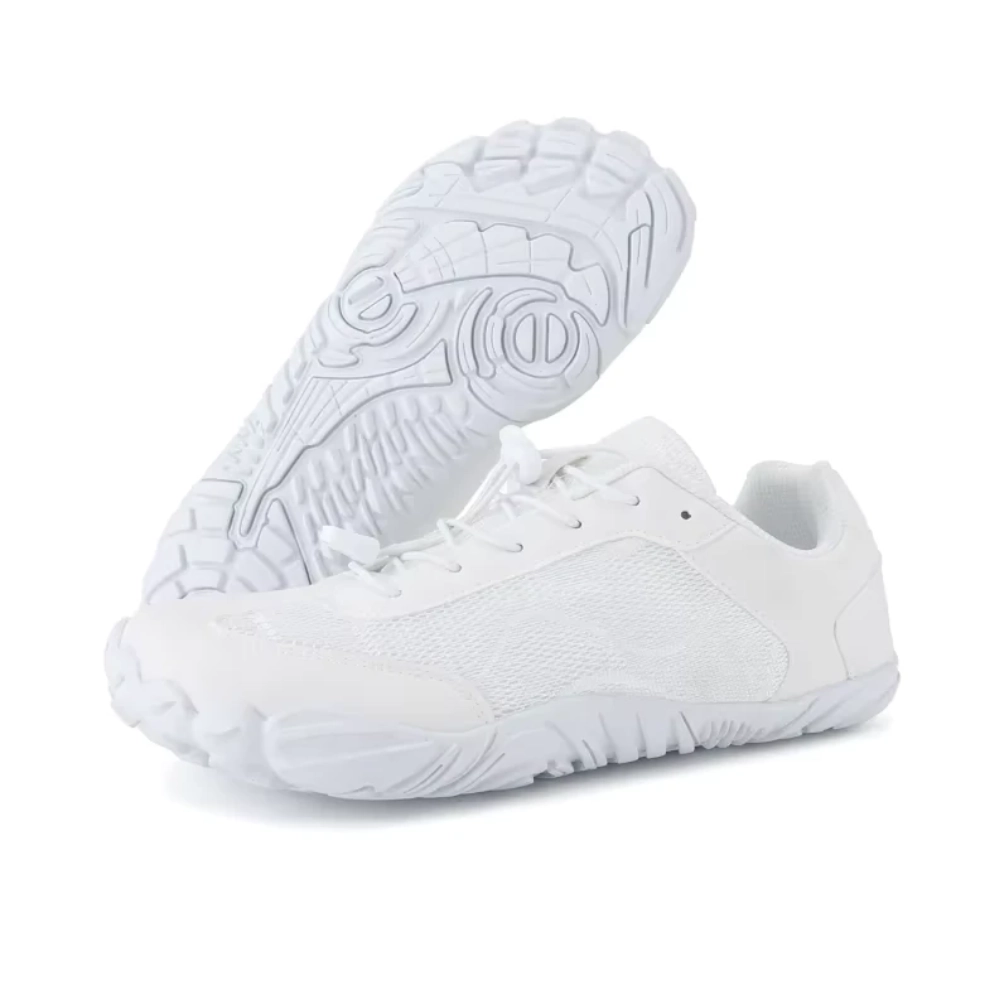
WIDE TOE BOX DESIGN
What Is a Barefoot Shoe?
Barefoot shoes copy the shape of a natural human foot. They use a wide toe box. Your toes spread and grip inside the shoe. The sole stays thin, so you feel the ground through it.
Barefoot shoes carry a zero-drop design. The heel and forefoot sit at the same height. Your foot stays level with the ground. This differs from most standard footwear, which raises the heel above the toes. Brands like HYKES build barefoot shoes for trail and daily use.
BUILT FOR TRAIL PROTECTION
What Is a Hiking Boot?
Hiking boots protect your foot from impact and rough terrain. They use a thick, stiff sole. A raised heel absorbs shock on each step. A rigid shank supports your arch on uneven ground.
Hiking boots rise above the ankle in most designs. This ankle collar limits your foot's range of motion. It also blocks debris and water from entering the boot. Many models add a waterproof liner and a lug outsole for grip.
Toe Freedom
Your toes spread and grip inside a wide barefoot toe box.
Balance
Zero-drop soles keep your foot level for natural balance.
Ground Feel
Thin soles send trail feedback straight to your brain.
Ankle Lock
High-cut boots limit ankle roll on loose rock.
Dry Feet
Waterproof boot liners keep water out on wet trails.
Deep Grip
Lug outsoles bite into mud, snow, and loose dirt.
"I switched to barefoot shoes for weekend trail walks and felt the difference in one week. My feet grip the ground now instead of sliding around inside a stiff boot."
— Jason K.
FROM SANDALS TO LUG SOLES
A Short History of Trail Footwear
Humans walked without built-up footwear for most of history. Early foot coverings were thin animal hide or woven plant fiber. They protected the sole without changing foot shape.
Boot design changed during the 19th and 20th centuries. Military and mountaineering use drove thicker soles and stiffer builds. Companies added leather uppers, metal eyelets, and rubber lug soles. The modern hiking boot took shape by the mid-1900s.
Cushioned athletic shoes grew popular during the 1970s running boom. Brands raised the heel and added foam padding. This shift moved footwear further from the natural foot shape. The barefoot movement started in the early 2000s. Researchers and runners questioned the health effects of raised heels and narrow toe boxes. Studies linked natural foot movement to stronger foot muscles. Barefoot and minimalist shoe brands grew from this shift, including HYKES.
Our Top Pick
From Ancient Sandals to Modern Comfort
Foot-shaped footwear is not new. It is a return to how feet moved for most of human history. See how the HYKES Nomad brings that natural design into a modern trail shoe.
★★★★★
HYKES Nomad — Zero-Drop Barefoot Shoes
WIDE TOE BOX · ZERO-DROP · TRAIL-READY
The HYKES Nomad is a flexible, foot-shaped hiking shoe with a wide toe box that lets your toes splay and grip naturally over uneven terrain. Its thin, zero-drop sole keeps your foot close to the ground for real trail feedback and a balanced, connected stride, whether you're covering rocky paths or logging easy miles.
- Wide toe box for natural toe spread
- Zero-drop sole for balanced alignment
- Thin, flexible sole for ground feel
- Foot-shaped design that moves with you
- Breathable material for all-day wear
- Goes anywhere — trail, work, or errands
ZERO-DROP VS RAISED HEEL
Specs Side by Side
The two shoe types differ across several measurable features. This table lays out the core specs.
|
Feature |
Barefoot Shoes |
Hiking Boots |
|---|---|---|
|
Heel-to-toe drop |
0mm (zero-drop) |
8–15mm |
|
Toe box width |
Wide, foot-shaped |
Narrow, tapered |
|
Sole thickness |
Thin (3–8mm) |
Thin (3–8mm) |
|
Sole flexibility |
High |
Low to moderate |
|
Ankle support |
Low-cut, no collar |
Mid or high-cut collar |
|
Weight |
Light (6–10 oz) |
Heavy (1–3 lbs per pair) |
The two shoe types differ across several measurable features. This table lays out the core specs.
CARE FOR EVERY SOLE TYPE
Keeping Your Shoes Trail-Ready
Each shoe type needs different care to last.
Barefoot shoe maintenance:
- Rinse mesh and knit uppers with cool water after muddy hikes.
- Air dry your shoes away from direct heat.
- Check the sole for wear at the ball of the foot every few months.
- Wash removable insoles by hand and let them dry fully before use.
Hiking boot maintenance:
- Clean dirt and debris off the upper and sole after each hike.
- Reapply waterproof treatment every few months, or as the label directs.
- Loosen laces and remove insoles to dry the boot fully between wears.
- Check the sole and shank for cracks once a season.
- Condition leather uppers to prevent stiffness and cracking.
MATCH SHOE TO TRAIL
Choosing the Right Shoe for Your Hike
Follow these steps to pick the right shoe for your trail plans.
- Identify your terrain. Choose a boot for rocky or technical trails. Choose a barefoot shoe for packed dirt, gravel, or mixed-use paths.
- Check your pack weight. A heavy pack calls for the support of a stiff-soled boot. A light day pack works well with a barefoot shoe.
- Assess your foot strength. New to barefoot shoes? Start with short walks before longer hikes.
- Consider the weather. Wet or snowy conditions favor a waterproof boot. Dry, warm trails suit a breathable barefoot shoe like the HYKES Nomad.
- Try both styles. Walk in each shoe type before you commit to one for a long trip.
- Rotate by season. Many hikers keep both a barefoot shoe and a boot in rotation, based on trail and weather each week.
Our Top Pick
Found Your Perfect Fit?
If your trail plans call for a light, flexible shoe, the choice is clear. The HYKES Nomad gives your foot room to move on packed trails and everyday walks alike.
★★★★★
HYKES Nomad — Zero-Drop Barefoot Shoes
WIDE TOE BOX · ZERO-DROP · TRAIL-READY
The HYKES Nomad is a flexible, foot-shaped hiking shoe with a wide toe box that lets your toes splay and grip naturally over uneven terrain. Its thin, zero-drop sole keeps your foot close to the ground for real trail feedback and a balanced, connected stride, whether you're covering rocky paths or logging easy miles.
- Wide toe box for natural toe spread
- Zero-drop sole for balanced alignment
- Thin, flexible sole for ground feel
- Foot-shaped design that moves with you
- Breathable material for all-day wear
- Goes anywhere — trail, work, or errands
FAQ
Yes. Barefoot shoes work well on packed dirt, gravel, and mixed trails. Rocky or technical terrain may call for more protection.
Some hikers feel new muscle soreness during the first weeks. This fades as foot muscles adapt to the wider toe box and thinner sole.
Hiking boots are not bad for your feet. A raised heel and narrow toe box can limit natural foot movement over time, though.
Yes, with the right socks and shoe choice. Check for a shoe built for cold or wet conditions if you hike in winter often.
Most barefoot shoes last 300 to 500 miles of trail use, depending on terrain and care.
Yes. Wear new boots on short walks first. This softens the material and prevents blisters on longer trips.
Final Verdict
Barefoot shoes and hiking boots serve different goals. A barefoot shoe builds foot strength and delivers ground feedback on moderate terrain. A hiking boot protects your foot and supports a heavy pack on rough, technical ground.
Pick the shoe that matches your trail, your pack, and your foot strength. Many hikers keep one of each in their gear closet and choose based on the day ahead.
Your feet were built to move. Choose the shoe that lets them. 🦶