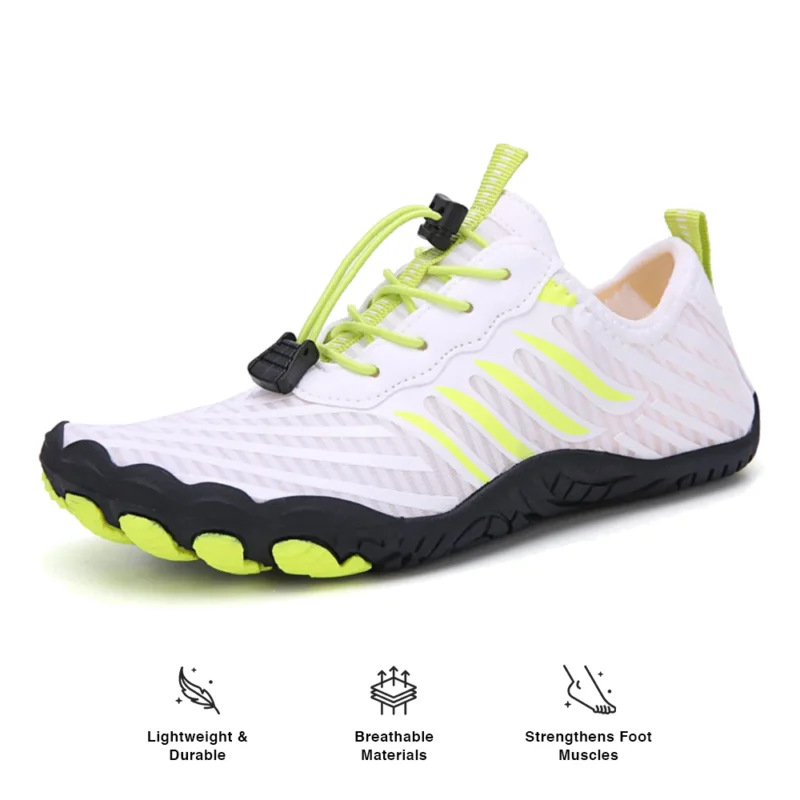
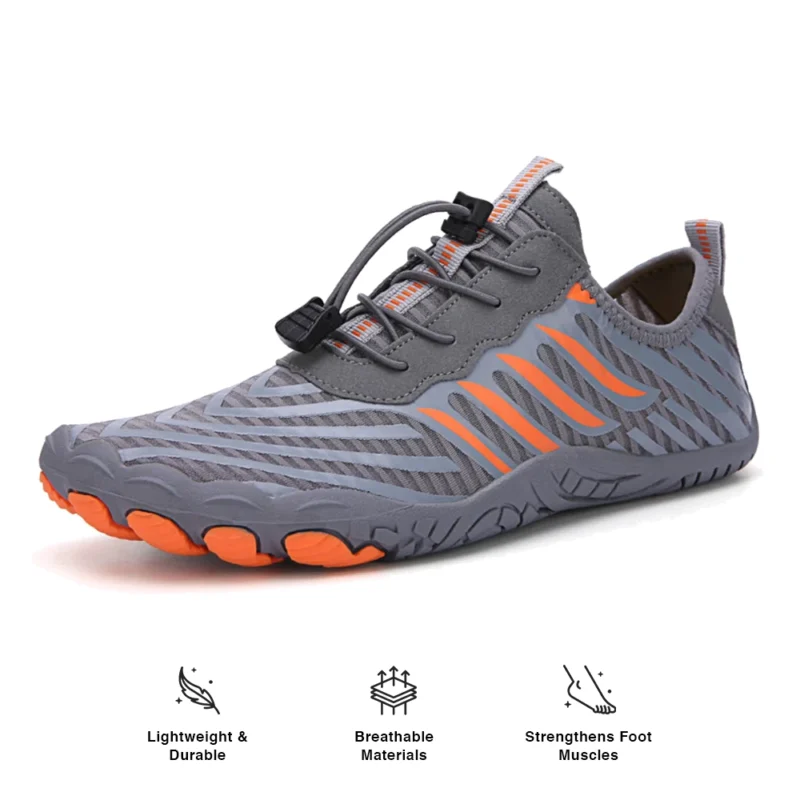
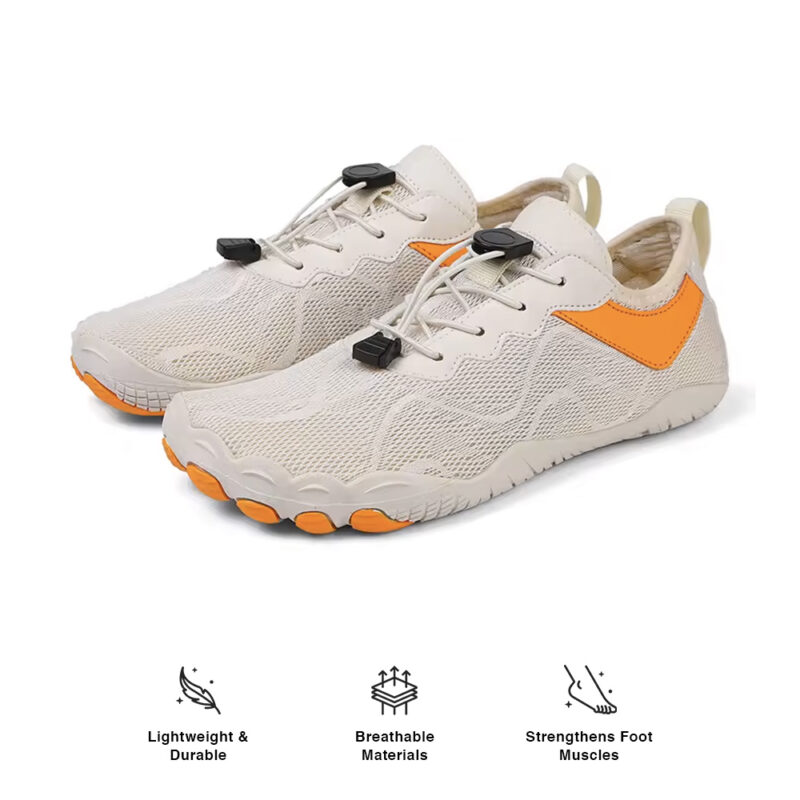
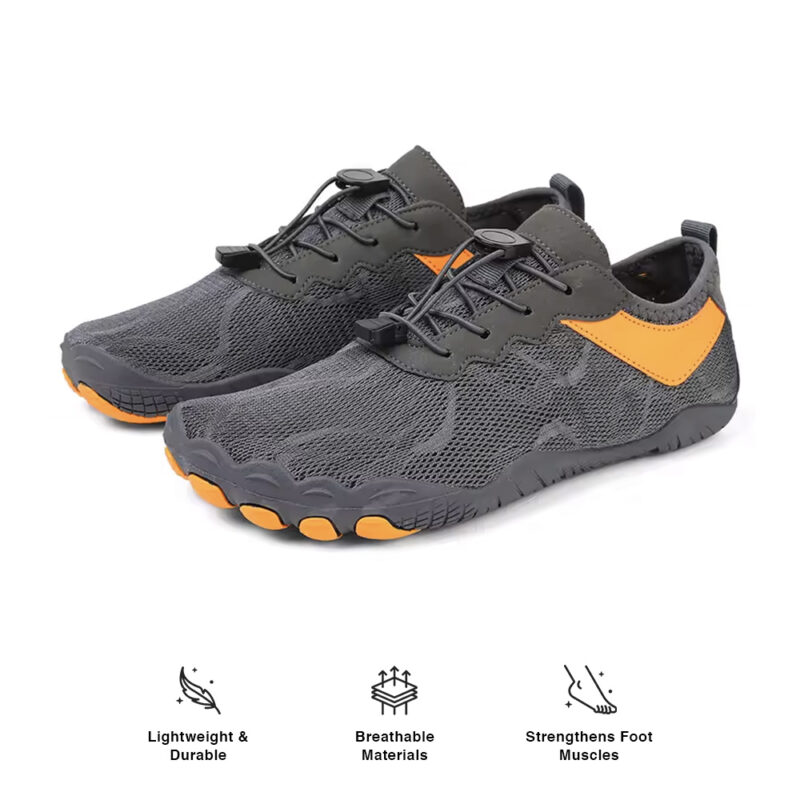
Hykes Barefoot: The Strongest Alternative for Natural Movement
Hykes Barefoot is a dedicated minimalist footwear brand. Every product in its catalog is built around one design philosophy: zero-drop, wide toe box, thin-sole construction. The brand does not make cushioned trail shoes or stability hikers. Its entire lineup is barefoot-first.
Hykes also operates a one-for-one giving model — every pair purchased funds a donated pair of Hykes shoes to a child in need. The brand ships worldwide for free with insured tracking, and all purchases include a 30-day money-back guarantee.
Hykes Element Ultralight
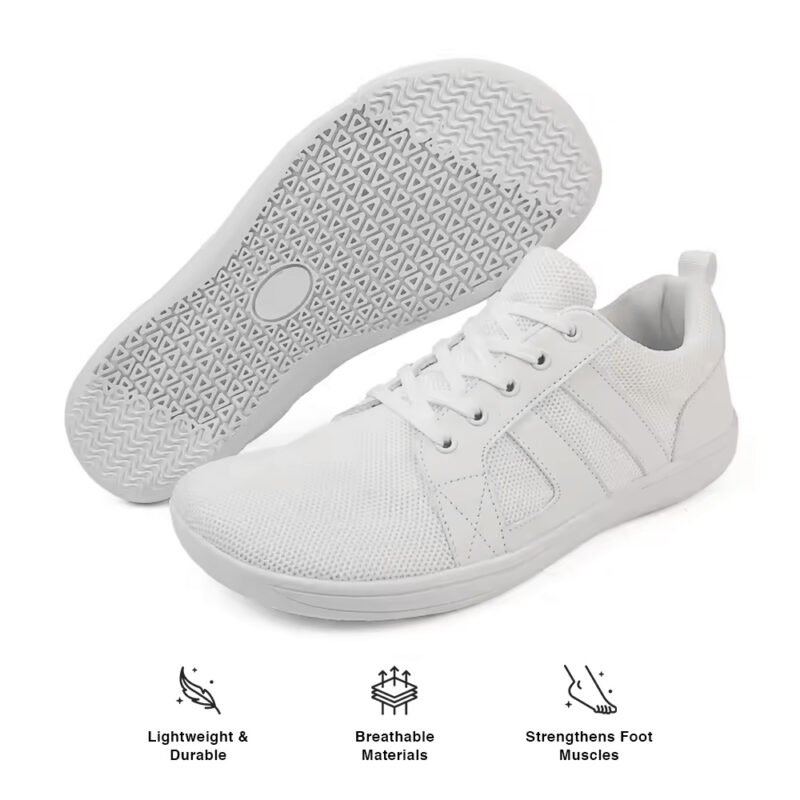
The Element Ultralight uses a 4mm thin sole and a breathable upper built for all-day wear. It packs flat for travel. Users report faster drying after wet conditions and reduced foot soreness on long walks compared to conventional shoes. This model works well for daily errands, light trail use, and travel.
Key specs:
- Sole thickness: 4mm
- Drop: 0mm (zero drop)
- Toe box: wide
- Use: everyday wear, light trails, travel
Hykes Stride
The Stride is built around the same 4mm sole platform with a focus on natural gait mechanics. Its tread pattern grips on pavement, gravel, and wet surfaces. Wearers report improved posture and less leg fatigue during long-distance walking. The Stride suits walkers who want a daily driver with consistent ground feedback.
Key specs:
- Sole thickness: 4mm
- Drop: 0mm
- Grip: multi-surface tread
- Use: walking, daily wear, light trail
Hykes Trailmaster
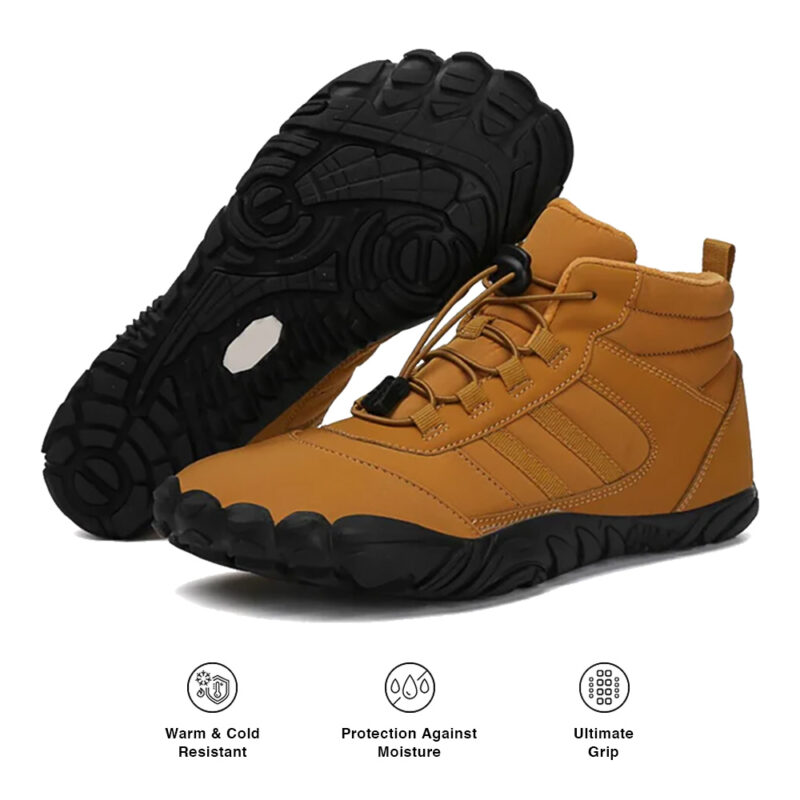
The Trailmaster is Hykes's trail-specific model. It includes a waterproof build and a non-slip outsole for outdoor use. The boot-style construction covers the ankle and protects against winter conditions. It is the closest Hykes model to Merrell's hiking category, with the barefoot construction retained throughout.
Key specs:
- Drop: 0mm
- Build: waterproof, non-slip outsole
- Upper: boot-style ankle coverage
- Use: trail hiking, winter walking, outdoor conditions
Hykes Summit
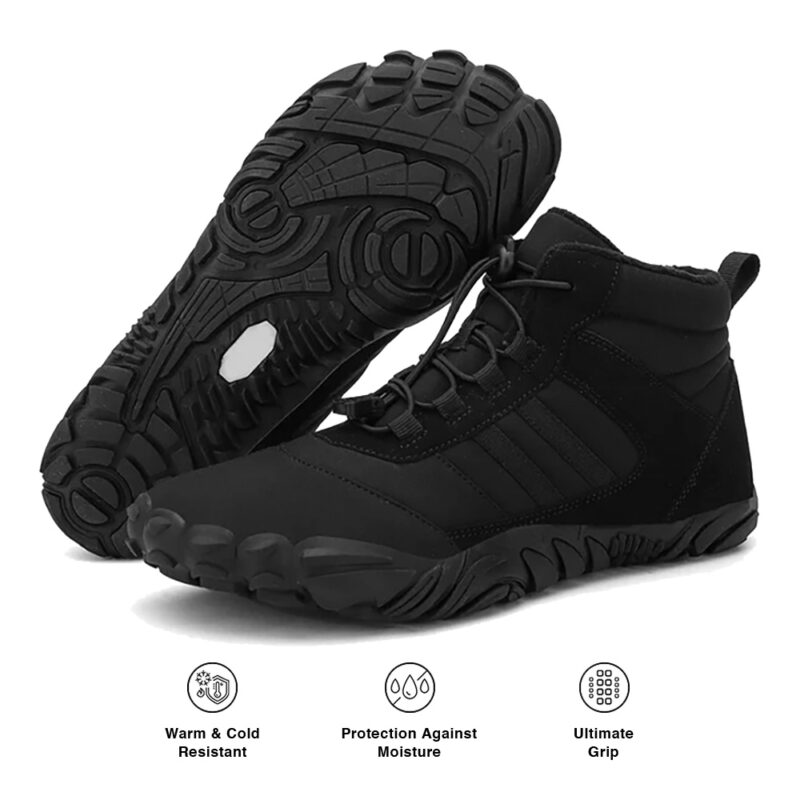
The Summit is a winter-ready barefoot boot. It adds cold-weather insulation to the barefoot platform. The toe box remains wide and the sole stays flat. This model addresses a gap that most minimalist brands leave open: seasonal outdoor use in cold or wet conditions.
Key specs:
- Drop: 0mm
- Construction: insulated, waterproof
- Toe box: wide
- Use: winter hiking, cold-weather daily wear
Hykes Flex
The Flex is the most adaptable model in the Hykes catalog. It moves between indoor sport, gym use, yoga, and light outdoor activity. The sole remains at 4mm. The fit is described as secure without being constrictive. Orthopedic and podiatry specialists have recommended the Hykes line for foot health applications including plantar fasciitis management and neuropathy relief.
Key specs:
- Sole: 4mm, highly flexible
- Drop: 0mm
- Use: gym, yoga, indoor sport, casual daily wear
Merrell vs. Hykes: Side-by-Side Comparison
| Feature | Merrell (Core Catalog) | Merrell Trail Glove 7 | Hykes Barefoot |
|---|
| Heel-to-toe drop | 6mm–12mm | ~0mm | 0mm |
| Stack height | 20mm–27mm | ~16mm | 4mm |
| Toe box | Medium | Medium | Wide |
| Barefoot focus | Subset of catalog | Yes | Entire catalog |
| Waterproof option | Yes (GORE-TEX) | No | Yes (Trailmaster, Summit) |
| Winter/insulated option | Yes | No | Yes (Summit) |
| Unisex sizing | No | No | Yes |
| Price range | $69–$170+ | ~$130 | Not publicly listed; free shipping worldwide |
| Giving model | No | No | Yes (1-for-1 donation) |
| Return policy | Standard | Standard | 30-day money-back |
| Sole flexibility | Moderate | High | Very high |
Maintenance Tips for Trail and Barefoot Shoes
Both Merrell and Hykes shoes last longer with consistent basic care. These tips apply across both brands.
- Remove loose debris after each use. Shake out sand, grit, and trail debris before it works into the sole bond.
- Air dry at room temperature. Avoid direct heat sources like radiators or clothes dryers. Heat degrades both adhesive bonds and foam materials.
- Clean uppers with a damp cloth and mild soap. Avoid machine washing for shoes with waterproof membranes — repeated agitation reduces waterproof performance.
- Rotate between pairs when possible. Foam and rubber both recover better with rest time between uses.
- Inspect the sole bond regularly. Thin-soled barefoot shoes can show separation at the toe box first. Catching this early allows for repair.
- Store flat or in their natural shape. Do not stack or compress shoes in storage. Barefoot shoes with thin soles can take a permanent set if stored under pressure.
How to Choose Between Merrell and Hykes: A Step-by-Step Guide
- Identify your drop preference. If you use or want to transition to zero-drop footwear, Hykes is purpose-built for this. Merrell's standard catalog runs 6mm–12mm. The Trail Glove 7 is the exception.
- Assess toe box width. If your toes feel compressed in standard-width shoes, Hykes builds every model with a wide toe box. Merrell offers medium widths across most of its catalog.
- Define your terrain. Merrell leads in technical trail and waterproof GORE-TEX hiking for aggressive terrain. Hykes covers trail, urban, and winter use with barefoot construction. For extreme technical terrain, Merrell has a deeper catalog.
- Consider ground feel as a priority. A 4mm Hykes sole gives substantially more ground feedback than a 20mm+ Merrell midsole. If sensory connection to the ground matters to your training or movement goals, Hykes is the stronger choice.
- Factor in foot health goals. Hykes is recommended by orthopedic and podiatry specialists for conditions including plantar fasciitis and neuropathy. If therapeutic benefit is part of your footwear decision, this is a differentiating factor.
- Check seasonal needs. Both brands offer waterproof and winter options. Hykes retains its zero-drop platform in cold-weather models. Merrell's winter boots typically add more stack height and structure.
- Evaluate purchase risk. Hykes includes a 30-day money-back guarantee and free insured worldwide shipping on all orders. This lowers the barrier for first-time buyers transitioning from conventional footwear.
Both Merrell and Hykes serve active people who want durable, capable footwear. They solve different problems. Merrell prioritizes cushion, trail protection, and versatility across terrain types. Hykes prioritizes natural movement, foot anatomy, and zero-drop construction across every model in its catalog. The right choice depends on which of those priorities you are shopping for.