
Best Barefoot Shoes for High Arches

"A high arch was never the problem — the shoe forcing it flat was. Barefoot shoes let the foot roll, flex, and land the way it was built to, turning a foot shape that's usually fought against into one that finally gets to move freely."
Shoes are usually judged by cushioning, price, or brand, but for a high-arch foot, the real story happens at the sole and the toe box. A high arch rolls the foot outward with every step — a motion called supination — and shifts weight onto the outer edge instead of spreading it evenly. Most people only notice once the ball of the foot or the heel starts to ache after a normal day on their feet.
Barefoot shoes have become a go-to answer for high arches because of two things: a flat, zero-drop sole and a wide, foot-shaped toe box. Instead of stacking foam and rigid arch support onto a foot shape that needs flexibility, barefoot shoes let the foot flex, spread, and adapt to the ground on its own terms.
As footwear demand shifts toward shapes that work with the foot instead of against it, barefoot design meets a high arch's actual need: a platform that lets the foot's own muscles absorb shock instead of outsourcing that job to cushioning.
Zero-Drop Sole System
LEVELS HEEL AND FOREFOOT
Wide, Foot-Shaped Toe Box
LETS TOES SPREAD NATURALLY
Thin, Flexible Sole
RESTORES NATURAL GROUND FEEL
Barefoot footwear's value for high arches comes into focus once you look at its shape, how it behaves in daily wear, and how it stacks up against structured, cushioned alternatives.
This guide breaks down what makes barefoot shoes work for high arches, how they hold up through a full day of wear, and why they're increasingly recommended alongside — or instead of — traditional supportive footwear.
Our Top Pick
Best Overall for High Arches
The HYKES Flex pairs a wide, natural toe box with a zero-drop, flexible sole, giving a high-arch foot the room and ground feel that stiff, structured shoes take away.
★★★★★
HYKES — Origin Zero Drop Barefoot Shoes
WIDE TOE BOX · ZERO-DROP · UNISEX
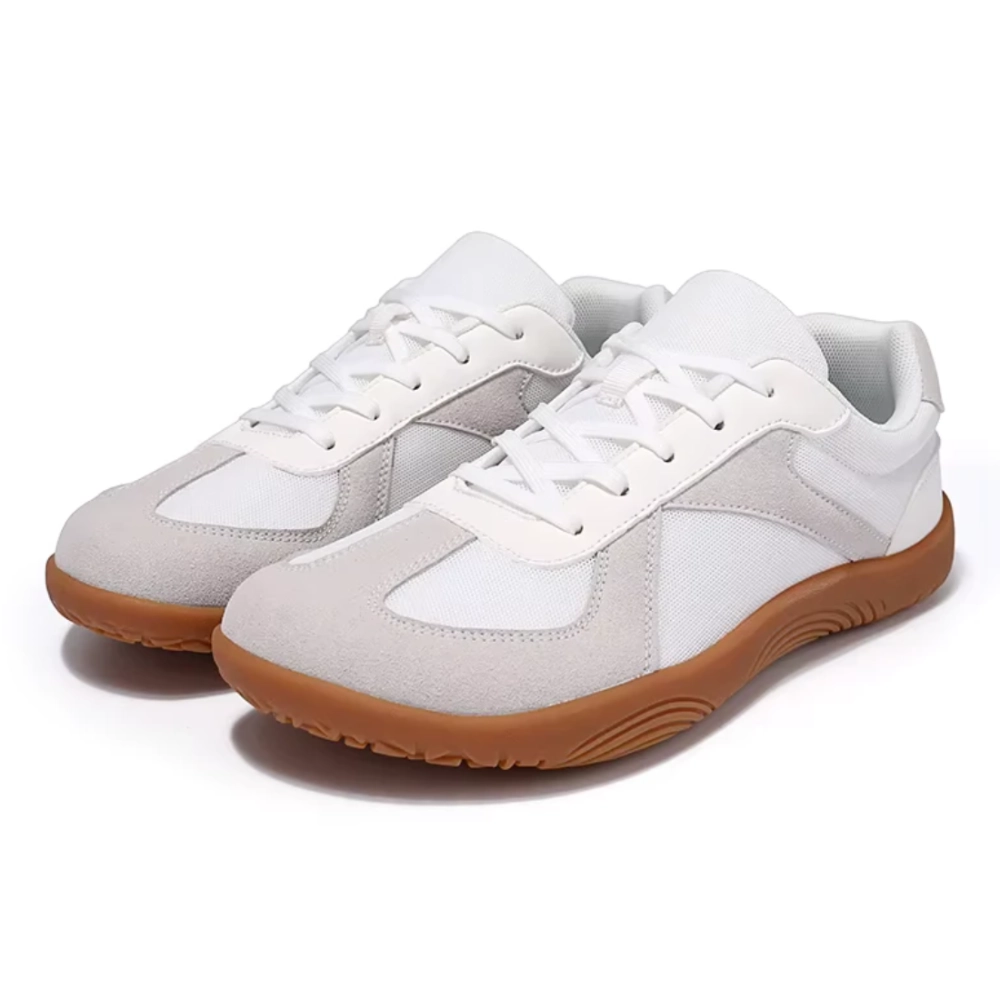
The HYKES Origin is a flexible, foot-shaped shoe built around a wide toe box and a zero-drop sole, so your foot can spread and roll the way it's meant to. An ultra-light 4mm sole keeps you close to the ground for a natural, connected stride, whether you're commuting, working, or out on the trail.
- Wide toe box for natural splay
- Zero-drop, foot-aligned sole
- Ultra-light 4mm sole
- Flexible, foot-shaped design
- Breathable everyday material
- Lightweight and flexible
WHY SHAPE CHANGES EVERYTHING
The Mechanics Behind Barefoot Relief for High Arches
A high arch supinates the foot, rolling weight toward the outer edge and reducing the foot's natural shock absorption. Standard shoes respond by stacking in stiff arch support — support that fights the foot's shape instead of working with it. Barefoot shoes take the opposite approach, using a flat, zero-drop sole so the heel and forefoot sit level and pressure distributes evenly across the whole foot.
The wide toe box matters just as much. A high-arch foot needs a stable base, and splayed toes create that base far better than a tapered, narrow front ever could. When toes spread flat against the ground, they share the load instead of leaving the outer foot to absorb it alone.
The third piece is a thin, flexible sole. Thin soles restore proprioception — the sensory feedback that tells the foot how to adjust to the ground beneath it. Strong proprioception helps a supinated foot react to uneven surfaces and absorb shock through muscle activation instead of relying on foam that was never built for this foot shape in the first place.
Together, these three features don't change the shape of the arch, but they remove the daily mechanical strain that a rigid, cushioned shoe adds on top of it.
HOW BAREFOOT SHOES PERFORM WHERE IT MATTERS MOST
Everyday Comfort and Real-World Wear
Day-to-day comfort isn't measured in a lab — it's measured in how the outer foot feels after hours on your feet. Many high-arch wearers notice less pressure under the ball of the foot and heel within the first couple of weeks of switching to a wide, flexible shoe, well before full adaptation is complete.
Sole flexibility drives most of that improvement. A good barefoot shoe bends easily at the ball of the foot, letting the small stabilizing muscles in the foot engage the way they would unshod. A stiffer sole blocks that movement and leaves the arch working against the shoe instead of with it.
Material choice shows up quickly too. Breathable mesh suits daily wear, while leather or synthetic overlays add durability for work or hiking. Either way, the material should move with the foot rather than hold it in one fixed position.
Closure type rounds out daily comfort. Laces give the most precise, adjustable fit — and a precise fit matters more for a high-arch foot, since a loose shoe lets the foot slide and lose the stability a wide base is meant to provide.
"I spent years buying shoes with 'extra arch support' and my feet never stopped aching by the end of the day. Switching to a wide, flat pair was the first thing that actually let my feet do their own work again."
— Jordan P.
WHAT TO KNOW BEFORE YOU BUY AND HOW TO TRANSITION SAFELY
Buying Factors and a Safe Transition Plan
Choosing the right barefoot shoe starts with measurement, not a size number. Stand on a hard floor barefoot and note how much space sits under your arch, then compare your foot's actual width and length to the shoe's toe box — not just the label inside.
Stack height matters just as much. Look for 4mm to 8mm for daily wear; lower stack height increases ground feel, which is exactly what a high arch benefits from most.
Switching cold from structured, cushioned shoes can strain calf and foot muscles that have been under-used for years, so a gradual transition matters:
- Wear the shoes one to two hours a day at first.
- Add 20 to 30 minutes of wear time each week.
- Stretch the calves daily and roll the arch with a firm ball to ease soreness.
- Walk on varied surfaces — grass, gravel, pavement — to train the foot differently.
- Watch for soreness that lasts more than two days as a signal to slow down.
- Expect full-day comfort somewhere between four and eight weeks in.
Our Top Pick
Best Overall for High Arches
The HYKES Flex pairs a wide, natural toe box with a zero-drop, flexible sole, giving a high-arch foot the room and ground feel that stiff, structured shoes take away.
★★★★★
HYKES — Origin Zero Drop Barefoot Shoes
WIDE TOE BOX · ZERO-DROP · UNISEX
The HYKES Origin is a flexible, foot-shaped shoe built around a wide toe box and a zero-drop sole, so your foot can spread and roll the way it's meant to. An ultra-light 4mm sole keeps you close to the ground for a natural, connected stride, whether you're commuting, working, or out on the trail.
- Wide toe box for natural splay
- Zero-drop, foot-aligned sole
- Ultra-light 4mm sole
- Flexible, foot-shaped design
- Breathable everyday material
- Lightweight and flexible
WHAT TO KNOW BEFORE YOU BUY AND HOW TO TRANSITION SAFELY
Top HYKES Picks
|
Shoe Model |
Best Use |
Key Design Features |
Price |
|---|---|---|---|
|
Daily wear and light training |
Wide toe box, zero drop, flexible sole |
$74.99 |
|
|
Running |
Lightweight build, zero drop, ground-feel sole |
$79.95 |
|
|
Athletic and gym use |
Wide toe box, non-slip flexible sole |
$79.95 |
|
|
Hiking |
Rugged flexible sole, wide toe box for uneven terrain |
$79.95 |
|
|
Casual, all-day wear |
Lightweight, zero drop, wide toe box |
$58.95 |
|
|
Winter and cold-weather wear |
Insulated, waterproof, zero drop, wide toe box |
$76.93 |
Every model here shares the same core barefoot construction — wide toe box, zero drop, flexible sole — built out for a different activity. Runners should look at the HYKES Aero. Anyone standing for long shifts should look at the HYKES Flex or HYKES Vero for all-day comfort. Hikers should choose the HYKES Trek for grip and durability on uneven ground.
BAREFOOT VERSUS STRUCTURED FOOTWEAR
Barefoot vs. Structured Shoes
|
Feature |
Structured/Cushioned Shoes |
Barefoot Shoes |
|---|---|---|
|
Sole Structure |
Raised heel, thick cushioning |
Flat, zero-drop |
|
Toe Box |
Often tapered, narrow |
Wide, foot-shaped |
|
Foot Muscle Engagement |
Low |
High |
|
Break-In Period |
Short |
Moderate to long |
|
Long-Term Arch Stability |
Neutral or reduced |
Improved |
Structured, cushioned shoes rely on built-in arch support and a raised heel to hold a high-arch foot in a fixed position — useful for some injury recovery, but limiting to natural movement over time. Barefoot shoes flip that approach, using a flat sole and wide toe box so the foot's own muscles do the stabilizing, building strength instead of leaning on foam and support built for a different foot shape.
Wide, Foot-Shaped Fit
Gives toes room to spread and build a stable base.
Even Weight Distribution
Zero-drop soles ease pressure off the outer foot.
Thin, Flexible Soles
Restore ground feel so muscles absorb shock naturally.
Stronger Foot Muscles
Regular wear builds the stabilizers a supinated foot relies on.
Better Balance and Posture
Ground feel sharpens the signals that keep a high arch steady.
Lower Joint Strain
Even weight distribution eases pressure on knees and hips.
CARE THAT KEEPS THEM PERFORMING
Maintenance Tips
Barefoot shoes need consistent care to keep supporting a high-arch foot. Clean soles after wet-weather use, since trapped debris wears down flex grooves faster than normal. Air dry shoes fully — direct heat can crack thin soles and shrink synthetic uppers. Rotate two pairs if you wear them daily, letting material recover its shape between wears. Check stitching monthly, since minimalist construction uses less material and puts more stress on seams. Replace insoles yearly, since even thin insoles compress over time and dull ground feel. Store shoes flat rather than folded, since creasing a flexible sole can be permanent, and stick to a soft brush on mesh or knit uppers rather than stiff bristles.
Our Top Pick
Best Overall for High Arches
The HYKES Flex pairs a wide, natural toe box with a zero-drop, flexible sole, giving a high-arch foot the room and ground feel that stiff, structured shoes take away.
★★★★★
HYKES — Origin Zero Drop Barefoot Shoes
WIDE TOE BOX · ZERO-DROP · UNISEX
The HYKES Origin is a flexible, foot-shaped shoe built around a wide toe box and a zero-drop sole, so your foot can spread and roll the way it's meant to. An ultra-light 4mm sole keeps you close to the ground for a natural, connected stride, whether you're commuting, working, or out on the trail.
- Wide toe box for natural splay
- Zero-drop, foot-aligned sole
- Ultra-light 4mm sole
- Flexible, foot-shaped design
- Breathable everyday material
- Lightweight and flexible
FAQ
No. They don't reshape the arch, but they can ease outer-foot pressure and reduce daily strain. Very rigid or painful arches may still need a podiatrist's input.
Yes, in most cases, but the transition should be slower and more gradual than for someone already used to minimal footwear.
Yes. Wearing them evenly on both feet keeps gait balanced; an uneven transition can add new strain to the hips and knees.
Many wearers notice less pressure within one to two weeks, with full muscle adaptation typically taking one to two months.
Not automatically. Some people use both, depending on arch severity and activity — a podiatrist can help decide what mix makes sense.
Choosing a snug, narrow fit out of habit. A high-arch foot needs room to spread, not a tight wrap.
FINAL VERDICT
A high arch responds well to shoes that work with its natural shape instead of fighting it. A wide toe box, a flat zero-drop sole, and a thin, flexible construction work together to remove the daily pressure that builds up under the ball of the foot and heel — not by masking it with cushioning, but by giving the foot room to do the job it was built for.
From a value perspective, barefoot shoes ask more of the wearer during the transition period, but the payoff is a foot that gets stronger instead of more dependent on stiff support. Compared to structured, cushioned shoes, they trade a shorter break-in for meaningfully better long-term stability.
For most high-arch feet, a well-fitted barefoot shoe is one of the more reliable upgrades available — not a trend, but a shift back toward how feet were meant to move.
Pick a pair that matches your foot's width and stack-height needs, transition slowly, and care for the shoes well. These steps protect your feet now and support their health for years ahead.
Built for the curve of your step. Weight that finally lands even. Feet built to last. 🦶