
Best Shoes for Europe Travel

"Europe tests your feet in ways home never does. Cobblestones, train stations, and full days of walking wear shoes down fast. This guide breaks down what a European trip demands from your footwear, so you pick one pair that works for the whole itinerary."
Europe mixes terrain in a single day. You walk cobblestones in the morning, marble floors at a museum by noon, and gravel paths in a park by evening. Your shoe needs to handle all three without a change.
Most travel guides skip this detail. They rank shoes by style, not by how a sole handles a wet cobblestone street or a steep staircase in an old building. The right shoe adapts to surface changes fast, and that adaptability matters more than looks.
City Miles
6–10 MILES A DAY
Wet Stone
GRIP HOLDS ON RAIN
Light Pack
ONE SHOE, FULL TRIP
A shoe built around these three traits carries you through a city day and a train transfer without a shoe change.
Our Top Pick
Start With a Shoe Built for Europe
European trips mix stone streets, train platforms, and museum floors in a single day. A wide toe box and a zero-drop sole give your foot room and a flat, stable base across every surface.
★★★★★
HYKES Nomad — Zero-Drop Barefoot Shoes
WIDE TOE BOX · ZERO-DROP · TRAIL-READY
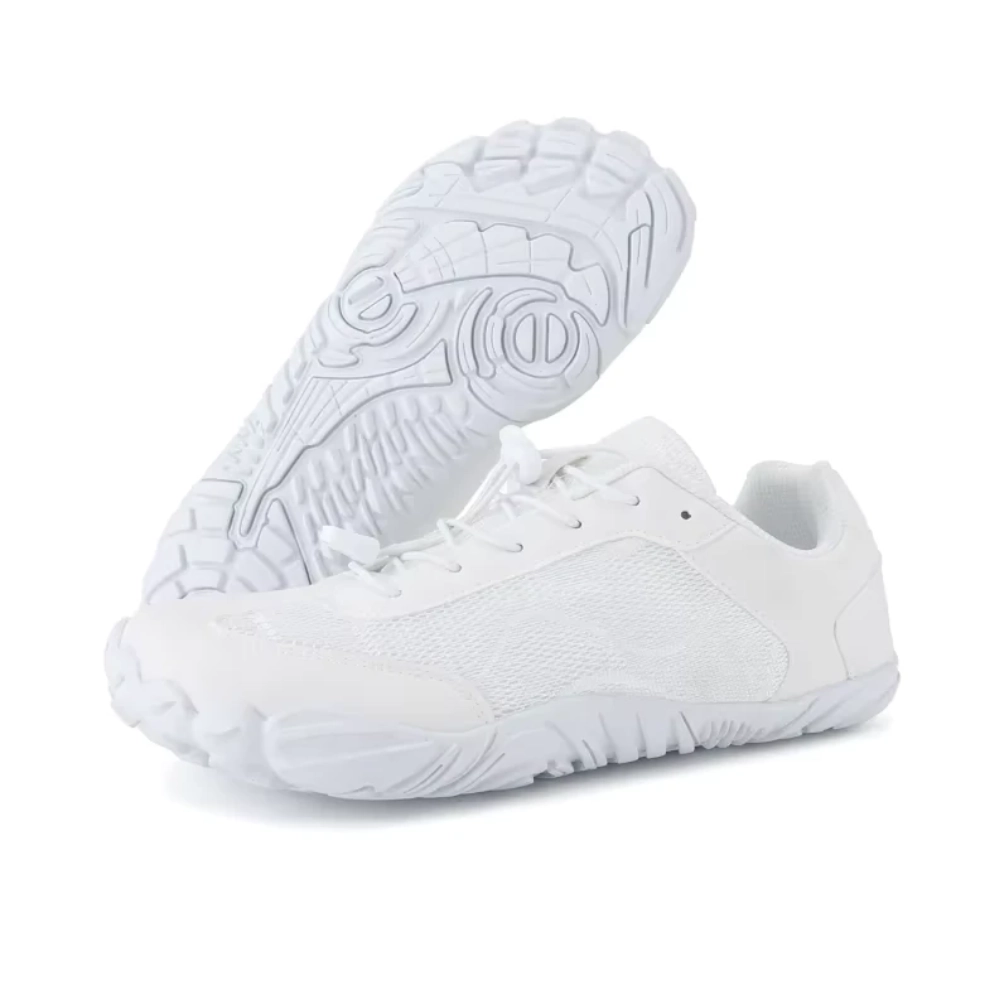
The HYKES Nomad is a flexible, foot-shaped hiking shoe with a wide toe box that lets your toes splay and grip naturally over uneven terrain. Its thin, zero-drop sole keeps your foot close to the ground for real trail feedback and a balanced, connected stride, whether you're covering rocky paths or logging easy miles.
- Wide toe box for natural toe spread
- Zero-drop sole for balanced alignment
- Thin, flexible sole for ground feel
- Foot-shaped design that moves with you
- Breathable material for all-day wear
- Goes anywhere — trail, work, or errands
WHAT EUROPE DEMANDS
What Makes a Shoe Right for Europe Travel?
A Europe-ready shoe handles stone, tile, and grass in one day. It grips wet surfaces and flexes on stairs. It also fits in a carry-on bag without adding bulk.
The best shoes for European travel share three traits. They stay light, they grip well on smooth or wet stone, and they give your toes room to move after hours on your feet.
Why Cobblestones Change the Equation
Cobblestone streets sit uneven under your foot. A stiff sole rocks on the high points and strains your ankle. A flexible sole bends with the stone and keeps your foot level. This single feature separates a good Europe shoe from a poor one.
FROM HIKING BOOTS TO CITY SHOES
A Short History of the European Travel Shoe
Early travelers wore local shoes. Before mass tourism, visitors to Europe packed the same shoes they wore at home. Leather soles and stiff uppers were standard, and they held up poorly on wet stone.
Backpacking culture shifted the demand. Through the 1970s and 1980s, budget travelers walked long distances between hostels and train stations. Hiking boots crossed over into city use during this period, trading style for durability.
Athletic brands entered next. Sneaker companies built city-friendly walking shoes through the 1990s and 2000s. These shoes added cushioning but often kept a narrow toe shape.
Barefoot-style shoes arrived last. Researchers questioned thick cushioning and narrow toe boxes in the 2000s. Wide, flat-soled shoes gained ground with travelers who wanted better ground feel on uneven European streets.
SPEC BREAKDOWN
Key Technical Features to Look For
- Wide toe box. Room for toes to spread reduces pressure during long walking days.
- Zero-drop sole. A flat sole from heel to toe keeps posture steady on uneven stone.
- Grippy rubber outsole. A textured tread holds traction on wet cobblestones and tile.
- Low weight. A shoe under 10 ounces reduces leg fatigue over a full day.
- Water-resistant upper. A treated or knit upper sheds light rain without soaking through.
- Packable design. A low-profile shoe fits a carry-on bag next to other essentials.
"I wore the same pair through Rome, Prague, and Budapest. Cobblestones never bothered my feet once. I packed one pair for a three-week trip and used it every day."
— Marina T.
Our Top Pick
Build Around a Shoe That Handles Every Street
A three-city itinerary puts different demands on your feet each day. A shoe that flexes and grips across surfaces keeps your pace steady from Paris to Prague.
★★★★★
HYKES Nomad — Zero-Drop Barefoot Shoes
WIDE TOE BOX · ZERO-DROP · TRAIL-READY
The HYKES Nomad is a flexible, foot-shaped hiking shoe with a wide toe box that lets your toes splay and grip naturally over uneven terrain. Its thin, zero-drop sole keeps your foot close to the ground for real trail feedback and a balanced, connected stride, whether you're covering rocky paths or logging easy miles.
- Wide toe box for natural toe spread
- Zero-drop sole for balanced alignment
- Thin, flexible sole for ground feel
- Foot-shaped design that moves with you
- Breathable material for all-day wear
- Goes anywhere — trail, work, or errands
CUSHIONING VS. GROUND FEEL
Weighing Your Options
A cushioned sneaker feels soft in a store, but it changes the way your foot moves on stone streets. A stiff hiking boot grips well but adds weight to a bag with limited space. A barefoot-style shoe trades cushioning for ground feel and packs lighter. Knowing these trade-offs makes the comparison below easier to use.
BAREFOOT VS. SNEAKERS
Barefoot Travel Shoes vs. Traditional Sneakers for Europe
|
Feature |
Barefoot Travel Shoes |
Traditional Sneakers |
|---|---|---|
|
Toe Box Width |
Wide, allows natural splay |
Narrow, tapered shape |
|
Sole Drop |
Zero-drop, flat from heel to toe |
Raised heel, 8–12mm drop |
|
Weight |
Typically under 8 ounces |
Often 10–16 ounces |
|
Cobblestone Grip |
High, sole flexes with terrain |
Moderate, stiffer sole rocks on stone |
|
Packability |
Folds flat, low profile |
Bulkier, holds shape |
|
Break-In Period |
Short, days to a week |
Often none, pre-cushioned |
Stone Grip
Holds traction on wet cobbles.
All-Day Comfort
Reduces fatigue on long walks.
More Toe Room
Cuts pressure on museum days.
One Pair
Skips a second shoe in your bag.
Weather Ready
Sheds light rain fast.
Steady Footing
Flat sole aids balance on stairs.
WHO IT'S FOR
Who Sees the Biggest Difference
City-hoppers move between three or four cities in a week. A shoe that works everywhere saves a full packing slot.
Museum walkers stand and shuffle across marble floors for hours. A wide toe box reduces pressure during long, slow days.
Train travelers rush between platforms with a full bag. A light, grippy shoe keeps footing steady on smooth station floors.
Hikers adding day trips step off the train into alpine trails. A flexible outsole handles both pavement and dirt paths.
RISKS OF THE WRONG SHOE
What the Wrong Shoe Causes in Europe
A poor shoe choice creates problems that build across a multi-city trip.
- Blisters from narrow shoes rubbing on long walking days
- Ankle strain from stiff soles rocking on cobblestones
- Slips on wet marble, tile, or rain-slicked stone
- Sore feet from thick cushioning that hides ground feedback
- Wasted bag space from packing a backup pair
A QUICK CHECKLIST
Choosing the Right Pair: A Quick Checklist
- Check the toe box width against your widest foot measurement.
- Test the sole on a hard floor to check flex and grip.
- Confirm the weight stays under 10 ounces for daily wear.
- Try the shoe with your travel socks before you pack it.
- Walk on an incline to check heel lock and stability.
- Break in the shoe for at least a week before departure.
CARE ON THE ROAD
Maintenance and Care on the Road
- Wipe the upper with a damp cloth after wet cobblestone days
- Air-dry insoles separately after rain exposure
- Avoid drying shoes on a radiator or heater
- Pack a small brush to clear dust from tread grooves
- Check the outsole for wear halfway through a long trip
Our Top Pick
Pack One Shoe for the Whole Trip
A three-week Europe trip does not need three pairs of shoes. The HYKES Nomad handles cobblestones, train platforms, and light trails in one shoe.
★★★★★
HYKES Nomad — Zero-Drop Barefoot Shoes
WIDE TOE BOX · ZERO-DROP · TRAIL-READY
The HYKES Nomad is a flexible, foot-shaped hiking shoe with a wide toe box that lets your toes splay and grip naturally over uneven terrain. Its thin, zero-drop sole keeps your foot close to the ground for real trail feedback and a balanced, connected stride, whether you're covering rocky paths or logging easy miles.
- Wide toe box for natural toe spread
- Zero-drop sole for balanced alignment
- Thin, flexible sole for ground feel
- Foot-shaped design that moves with you
- Breathable material for all-day wear
- Goes anywhere — trail, work, or errands
FAQ
A flexible, zero-drop sole handles cobblestones best. It bends with the uneven stone instead of rocking on the high points.
A water-resistant upper works for most trips. Full waterproofing adds weight and traps heat during long walking days.
Yes. A light, flexible, wide-toe shoe handles city streets, train travel, and light trails without a change.
Yes. A wide toe box and flat sole reduce pressure and fatigue during full days of walking.
Remove the insoles and let them air-dry separately from the shoe after wet days.
Yes. Wear new shoes around your home for at least a week before you travel.
Final Verdict
Europe demands a shoe that adapts fast. Cobblestones, marble floors, and train platforms each test a shoe in a different way. A wide toe box, a flat sole, and a grippy outsole handle all three without added weight in your bag.
The HYKES Nomad meets these standards with a light, foot-shaped build. It works as a single shoe across a full European itinerary, which saves space and removes the guesswork from packing.
One shoe, every cobblestone, no second pair needed. 🦶