
How to Transition to Barefoot Shoes

"Your feet spend a lifetime locked in narrow shapes. A shoe can undo that. This guide breaks down the transition into clear stages, so your feet strengthen without pain, without setbacks, and without guesswork."
Most people switch to barefoot shoes the wrong way. They buy a pair, wear them for a full day, and quit when their calves ache. The shoe is not the problem. The pace is the problem.
A proper transition rebuilds foot strength gradually. Your muscles, tendons, and joints need time to adapt to a wider toe box and a flat sole. Skip that adaptation and you invite soreness. Respect it and you build a stronger, more natural stride.
Foot Strength
Grows with use
Toe Splay
Restores natural spread
Ground Feel
Improves balance fast
Traditional shoes train your feet to stay still. Barefoot shoes ask your feet to work again. That shift takes weeks, not days, and the steps below make the process simple.
Our Top Pick
Start With the Right Shoe
The transition begins with your footwear choice. A shoe with a wide toe box and a zero-drop sole gives your foot room to move and a flat base to balance on from day one.
★★★★★
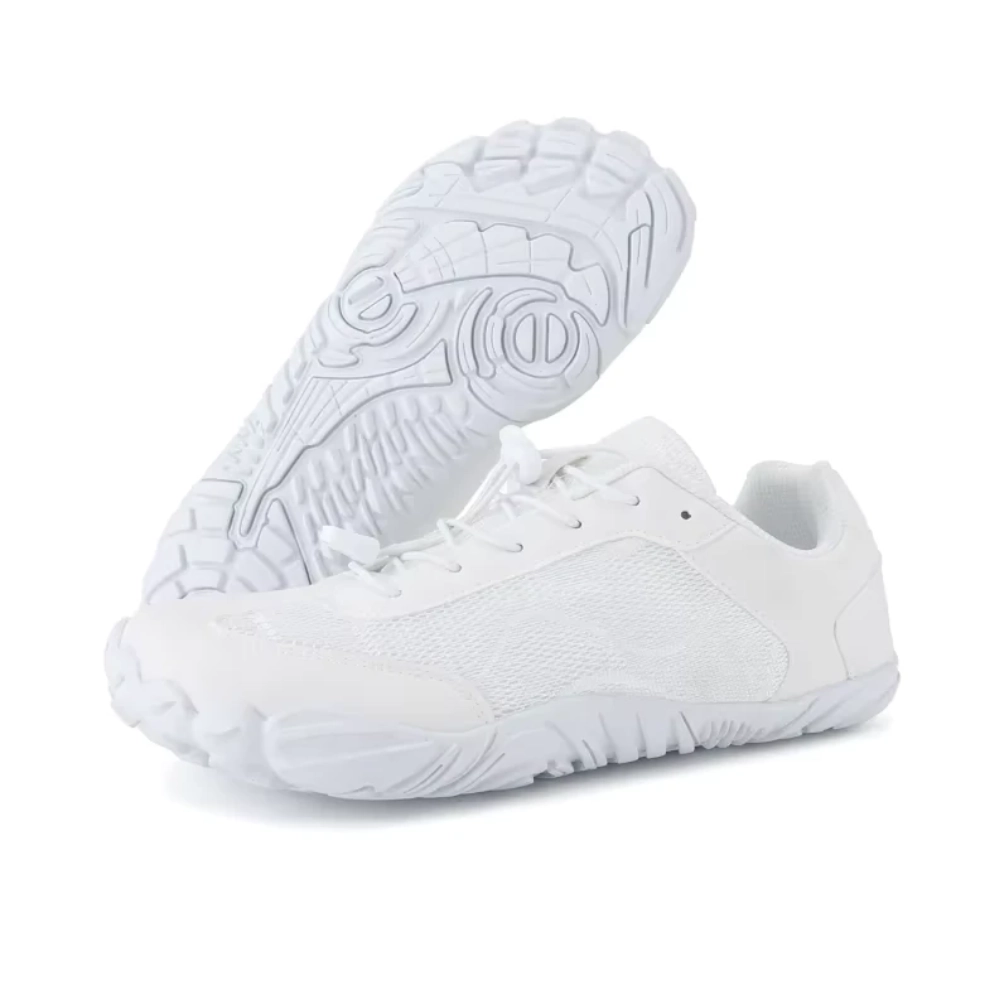
HYKES Nomad — Zero-Drop Barefoot Shoes
WIDE TOE BOX · ZERO-DROP · TRAIL-READY
The HYKES Nomad is a flexible, foot-shaped hiking shoe with a wide toe box that lets your toes splay and grip naturally over uneven terrain. Its thin, zero-drop sole keeps your foot close to the ground for real trail feedback and a balanced, connected stride, whether you're covering rocky paths or logging easy miles.
- Wide toe box for natural toe spread
- Zero-drop sole for balanced alignment
- Thin, flexible sole for ground feel
- Foot-shaped design that moves with you
- Breathable material for all-day wear
- Goes anywhere — trail, work, or errands
The Basics
What Is a Barefoot Transition?
A barefoot transition is the gradual process of moving your feet from cushioned, structured shoes to minimal, flat, wide shoes. Your foot muscles weaken inside traditional footwear. A rigid arch support does the work your foot should do. A narrow toe box holds your toes in place instead of letting them spread.
The transition reverses that pattern. You reintroduce ground feel, toe movement, and natural foot mechanics in stages. Done correctly, most people finish the process in six to twelve weeks.
The process works because your foot contains over 100 muscles, tendons, and ligaments. Cushioned shoes let many of these structures go idle. A gradual transition wakes them back up, one short session at a time, instead of forcing a sudden change your tissue can't absorb.
Where It Started
A Short History of Barefoot Footwear
Early movement. Humans walked and ran barefoot or in thin animal-hide wraps for most of history. Feet built strength through daily use, not through shoe support. Early footwear, such as sandals and moccasins, protected the sole but left the toes and arch free to move.
The cushioning era. Modern running shoe brands introduced thick, elevated heels and rigid arch support in the 1970s. The goal was injury prevention. Manufacturers marketed extra cushioning as protection, and the elevated heel became a standard feature across running and casual shoes alike. Foot strength declined as a side effect, since the shoe absorbed impact the foot used to handle.
The correction. Podiatrists and researchers began studying foot function in the 2000s. Study after study linked narrow, elevated shoes to weakened intrinsic foot muscles and reduced toe splay. Researchers also found that flatter, wider footwear improved balance scores in older adults. Barefoot and minimalist shoe brands emerged in response, rebuilding footwear around the foot's natural shape rather than around a manufactured arch.
Where it stands now. Barefoot shoes now serve runners, walkers, and everyday wearers who want their feet to work the way they were built to work. Physical therapists increasingly recommend a slow, structured transition instead of an immediate switch, which is the approach this guide follows.
What to Look For
Key Technical Features to Look For
Zero-drop sole.
The heel and forefoot sit at the same height. This keeps your spine, hips, and ankles in a natural line.
Wide toe box.
Your toes need room to spread on impact. A narrow toe box blocks that spread and limits stability.
Thin, flexible sole.
A thin sole lets your foot sense the ground. Ground feedback improves balance and shortens your stride naturally.
Minimal cushioning.
Less foam means your foot muscles absorb more impact themselves, which builds strength over time.
Secure, non-restrictive fit.
The shoe should hold your heel and midfoot without squeezing your toes.
Lightweight construction.
Extra shoe weight changes your gait and adds fatigue over a full day. A lighter shoe lets your foot move without added resistance.
Breathable material.
Your foot works harder in a barefoot shoe, which raises heat and moisture. Breathable uppers keep the foot comfortable through longer wear.
"I switched three months ago and wore mine for short walks only, at first. My feet complained the first week. Now I forget I have shoes on. My balance on stairs improved too."
— Owen K.
Our Top Pick
Build Around a Shoe That Adapts With You
Halfway through the transition, your feet need a shoe that still gives them room to work — not one that holds them the way a stiff sneaker would. The same pair that started you off should carry you through the middle stretch too.
★★★★★
HYKES Nomad — Zero-Drop Barefoot Shoes
WIDE TOE BOX · ZERO-DROP · TRAIL-READY
The HYKES Nomad is a flexible, foot-shaped hiking shoe with a wide toe box that lets your toes splay and grip naturally over uneven terrain. Its thin, zero-drop sole keeps your foot close to the ground for real trail feedback and a balanced, connected stride, whether you're covering rocky paths or logging easy miles.
- Wide toe box for natural toe spread
- Zero-drop sole for balanced alignment
- Thin, flexible sole for ground feel
- Foot-shaped design that moves with you
- Breathable material for all-day wear
- Goes anywhere — trail, work, or errands
The Halfway Point
Build a Realistic Timeline
Rushing the transition causes most of the pain people blame on barefoot shoes. A realistic timeline spreads the adjustment across several weeks and gives your foot muscles time to catch up.
Short, frequent wear beats long, occasional wear. Ten minutes a day for a week builds more strength than one four-hour outing that leaves you sore for a month.
Track soreness, not just time worn. Mild muscle fatigue in the calves or arches is normal in the first two weeks. Sharp pain, swelling, or soreness that lasts more than a day signals you should slow down and repeat the previous stage before moving forward.
Side by Side
Traditional Shoes vs. Barefoot Shoes
|
Feature |
Traditional Shoes |
Barefoot Shoes |
|---|---|---|
|
Heel height |
Elevated 8–12mm |
Zero-drop, flat |
|
Toe box |
Narrow, tapered |
Wide, foot-shaped |
|
Sole thickness |
Thick, cushioned |
Thin, minimal |
|
Ground feedback |
Blocked |
High |
|
Foot muscle use |
Reduced |
Active |
|
Break-in period |
Short or none |
Gradual, weeks |
Why It's Worth It
Benefits of Making the Switch
Bare Feet
Full strength.
Better Posture
Aligns joints naturally.
Stronger Toes
Rebuilds grip and splay.
Sharper Balance
Improves ground feedback.
Lighter Steps
Reduces shoe weight.
Real Fit
No forced arch support.
Who Sees the Biggest Difference
Runners. Runners feel the change fastest, since barefoot shoes shorten stride and shift landing patterns toward the midfoot.
Desk workers. People who sit most of the day often carry weak, stiff feet. A slow transition rebuilds mobility during short walking breaks.
Parents on their feet all day. Standing and walking for hours benefits from a shoe that lets the foot flex and adapt through the day, rather than lock into one rigid position.
Hikers and trail walkers. Ground feedback on uneven trails improves footing and reduces ankle rolls once the foot adapts.
Older adults. Balance often declines with age, partly because weak foot muscles reduce ground sensation. A slow transition can rebuild sensory feedback and support steadier steps.
People recovering from tight, narrow shoes. Years in pointed or narrow footwear can leave toes crowded together. A wide toe box gives them room to spread back out over time.
Common Mistakes
What Rushing the Transition Causes
Skipping the gradual buildup creates problems that have nothing to do with the shoe itself.
- Calf and Achilles soreness from sudden zero-drop use
- Arch fatigue from lost cushioning too fast
- Blisters from new pressure points
- Reduced motivation to continue after early discomfort
- Misplaced blame on the shoe instead of the pace
- Overuse strain in the plantar fascia from too much distance too soon
- Stiffness in the ankles from a heel-to-flat height shift the joint hasn't adapted to yet
Each issue traces back to volume, not the shoe design. Slowing the pace resolves nearly all of them within days.
Your Transition Timeline
Week 1–2: Short daily wear. Wear your barefoot shoes for 15–30 minutes a day around the house or on short errands.
Week 3–4: Add walking distance. Extend wear to one to two hours a day, mixing in longer walks.
Week 5–6: Introduce your normal routine. Wear the shoes for most of your regular day, but keep your old shoes on hand for long, demanding days.
Week 7–8: Add activity-specific use. Bring barefoot shoes into light runs, gym sessions, or hikes, starting with short sessions.
Week 9–12: Full transition. Wear barefoot shoes as your default option, adjusting pace only if soreness returns.
Caring for Your Barefoot Shoes
- Air dry after wet conditions instead of using direct heat
- Rotate two pairs if you wear them daily, to let the material recover
- Clean the sole regularly to preserve grip
- Check toe box material for stretch or wear every few months
- Replace the sole once ground feedback feels dull or flat
Our Top Pick
Start Your Own Transition
The right first pair makes the entire transition easier to manage.
★★★★★
HYKES Nomad — Zero-Drop Barefoot Shoes
WIDE TOE BOX · ZERO-DROP · TRAIL-READY
The HYKES Nomad is a flexible, foot-shaped hiking shoe with a wide toe box that lets your toes splay and grip naturally over uneven terrain. Its thin, zero-drop sole keeps your foot close to the ground for real trail feedback and a balanced, connected stride, whether you're covering rocky paths or logging easy miles.
- Wide toe box for natural toe spread
- Zero-drop sole for balanced alignment
- Thin, flexible sole for ground feel
- Foot-shaped design that moves with you
- Breathable material for all-day wear
- Goes anywhere — trail, work, or errands
FAQ
Most people complete a comfortable transition in six to twelve weeks, depending on starting foot strength and daily wear time.
Mild soreness in the calves or arches is common during the first two weeks. Sharp or lasting pain signals you're moving too fast.
No. Build up walking time first, then introduce short runs once your feet adjust to the flat sole.
Yes. A wide toe box lets your toes spread on impact, which improves balance and reduces pressure points.
Yes, once your feet finish adjusting. The flat, wide design supports natural movement through a full shift.
Yes. Many hikers prefer the ground feedback on uneven terrain, though a slower transition period still applies before longer trail use.
Final Verdict
A barefoot shoe transition rewards patience. Your feet strengthen, your balance sharpens, and your stride becomes more natural, but only if you give the process the weeks it needs.
Start slow, track your progress, and choose a shoe built around a wide toe box and a zero-drop sole. The HYKES Nomad gives your feet the room and ground feel this transition depends on, from the first short walk to full-day wear.
Most transitions fail from impatience, not from the shoe itself. Follow the weekly timeline, listen to early soreness, and let your foot muscles rebuild at their own pace. The result is a stronger, more capable foot that carries you through every step without help from a rigid arch or a raised heel.
Strong feet start with small steps, worn often, in a shoe built to let them move. 🦶