
What Are Barefoot Shoes?

"Somewhere between sneaker cushioning and skin, a quiet shift took hold. Feet stopped hiding inside foam and started feeling the ground again. Barefoot shoes strip away the padding but keep the protection, and that trade changes how people stand, walk, and run."
Barefoot shoes look simple, but they solve a real problem. Standard shoes lift the heel, squeeze the toes, and stiffen the sole. Feet lose their natural shape over years of that treatment. Barefoot shoes reverse the process. They give feet room to spread, flex, and grip the way they did before shoes existed.
This guide explains what barefoot shoes are, how they differ from regular footwear, and what to check before buying a pair. It covers the history, the construction, the benefits, and the care steps that keep a pair working well for years.
Zero Drop
Heel and toe sit level
Wide Toe Box
Toes spread and splay
Thin Flexible Sole
Ground feedback stays intact
Each of these three traits defines a barefoot shoe. Remove any one of them, and the shoe stops qualifying as barefoot, no matter what the label says.
Our Top Pick
The Shoe Built Around the Toe Box, Not Around a Trend
Every trait in the callout above points to one shoe. HYKES builds the Origin around a zero-drop platform, a foot-shaped toe box, and a thin, flexible sole, so it matches the barefoot standard this guide just defined.
★★★★★
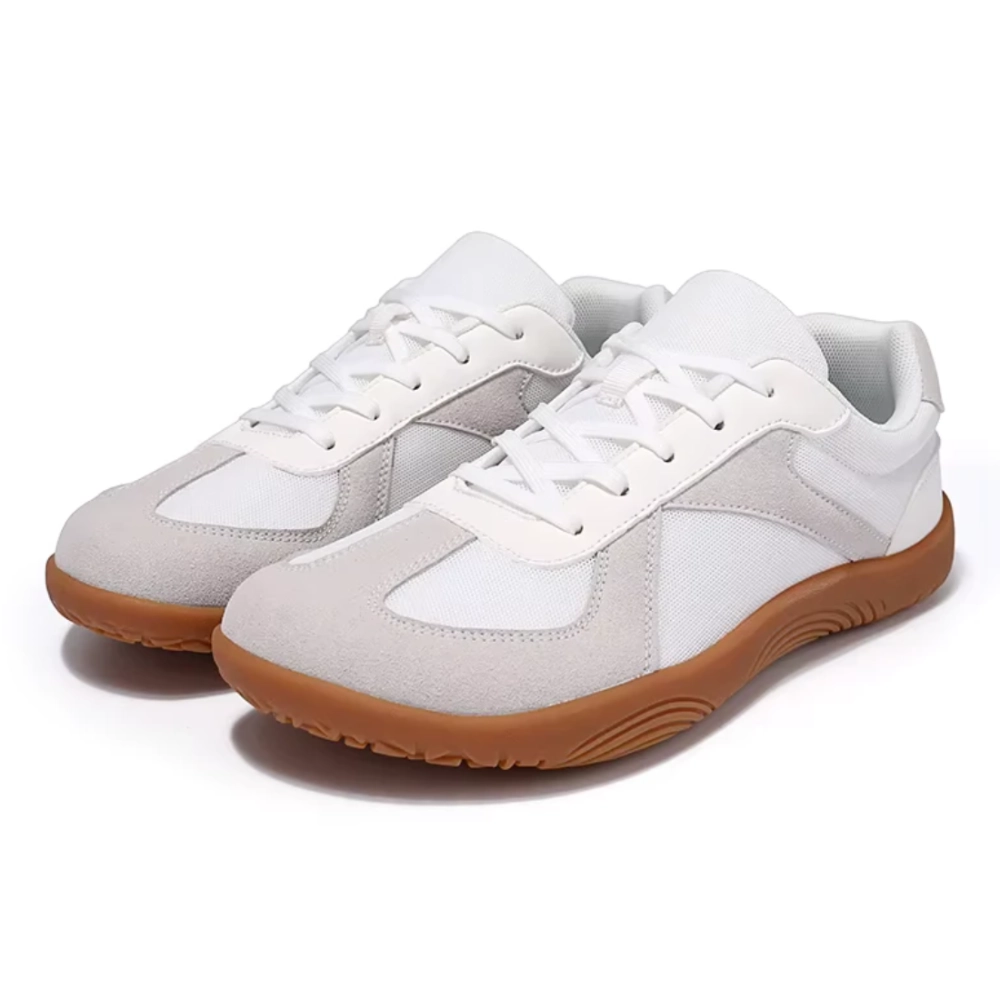
HYKES — Origin Zero Drop Barefoot Shoes
WIDE TOE BOX · ZERO-DROP · UNISEX
The HYKES Origin is a flexible, foot-shaped shoe built around a wide toe box and a zero-drop sole, so your foot can spread and roll the way it's meant to. An ultra-light 4mm sole keeps you close to the ground for a natural, connected stride, whether you're commuting, working, or out on the trail.
- Wide toe box for natural splay
- Zero-drop, foot-aligned sole
- Ultra-light 4mm sole
- Flexible, foot-shaped design
- Breathable everyday material
- Lightweight and flexible
THE BACKSTORY
Where Barefoot Shoes Came From
Humans walked barefoot for most of history. Feet adapted to sand, rock, grass, and mud without help from cushioning. Shoes existed, but early versions stayed thin and simple. They protected the sole from sharp objects and left the rest of the foot free.
The Cushioning Era
Running shoe brands changed that pattern in the 1970s. Companies added thick heels, arch support, and motion control. Marketing promised fewer injuries and softer landings. Sales grew fast, and cushioned shoes became the default choice.
The Return to Minimal Design
Researchers began questioning that promise in the 2000s. Studies compared injury rates between barefoot runners and cushioned-shoe runners. Some findings suggested that thick cushioning changed foot strike patterns and reduced natural shock absorption. A popular book on endurance running added momentum to the idea, and readers started asking why shoes needed so much material between the foot and the ground.
Interest in minimal footwear grew fast after that. Small brands built shoes with thin soles and wide toe boxes. Larger brands followed and released their own minimal lines. Retailers added a new shelf category, and runners split into two camps: those who stayed with cushioned shoes and those who moved toward barefoot design.
Barefoot Shoes Today
The category has matured since that early wave. Early minimal shoes sometimes skipped protection altogether, and wearers dealt with punctures and bruised soles. Modern barefoot shoes solve that problem with tougher, thin materials that still bend and flex. Brands now build barefoot shoes for running, hiking, work shifts, and daily wear, not just competitive racing. The audience has grown from a small group of endurance runners to a wider range of people who spend long hours on their feet and want more natural movement.
HOW THEY'RE BUILT
The Technical Specifications
Barefoot shoes follow a specific construction standard. Three features separate them from every other shoe category.
Zero heel-to-toe drop keeps the heel and forefoot at the same height. Standard running shoes raise the heel 8 to 12 millimeters above the toe. That lift shortens the calf muscles and changes posture over time. A zero-drop sole keeps the spine and ankle in a neutral line.
Wide toe boxes match the natural shape of a human foot. Feet taper slightly at the toes, but they do not come to a point. Standard shoes narrow sharply at the front, and toes compress into a wedge shape. Barefoot shoes widen instead of narrowing, so each toe can spread and grip independently.
Thin, flexible soles let the foot bend and twist. Most barefoot soles measure between 3 and 8 millimeters thick. That thinness transmits ground texture and temperature to the foot, which helps the nervous system judge terrain and adjust balance in real time.
Lightweight materials round out the design. Barefoot shoes skip heavy foam layers and rigid shanks, so a typical pair weighs less than a standard sneaker. Lighter shoes reduce fatigue on long walks and let the leg swing through its natural range instead of fighting extra mass with every step.
Foot-shaped soles also matter alongside the toe box. A straight inner edge, instead of a curved one, lets the big toe point forward instead of angling inward. That straight line reduces bunion pressure and keeps the arch working the way it was built to work.
Barefoot Shoes vs. Traditional Shoes
|
Feature |
Barefoot Shoes |
Traditional Shoes |
|---|---|---|
|
Heel-to-toe drop |
0mm |
8-12mm |
|
Toe box shape |
Wide, foot-shaped |
Narrow, tapered |
|
Sole thickness |
3-8mm |
20-40mm |
|
Arch support |
None (foot builds its own) |
Built-in support |
|
Ground feedback |
High |
Low |
|
Break-in period |
Gradual, weeks |
Minimal |
|
Muscle engagement |
High |
Low |
This table shows why the two categories feel so different on first wear. A barefoot shoe asks the foot to do work that a cushioned shoe normally handles for it.
Our Top Pick
The Shoe Built for the Fourth Hour and Beyond
The opening line says it best: a shoe stops being an accessory and starts being infrastructure. The HYKES Origin's wide, foot-shaped toe box and flat, zero-drop sole are built to carry that load instead of adding to it.
★★★★★
HYKES — Origin Zero Drop Barefoot Shoes
WIDE TOE BOX · ZERO-DROP · UNISEX
The HYKES Origin is a flexible, foot-shaped shoe built around a wide toe box and a zero-drop sole, so your foot can spread and roll the way it's meant to. An ultra-light 4mm sole keeps you close to the ground for a natural, connected stride, whether you're commuting, working, or out on the trail.
- Wide toe box for natural splay
- Zero-drop, foot-aligned sole
- Ultra-light 4mm sole
- Flexible, foot-shaped design
- Breathable everyday material
- Lightweight and flexible
WHY PEOPLE SWITCH
Benefits for the Foot and Body
Barefoot shoes change more than comfort. They shift how muscles, joints, and posture work together during standing and movement.
Stronger Foot Muscles
Muscles activate more.
Better Posture
Spine stays aligned.
Sharper Ground Sense
Feet read the terrain.
Natural Gait
Stride shortens and lands softer.
Fewer Overuse Injuries
Impact spreads more evenly.
All-Day Comfort
Toes move without restriction.
Foot muscles strengthen because they finally bear load instead of resting inside a rigid support structure. A wide toe box lets toes grip the ground and stabilize each step. Over weeks, that grip builds arch strength without added exercise.
Posture improves because the zero-drop platform keeps the ankle joint neutral. A raised heel tilts the body forward and forces the lower back to compensate. Flat soles remove that tilt and let the spine stack more naturally.
Ground sense sharpens because thin soles pass more information to the nerves in the foot. Sighted balance relies mostly on the eyes and inner ear, but foot sensation plays a supporting role. Thick cushioning mutes that sensation. A thin sole restores it, which helps the body react faster on uneven ground.
Gait patterns shift too. Cushioned shoes encourage a heel strike, since the raised heel absorbs the impact of landing far in front of the body. Barefoot shoes discourage that pattern, because a hard heel strike without cushioning feels uncomfortable. Most wearers shift toward a midfoot or forefoot strike, which lands closer to the body's center of mass and spreads impact across a wider area of the foot.
Injury patterns can shift as a result. Repetitive heel striking on a rigid platform contributes to overuse injuries like shin splints. A softer, more natural stride reduces that stress, though a fast transition into full-time barefoot use carries its own risk.
"I switched to barefoot shoes for my warehouse shifts, and my feet stopped aching by week three. My knees feel better too."
— Marcus T.
CARE AND FIT
Maintenance and Selection Steps
Barefoot shoes need different care than padded sneakers, and picking the right pair takes a few extra checks.
Maintenance Tips
- Air dry shoes after wet use instead of using direct heat
- Rotate between two pairs to let the sole recover its shape
- Clean mesh uppers with a soft brush and mild soap
- Check the sole for cracks every few months, since thin soles wear faster than thick ones
- Store shoes away from direct sunlight to protect the upper material
How to Select the Right Pair
- Measure both feet at the end of the day, when feet sit at their largest size.
- Check the toe box width against your widest toe spread, not your shoe size alone.
- Confirm zero drop by checking the manufacturer's stated heel-to-toe measurement.
- Test the sole flex by bending the shoe in your hands before buying.
- Match the sole thickness to your use. Thin soles suit walking and daily wear. Slightly thicker soles suit trail use or heavy standing jobs.
- Plan a transition period. Wear new barefoot shoes for short sessions first, then extend the time over several weeks.
Our Top Pick
Where Every Spec on This List Comes Together
Zero drop, foot-shaped fit, breathable materials, and an easy break-in period. Instead of hunting for a shoe that checks every box on the list above, start with the one already built to it.
★★★★★
HYKES — Origin Zero Drop Barefoot Shoes
WIDE TOE BOX · ZERO-DROP · UNISEX
The HYKES Origin is a flexible, foot-shaped shoe built around a wide toe box and a zero-drop sole, so your foot can spread and roll the way it's meant to. An ultra-light 4mm sole keeps you close to the ground for a natural, connected stride, whether you're commuting, working, or out on the trail.
- Wide toe box for natural splay
- Zero-drop, foot-aligned sole
- Ultra-light 4mm sole
- Flexible, foot-shaped design
- Breathable everyday material
- Lightweight and flexible
FAQ
No. Barefoot shoes are not bad for feet. They can strain unconditioned muscles during the first few weeks, so a slow transition prevents soreness.
Yes. Many runners complete long distances in barefoot shoes after they build up mileage gradually and let their calf and foot muscles adapt.
Some people report relief because the wide toe box and flat sole reduce pressure points. Results vary, so anyone with existing foot pain should consult a podiatrist before switching.
Most people need two to six weeks. Muscle soreness in the calves and feet is common during that window and usually fades as strength builds.
Yes. The wide toe box and even sole reduce pressure points during long shifts, which many warehouse and retail workers report as a major benefit.
Final Verdict
Barefoot shoes rebuild the natural mechanics that thick cushioning removes. The zero-drop sole, wide toe box, and thin flexible base work together to strengthen feet, correct posture, and sharpen ground feedback. The switch takes patience, but the payoff shows up in stronger, more capable feet over time.
HYKES applies every one of these principles to its shoe designs, so switching does not mean giving up daily comfort or durability. Explore the HYKES lineup to find the right pair for your feet.
Feet built to move. Shoes finally built to let them. 🦶