
Best Barefoot Shoes for Flat Feet

"Across every flattened arch, the question isn't whether the foot needs help — it's whether a shoe should be doing the helping, or the foot itself. Barefoot shoes, with their zero-drop sole and unrestricted toe box, hand that job back to the muscles that were built for it. The right pair doesn't prop up an arch. It teaches one to hold itself up."
Flat feet are often treated as a shape to correct instead of a pattern to retrain. A rigid arch support slides underneath the foot, the ache eases for a moment, and the shoe quietly takes over a job the foot's own muscles used to do. Years later, those muscles are weaker, not stronger, and the support has become a requirement instead of a convenience.
Barefoot shoes have become a preferred response for people managing flat feet, thanks to their flat, zero-drop sole and wide, foot-shaped toe box. Instead of holding the arch in a fixed position, they let the small stabilizing muscles in the foot engage with every step, rebuilding the strength that propped-up arches never get the chance to use.
In modern footwear, demand has shifted toward shoes that let the foot work rather than shoes that work for it. Barefoot designs meet that shift with a thin, flexible platform that restores the muscle activity cushioned soles put to sleep.
Zero-Drop Sole System
Keeps the spine aligned and reduces strain up the chain
Muscle Engagement Design
Rebuilds the arch from the inside out
Foot-Shaped Toe Box
Gives the foot a wider, steadier base
Barefoot footwear's value for flat feet becomes clearest when examined through its structure, its daily behavior, and how it compares to the traditional alternative.
This guide explores what makes barefoot shoes effective for flat feet, how they perform during the transition, and why podiatrists are recommending them more often as part of long-term arch care.
Our Top Pick
Best Overall for Flat Feet
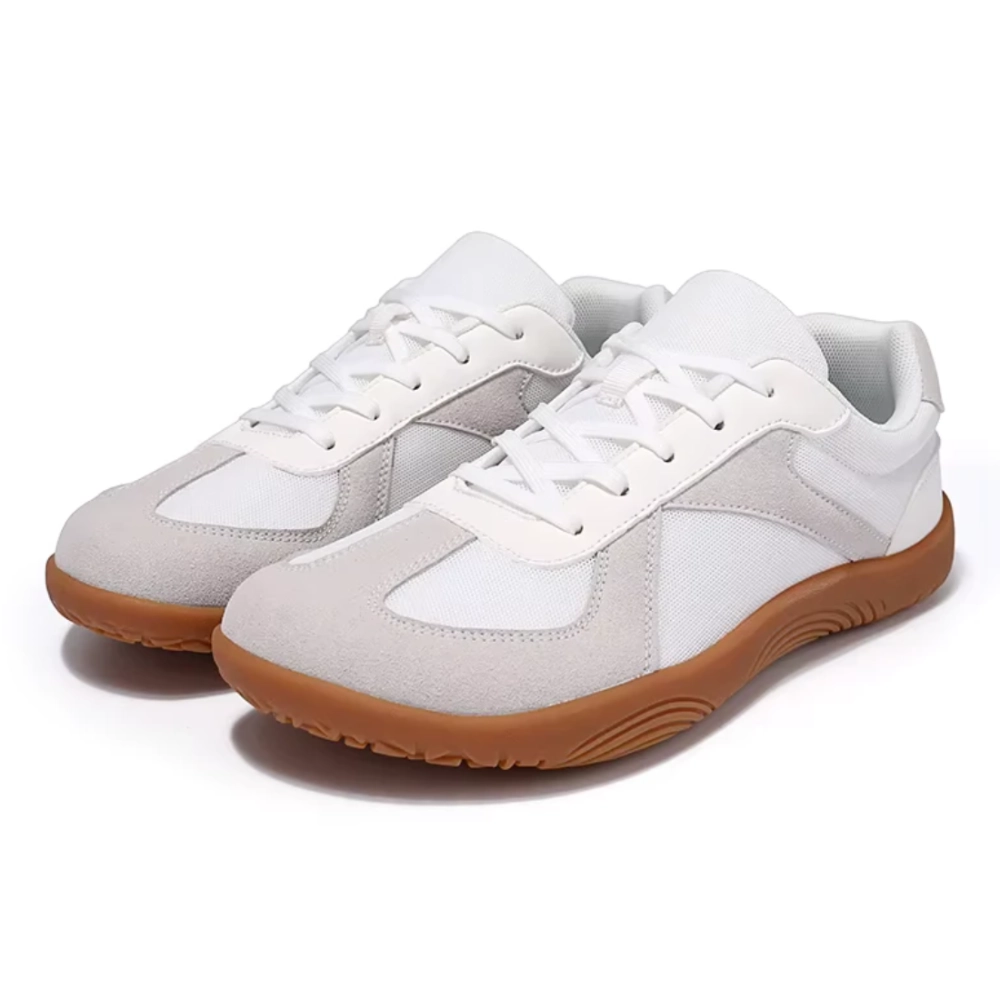
The HYKES Origin pairs an ultra-thin zero-drop sole with a wide, foot-shaped toe box, giving flat feet the ground feel and freedom of movement a rigid arch support takes away.
★★★★★
HYKES — Origin Zero Drop Barefoot Shoes
WIDE TOE BOX · ZERO-DROP · UNISEX
The HYKES Origin is a flexible, foot-shaped shoe built around a wide toe box and a zero-drop sole, so your foot can spread and roll the way it's meant to. An ultra-light 4mm sole keeps you close to the ground for a natural, connected stride, whether you're commuting, working, or out on the trail.
- Wide toe box for natural splay
- Zero-drop, foot-aligned sole
- Ultra-light 4mm sole
- Flexible, foot-shaped design
- Breathable everyday material
- Lightweight and flexible
WHY STRUCTURE CHANGES EVERYTHING
The Anatomy Behind Barefoot Shoe Relief
Flat feet, or pes planus, means the arch touches the ground when standing — sometimes from birth, sometimes from years of tight Achilles tendons, worn-out arch support, or tendons that simply stretch with age. Flexible flat feet still show an arch when sitting; rigid flat feet stay flat no matter the position, and usually deserve a podiatrist's opinion before any shoe change.
Traditional shoes respond to flat feet by propping the arch up from below. It feels like relief immediately. Over time, the muscles that once held the arch in place stop doing that job, since the shoe does it instead — and a weaker arch ends up needing even more support than before.
Barefoot shoes remove that crutch. A flat, zero-drop sole keeps the heel and forefoot level, so weight distributes evenly instead of rolling the ankle inward — the overpronation that strains the knees, hips, and lower back with every step. A wide, foot-shaped toe box lets the toes spread fully, widening the base the foot balances on and giving the small arch-supporting muscles more surface to work with.
Together, these two features don't reshape the arch overnight, but they remove the daily mechanical habit that keeps the arch dependent on something else to hold it up.
HOW BAREFOOT SHOES PERFORM WHERE IT MATTERS MOST
Everyday Comfort and Real-World Wear
In daily use, results show up less in a measurement and more in how the foot feels by the end of a long day. Most people with flat feet notice less fatigue in the calves and less rolling at the ankle within the first few weeks, well before the deeper arch strength has built up.
Sole flexibility does most of the early work. A true barefoot shoe folds easily at the ball of the foot, letting the arch muscles fire the way they would unshod. A stiffer sole blocks that movement and leaves the same old support habits in place, just in a different shoe.
Weight and material matter too. Most barefoot shoes for flat feet weigh between 150g and 300g per shoe — light enough to avoid adding fatigue during longer walks, while still holding shape well enough to guide a good gait.
Closure system rounds out the picture. Laces give the most adjustable, secure fit, which matters more for flat feet than most other conditions — a loose shoe lets the foot slide inside it and worsens the very overpronation the shoe is meant to correct.
"I spent years buying shoes with the thickest arch support I could find, and my feet only got more tired. Switching to a flat, wide-toed shoe felt wrong for about two weeks — then my ankles stopped rolling on uneven ground, and I finally understood what everyone meant by 'let your feet do the work.'"
— Marissa T.
WHAT TO KNOW BEFORE YOU BUY AND HOW TO TRANSITION SAFELY
Buying Factors and a Safe Transition Plan
Choosing the right barefoot shoe starts with sole thickness and flexibility, not the size on the label. A sole between 4mm and 8mm balances ground feel with enough protection for daily wear, and folding the shoe in half is the simplest test — a true barefoot sole bends easily at the ball of the foot without resistance.
Toe box width matters just as much. The toes should spread fully without pressing against the shoe's wall; a narrow toe box undermines the whole design, no matter how thin the sole is.
Switching cold can strain calf and arch muscles that have been under-used for years, so a gradual transition matters:
- Wear the shoes about one hour a day at first.
- Add roughly 30 minutes of wear each week.
- Walk on varied surfaces — grass, sand, pavement — to build strength differently each time.
- Stretch the calves daily, since a zero-drop sole changes how the Achilles tendon works.
- Watch for sharp pain rather than mild soreness; soreness is normal, pain is a signal to slow down.
- Check in with a podiatrist if arch or ankle pain increases during the transition.
Our Top Pick
Best Overall for Flat Feet
The HYKES Origin pairs an ultra-thin zero-drop sole with a wide, foot-shaped toe box, giving flat feet the ground feel and freedom of movement a rigid arch support takes away.
★★★★★
HYKES — Origin Zero Drop Barefoot Shoes
WIDE TOE BOX · ZERO-DROP · UNISEX
The HYKES Origin is a flexible, foot-shaped shoe built around a wide toe box and a zero-drop sole, so your foot can spread and roll the way it's meant to. An ultra-light 4mm sole keeps you close to the ground for a natural, connected stride, whether you're commuting, working, or out on the trail.
- Wide toe box for natural splay
- Zero-drop, foot-aligned sole
- Ultra-light 4mm sole
- Flexible, foot-shaped design
- Breathable everyday material
- Lightweight and flexible
WHAT TO KNOW BEFORE YOU BUY AND HOW TO TRANSITION SAFELY
Best Barefoot Shoe Types for Flat Feet
|
Shoe Type |
Sole Thickness |
Best Use |
Arch Support Style |
Flat Feet Comfort Rating |
|---|---|---|---|---|
|
Minimalist Running Shoe |
4-6mm |
Road running |
None; muscle-driven |
High |
|
Barefoot Hiking Shoe |
6-8mm |
Trail walking |
None; wide base |
High |
|
Barefoot Casual Shoe |
5-7mm |
Daily wear |
None; flexible sole |
High |
|
Barefoot Water Shoe |
3-5mm |
Swimming, wading |
None; drainage holes |
Medium |
|
Barefoot Work Shoe |
6-9mm |
Standing all day |
Reinforced toe, flat base |
Medium |
Casual and hiking styles score highest for flat feet, pairing a wide, stable base with enough sole flexibility to keep the arch muscles active through a full day of wear.
BAREFOOT VERSUS TRADITIONAL ARCH SUPPORT
How Barefoot Shoes Stack Up Against Traditional Arch-Support Shoes
|
Feature |
Traditional Arch-Support Shoes |
Barefoot Shoes |
|---|---|---|
|
Sole Structure |
Cushioned, raised heel |
Flat, zero-drop |
|
Toe Box |
6-8mm |
Wide, foot-shaped |
|
Foot Muscle Engagement |
Low |
High |
|
Break-In Period |
Short |
Moderate to long |
|
Long-Term Arch Strength |
Neutral or reduced |
Improved |
Traditional shoes use a rigid built-in arch to hold the foot in position — useful for rigid flat feet or cases needing extra stability, but limiting to natural muscle development over time. Barefoot shoes take the opposite approach, using a flat sole and wide toe box so the arch muscles do the adjusting themselves. Many people use both, depending on the activity and how far along their transition is.
Wide, Foot-Shaped Fit
Gives the foot a broader, steadier base to balance on.
Even Weight Distribution
Zero-drop soles reduce the inward ankle roll of overpronation.
Flexible, Breathable Materials
Let the foot move and flex the way it would unshod.
Stronger Arch Muscles
Unsupported movement rebuilds strength a rigid support let fade.
Better Balance and Posture
Ground feel sharpens the signals sent to the brain, improving stability.
Lower Risk of Related Strain
A stronger arch means less compensating strain on knees, hips, and lower back.
CARE THAT KEEPS THEM PERFORMING
Maintenance Tips for Barefoot Shoes
Barefoot shoes need consistent care to keep supporting a flat-footed gait. Wash the upper with mild soap and cool water, since hot water can warp a thin sole, and air dry away from direct heat. Check the sole monthly for cracks or thin spots — barefoot soles wear faster than traditional soles because they meet the ground more directly. Owning two pairs and rotating them lets each one dry fully between wears and extends their lifespan. Removable insoles are worth replacing every six months for anyone walking long distances daily, and shoes are best stored in a cool, dry place without being folded tightly, which can damage the sole's flexibility over time.
Exercises That Support the Transition
Barefoot shoes work faster paired with foot exercises that target the same muscles the shoes are training. Toe curls — scrunching a towel toward you using only the toes for two minutes daily — and arch lifts, where the arch rises without the toes curling, held for five seconds, both isolate the right muscles directly. Calf raises build the strength a zero-drop sole demands from the Achilles tendon, while single-leg balance holds of 30 seconds train the small stabilizers around the ankle. Marble pickups, using the toes to move small objects into a cup, round out the routine. Three to four sessions a week alongside the shoe transition gives the best results.
Our Top Pick
Best Overall for Flat Feet
The HYKES Origin pairs an ultra-thin zero-drop sole with a wide, foot-shaped toe box, giving flat feet the ground feel and freedom of movement a rigid arch support takes away.
★★★★★
HYKES — Origin Zero Drop Barefoot Shoes
WIDE TOE BOX · ZERO-DROP · UNISEX
The HYKES Origin is a flexible, foot-shaped shoe built around a wide toe box and a zero-drop sole, so your foot can spread and roll the way it's meant to. An ultra-light 4mm sole keeps you close to the ground for a natural, connected stride, whether you're commuting, working, or out on the trail.
- Wide toe box for natural splay
- Zero-drop, foot-aligned sole
- Ultra-light 4mm sole
- Flexible, foot-shaped design
- Breathable everyday material
- Lightweight and flexible
FAQ
No. They strengthen the arch muscles and improve function, but they rarely change bone structure. Most people gain less pain and better control, not a fully raised arch.
Consult a podiatrist first. Rigid flat feet may need orthotics alongside barefoot training, and a doctor can confirm the feet are ready for the switch.
Most people notice less fatigue within about four weeks. Real arch-strength gains take three to six months of steady wear.
Yes, after a proper transition. Runners who switch too fast often strain their calves, so build mileage slowly and rotate with older shoes at first.
Many pediatric podiatrists recommend them. Young feet adapt faster than adult feet, and a flexible sole supports natural arch development during growth years.
Skipping the transition period. Full-time wear on day one is the most common reason for calf and arch soreness — a gradual increase in wear time matters more than the shoe itself.
FINAL VERDICT
Flat feet respond well to shoes that ask the arch to work rather than shoes that work around it. A zero-drop sole and a wide, foot-shaped toe box remove the daily habit that keeps an arch dependent on external support — not by masking the issue, but by giving the foot's own muscles room to take the job back.
From a value perspective, barefoot shoes reward patience: the transition asks more of the wearer up front, but the payoff is an arch that gets stronger instead of more reliant on structure. Compared to traditional arch-support shoes, they trade a shorter break-in period for meaningfully better long-term foot strength.
For flexible flat feet, and for anyone focused on long-term prevention, a well-fitted barefoot shoe like the HYKES Origin is one of the more reliable upgrades available — not a trend, but a shift back toward how feet were meant to move.
Pick a pair that matches your foot width and daily activity, transition slowly, and care for the shoes well. These steps protect the feet now and support their health for years ahead.
Room to move. Strength that builds. Feet built to last. 🦶