
Best Shoes for Standing All Day

"By the fourth hour of a shift, a shoe stops being an accessory and starts being infrastructure. It either carries the weight your body can no longer manage on its own, or it quietly adds to the bill. Nurses, chefs, retail staff — anyone who spends a day upright learns this the hard way. The right shoe doesn't just cushion a step; it changes how the whole day feels by the time you sit down."
Standing all day changes your body in ways sitting never does. Nurses, retail workers, chefs, and factory staff carry their full weight, hour after hour, on the same few square inches of foot. The right shoes reduce that fatigue. The wrong ones compound it, quietly, until knees, hips, and lower backs start paying the bill too.
Footwear demand has shifted accordingly. Workers and employers alike now treat shoes as safety equipment, not just uniform. This guide breaks down why standing hurts, what separates a good standing shoe from an average one, and how two very different design philosophies — cushioned and barefoot — solve the same problem in opposite ways.
Zero-Drop Sole System
Even weight, front to heel
Muscle Engagement Design
Builds strength, not dependency
Foot-Shaped Toe Box
Lets the toe sit straight
Barefoot footwear's value for standing workers becomes clearest when examined through its shape, its daily behavior, and how it compares to the alternatives.
Our Top Pick
The Shoe Built for the Fourth Hour and Beyond
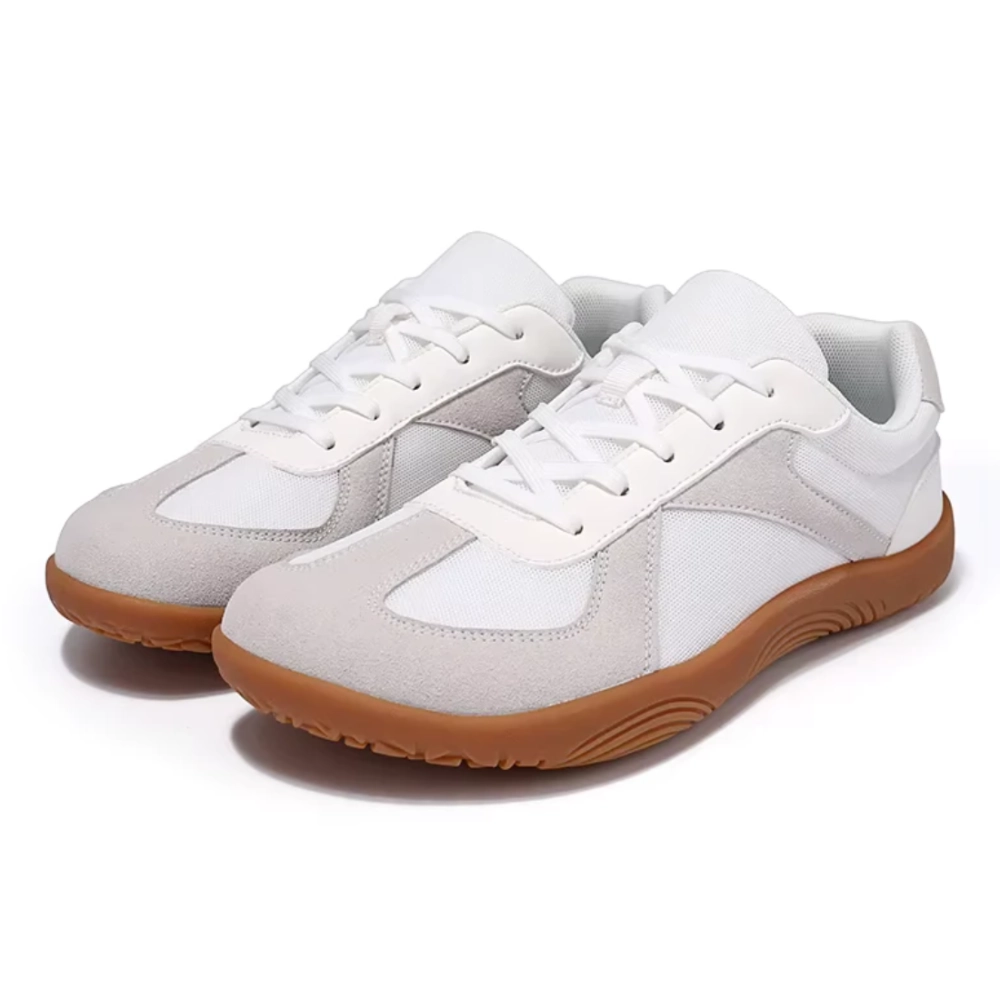
The opening line says it best: a shoe stops being an accessory and starts being infrastructure. The HYKES Origin's wide, foot-shaped toe box and flat, zero-drop sole are built to carry that load instead of adding to it.
★★★★★
HYKES — Origin Zero Drop Barefoot Shoes
WIDE TOE BOX · ZERO-DROP · UNISEX
The HYKES Origin is a flexible, foot-shaped shoe built around a wide toe box and a zero-drop sole, so your foot can spread and roll the way it's meant to. An ultra-light 4mm sole keeps you close to the ground for a natural, connected stride, whether you're commuting, working, or out on the trail.
- Wide toe box for natural splay
- Zero-drop, foot-aligned sole
- Ultra-light 4mm sole
- Flexible, foot-shaped design
- Breathable everyday material
- Lightweight and flexible
WHY YOUR FEET PAY THE PRICE
The Toll of a Full Shift on Your Feet
Your feet carry your full body weight for eight, ten, or twelve hours at a stretch. Gravity pulls blood downward. Muscles fight constantly to keep you upright. Over time, that strain radiates up into the knees, hips, and lower back.
Standing is not passive. The posterior chain — calves, hamstrings, and back muscles — works the entire shift to stabilize the body. Poor footwear makes that job harder. Good footwear shares the load instead.
Common problems from long standing shifts include:
- Plantar fasciitis — inflammation of the tissue under the heel
- Varicose veins — swollen veins from poor circulation
- Lower back pain — from poor posture and weak shock absorption
- Metatarsalgia — pain in the ball of the foot
- Joint stiffness — from repetitive pressure on knees and hips
- Bunions and hammertoes — deformities driven by narrow, ill-fitting shoes
- Edema — fluid buildup in the feet and ankles from staying in one position too long
A well-built shoe cushions impact, supports the arch, and gives toes room to move — and in doing so, addresses each of these problems directly. It also improves circulation by avoiding tight pressure points across the midfoot. Some employers now factor footwear into workplace safety policy outright, offering shoe allowances or approved shoe lists, which says a lot about how seriously standing-related injury is taken in modern workplaces.
FROM LEATHER BOOTS TO BAREFOOT DESIGN
A Short History of the Standing Shoe
Work shoes have existed for centuries. Early laborers wore simple leather boots with flat soles — protective, but with no cushioning to speak of.
The 20th century changed the calculus. Factory work expanded, and nurses and retail staff needed shoes built for full shifts, not short walks. Shoemakers responded in the 1970s and 80s with cushioned insoles and dedicated arch support. The 1990s went further, introducing gel and foam cushioning systems and shock-absorbing midsoles to cut joint impact during repetitive standing and walking.
The 2000s brought a competing idea: barefoot and minimalist footwear, built on the premise that thick cushioning weakens natural foot muscles over time. These shoes use thin, flexible soles that let the foot move and flex the way it would unshod. HYKES built its entire design philosophy around this idea — barefoot shoes meant for daily wear, standing shifts included.
Sports science shaped much of this timeline too. Running shoe brands pioneered air and gel cushioning in the 1980s, and work shoe makers borrowed the technology directly. Safety standards developed in parallel — slip-resistant outsoles became mandatory across food service and healthcare in the 1990s, and steel- or composite-toe protection became standard in industrial settings. What started as plain leather boots has become engineered footwear built for specific occupational hazards.
WHAT SEPARATES A STANDING SHOE FROM AN ORDINARY ONE
Key Technical Features to Look For
Not all shoes handle standing well. A handful of features separate a shoe built for full shifts from one built for casual wear.
Sole construction. Cushioned soles use foam or gel to soften impact. Barefoot soles use thin, flexible rubber to preserve natural foot movement. Rocker soles curve slightly to ease pressure during the transition between steps.
Arch support. High arch support suits fallen arches or flat feet. Neutral support suits average arch height. Zero-drop support, common in barefoot shoes, lets the arch work naturally without forced elevation.
Toe box width. A narrow toe box squeezes toes together, restricting blood flow and causing numbness over a long shift. A wide toe box lets toes spread naturally, improving balance and reducing pressure points — a big part of why HYKES builds its shoes wide at the front.
Breathability. Feet sweat during long shifts. Breathable mesh or natural materials reduce moisture buildup, lowering the risk of blisters and bacterial growth.
Weight. Heavy shoes tire legs faster. Barefoot shoes typically weigh less than cushioned shoes simply because they use less material.
Outsole traction. Standing workers often cross wet, greasy, or polished floors. Slip-resistant rubber compounds channel liquid away from the contact point, cutting the risk of falls — still a leading cause of workplace injury.
Material durability. Full-grain leather resists abrasion. Reinforced stitching keeps seams from splitting under repeated flexing. High-density rubber outsoles resist wear from constant contact with hard floors. A durable shoe holds its shape and support long after a lesser shoe would have broken down.
Our Top Pick
Where These Features Come Together
Sole flex, toe box width, breathability, weight, traction, durability — the HYKES Origin is built to check every box above at once, rather than trading one feature off against another.
★★★★★
HYKES — Origin Zero Drop Barefoot Shoes
WIDE TOE BOX · ZERO-DROP · UNISEX
The HYKES Origin is a flexible, foot-shaped shoe built around a wide toe box and a zero-drop sole, so your foot can spread and roll the way it's meant to. An ultra-light 4mm sole keeps you close to the ground for a natural, connected stride, whether you're commuting, working, or out on the trail.
- Wide toe box for natural splay
- Zero-drop, foot-aligned sole
- Ultra-light 4mm sole
- Flexible, foot-shaped design
- Breathable everyday material
- Lightweight and flexible
CUSHIONED VS. BAREFOOT
How the Two Approaches Compare
|
Feature |
Traditional Cushioned Shoes |
Barefoot Shoes (e.g., HYKES) |
|---|---|---|
|
Sole thickness |
Thick, padded |
Thin, flexible |
|
Foot muscle engagement |
Lower (cushion absorbs impact) |
Higher (foot muscles work naturally) |
|
Arch support |
Built-in, often raised |
Zero-drop, natural arch movement |
|
Toe box shape |
Often tapered |
Wide, foot-shaped |
|
Break-in period |
Short |
Moderate, as foot muscles adapt |
|
Weight |
Heavier |
Lighter |
|
Best for |
Workers wanting maximum cushioning |
Workers wanting natural foot strength and posture |
|
Long-term foot health claim |
Reduces immediate impact |
Builds foot strength over time |
Neither option is wrong. The right choice depends on foot type, job demands, and personal comfort.
Even Weight Distribution
Zero-drop soles spread pressure evenly instead of tipping weight onto the forefoot.
Breathable, Flexible Uppers
Mesh and soft leather cut moisture buildup and let the foot flex naturally.
Stronger Foot Muscles
Thin, flexible soles let muscles do the stabilizing work cushioning otherwise takes over.
Better Balance and Posture
Ground feel sharpens the signals sent to the brain, improving coordination over a shift.
Lighter, All-Day Comfort
Less material means less weight dragging on tired legs by hour eight.
Fewer Slip-and-Fall Risks
Slip-resistant tread channels liquid away from the contact point on wet or greasy floors.
MATCH THE SHOE TO THE JOB
How to Choose the Right Shoe for Your Work
Healthcare workers stand and walk for long stretches on hard, sanitized floors. Look for slip-resistant soles, breathable materials, and a wide toe box built for 12-hour shifts.
Retail and hospitality staff stand more than they walk. Look for strong arch support or a barefoot design that lets the arch work naturally, a lightweight build, and a design that still fits a dress code.
Kitchen and restaurant staff face wet, greasy floors. Look for oil- and slip-resistant outsoles, easy-to-clean materials, and reinforced toe protection.
Office workers at standing desks need support without bulk. A barefoot shoe works well here — HYKES designs specifically for this use case, all-day comfort without sacrificing a professional look.
GETTING THE FIT RIGHT
Fit, Sizing, and a Safe Transition
A great shoe design fails if the fit is wrong. When trying on standing shoes:
- Shop in the afternoon, when feet naturally swell.
- Wear the socks you plan to use at work.
- Check for a thumb's width of space at the toe.
- Walk and stand in the shoe for several minutes before deciding.
- Confirm the width matches your foot, not just the length.
- Test on a hard floor surface, not just carpet, to judge true comfort.
- Flex the shoe by hand — a sole that bends easily at the ball of the foot supports natural movement better than a stiff one.
Switching from cushioned shoes to a barefoot design takes an adjustment period. Feet need time to build strength in muscles that cushioned soles previously did the work for:
- Wear the new shoes one to two hours a day at first.
- Add about 30 minutes of wear every few days.
- Stretch calves and feet daily, since barefoot shoes activate muscles tight shoes leave dormant.
- Watch for sharp pain rather than mild soreness — soreness is normal, pain is a signal to slow down.
CARE THAT KEEPS THEM PERFORMING
Maintenance and Care
Proper care extends the life of a standing shoe and keeps it supportive:
- Rotate pairs — alternate between two pairs so cushioning and materials recover between shifts.
- Clean regularly — wipe down soles and uppers to remove salt, oil, and debris.
- Air dry fully — avoid direct heat, which can crack materials and break down soles.
- Replace insoles when worn — flattened insoles lose their support function.
- Check outsoles for wear — smooth tread reduces slip resistance and raises fall risk.
- Store properly — keep shoes away from direct sunlight and extreme temperatures.
Most standing shoes last six to twelve months under daily heavy use. Barefoot shoes, including HYKES models, often last longer thanks to simpler construction with fewer components to break down.
Our Top Pick
Built to Outlast a Full Shift, Season After Season
Simpler construction means fewer parts to wear out. The HYKES Origin's minimal, high-density build is designed to hold its shape and support well past the point where a heavily cushioned shoe starts breaking down.
★★★★★
HYKES — Origin Zero Drop Barefoot Shoes
WIDE TOE BOX · ZERO-DROP · UNISEX
The HYKES Origin is a flexible, foot-shaped shoe built around a wide toe box and a zero-drop sole, so your foot can spread and roll the way it's meant to. An ultra-light 4mm sole keeps you close to the ground for a natural, connected stride, whether you're commuting, working, or out on the trail.
- Wide toe box for natural splay
- Zero-drop, foot-aligned sole
- Ultra-light 4mm sole
- Flexible, foot-shaped design
- Breathable everyday material
- Lightweight and flexible
FAQ
It depends on the foot and the floor. Barefoot shoes build natural strength and alignment over time; cushioned shoes offer more immediate shock absorption. Many workers switch between the two depending on the shift.
Most people notice less fatigue within one to two weeks, with full muscle adaptation taking one to three months.
In most cases, yes, though anyone with an existing condition should transition slowly and check in with a podiatrist if pain increases.
The floor and dress code matter more than the job title. A wide, flexible, slip-resistant shoe covers most standing jobs; wet or formal environments may call for a dedicated pair.
Buying by size number alone. Toe box width and sole flexibility matter more than the label inside the shoe.
FINAL VERDICT
Standing all day rewards shoes that respect how the foot actually moves, not just how it looks in a uniform. A wide toe box, a stable sole, and breathable materials remove the daily pressure that turns an eight-hour shift into chronic pain — whether that comes from cushioning that absorbs the impact or a barefoot design, like the HYKES Origin, that lets the foot build its own strength instead.
Cushioned shoes offer immediate impact protection. Barefoot shoes ask more of the wearer up front during the transition, but reward that patience with a foot that gets stronger rather than more dependent on the shoe. Match the choice to the job, the floor, and the feet doing the standing.
Feet built for the long shift. Pressure that eases by the end of the day. 🦶