
Wide Toe Box Shoes Explained

"By the time most people notice their toe box, something has already gone wrong — a pinch that shows up by evening, a bump that wasn't there last year, a shoe that no longer fits the way it used to. A wide toe box changes that relationship before it starts, giving toes the room to spread and grip instead of the pressure to fight against."
Most shoes taper toward the front, squeezing toes into a shape no human foot actually has. That mismatch sits quietly at the front of nearly every pair on the market, and most people only notice it once a problem shows up — redness across the smallest toe, a bony ache at the base of the big toe, a shoe that fits differently than it did a year ago.
A wide toe box is built the opposite direction. This guide breaks down what the design actually is, where it came from, the technical specs that separate a real wide toe box from a marketing label, and how to choose, transition into, and care for a pair.
Foot-Shaped Front
Follows the toes' real outline
Toe Splay Room
Lets toes spread while walking
Zero-Drop Base
Keeps heel and forefoot level
Barefoot footwear's value for foot health becomes clearest when examined through its shape, its daily behavior, and how it compares to the alternatives.
Our Top Pick
The Shoe Built Around the Toe Box, Not Around a Trend
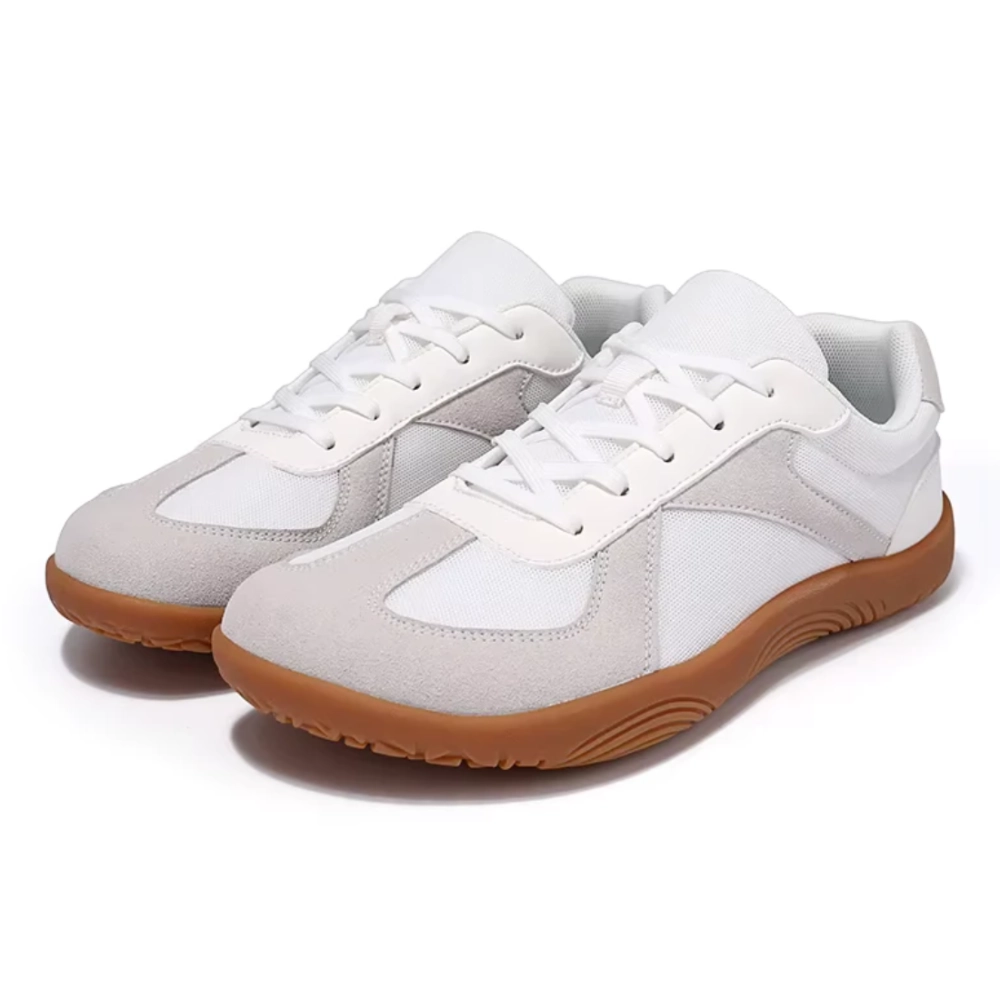
The HYKES Origin's wide, foot-shaped toe box and flat, zero-drop sole are built to follow the foot's real shape rather than force it into one.
★★★★★
HYKES — Origin Zero Drop Barefoot Shoes
WIDE TOE BOX · ZERO-DROP · UNISEX
The HYKES Origin is a flexible, foot-shaped shoe built around a wide toe box and a zero-drop sole, so your foot can spread and roll the way it's meant to. An ultra-light 4mm sole keeps you close to the ground for a natural, connected stride, whether you're commuting, working, or out on the trail.
- Wide toe box for natural splay
- Zero-drop, foot-aligned sole
- Ultra-light 4mm sole
- Flexible, foot-shaped design
- Breathable everyday material
- Lightweight and flexible
WHAT MAKES A TOE BOX "WIDE"
What Is a Wide Toe Box?
A toe box is the front section of a shoe — the part that holds the toes. A wide toe box gives that section extra width and height so toes can move freely instead of being pressed together.
Standard shoes taper toward the front, following a pointed last rather than the actual shape of a foot. A wide toe box shoe uses a different last altogether — one that stays wide at the toes and narrows only slightly toward the heel, mirroring the foot's natural outline. Podiatrists often recommend this shape specifically because it lowers pressure on the toes and lets the foot function the way it evolved to function.
A wide toe box is not the same thing as a "wide" shoe size. A shoe labeled wide often just adds width across the whole foot while still tapering sharply at the toes. A true wide toe box keeps its width all the way to the front, so toes stay level with the ball of the foot instead of narrowing into a point.
FROM POINTED TOES TO FOOT-SHAPED DESIGN
A Short History of the Wide Toe Box
Foot health experts have studied shoe shape for over a century.
Early observations. In the late 1800s, doctors began noticing a pattern: patients in narrow shoes developed foot problems more often than patients who walked barefoot or wore simple sandals. Some early doctors sketched foot outlines next to shoe outlines and found a clear mismatch between the two shapes.
Fashion took over. Through the 20th century, fashion drove shoe design more than comfort did. Pointed toes and narrow heels became the standard look, and sizing charts of the era rarely measured toe box width at all — mostly just length. That gap let narrow, pointed shoes dominate shelves for decades.
The minimalist shift. In the early 2000s, runners and researchers began questioning cushioned, narrow running shoes, pointing to populations who ran and walked barefoot with lower rates of certain injuries. This sparked renewed interest in barefoot shoes, and as the movement matured, toe box width became just as central as sole thickness.
Where things stand today. Wide toe box shoes have since moved well beyond niche running circles. HYKES is one of the brands built specifically around this shape, designing shoes that let toes spread naturally during everyday wear — not just during exercise.
WHAT SEPARATES A REAL WIDE TOE BOX FROM A LABEL
Key Technical Features to Look For
Not every shoe marketed as "wide" meets the same bar. A handful of specific features separate a real wide toe box from a marketing term.
Toe box width. The shoe should match your foot's widest point, usually across the ball of the foot, with no contact against the sides.
Toe box shape. The front should be wide and rounded rather than pointed, keeping the big toe pointed straight ahead instead of angled inward.
Toe splay allowance. Toe splay is the natural spreading motion toes make while standing and walking. A wide toe box doesn't restrict this motion, which helps with both balance and shock absorption.
Zero or low drop. Many wide toe box shoes, including HYKES models, pair the wide front with a zero-drop sole, keeping heel and forefoot at the same height for a more natural foot position.
Flexible sole. A thin, flexible sole lets the foot bend and move the way it would unshod. A rigid sole can cancel out the benefit of extra toe room.
Material structure. The upper should stretch slightly at the toe area. Knit fabric and soft leather work well; stiff materials can create pressure points even inside a wide shape.
Volume and height. Width alone isn't enough. The toe box also needs vertical space, or toes end up pressed down from above even in a side-to-side wide shoe.
Sizing consistency. Some brands only widen their largest sizes, so it's worth checking width specs at your specific size rather than assuming.
"I used to buy a half size up in every shoe just to get some width up front, and my feet still ached by dinner. The first time I tried on something with an actual wide toe box, I could feel my toes flatten out and just relax. I didn't realize how much they'd been curling until they finally didn't have to."
— Danielle R.
Our Top Pick
Where Every One of These Specs Comes Together
Width, shape, toe splay, drop height, sole flex, material — the HYKES Origin is built to check every spec above at once, rather than trading one off against another.
★★★★★
HYKES — Origin Zero Drop Barefoot Shoes
WIDE TOE BOX · ZERO-DROP · UNISEX
The HYKES Origin is a flexible, foot-shaped shoe built around a wide toe box and a zero-drop sole, so your foot can spread and roll the way it's meant to. An ultra-light 4mm sole keeps you close to the ground for a natural, connected stride, whether you're commuting, working, or out on the trail.
- Wide toe box for natural splay
- Zero-drop, foot-aligned sole
- Ultra-light 4mm sole
- Flexible, foot-shaped design
- Breathable everyday material
- Lightweight and flexible
WIDE VS. STANDARD, SIDE BY SIDE
How the Two Shapes Compare
|
Feature |
Wide Toe Box |
Standard Toe Box |
|---|---|---|
|
Toe shape allowed |
Straight, natural splay |
Tapered, toes angle inward |
|
Pressure on toes |
Low |
Higher, especially pinky and big toe |
|
Toe splay during walking |
Allowed |
Restricted |
|
Common sole type |
Zero-drop, flexible |
Raised heel, stiffer sole |
|
Best for |
Daily wear, foot health, wide feet |
Formal looks, narrow feet |
|
Bunion/hammertoe risk over time |
Lower |
Higher |
|
Balance and ground feel |
Improved |
Reduced |
Neither shape is universally right for every situation. The best choice depends on foot shape, daily activity, and any existing foot conditions.
Less Toe Pain
Toes aren't forced into a narrow point, so pressure points that build up over a long day never get the chance to form.
Lower Bunion Risk
The big toe stays straight instead of angling inward, easing one of the main mechanical drivers behind bunion progression.
Better Balance
A wider splay gives the foot a wider base of contact, improving stability on uneven or shifting ground.
Stronger Feet
Foot muscles engage naturally instead of staying compressed, building strength cushioned, narrow shoes otherwise take over.
All-Day Comfort
Feet swell over the course of a day, and a wide toe box adjusts to that change instead of fighting it.
Fits More Foot Shapes
People with naturally wide feet don't need to size up just to get width at the front.
WHO SEES THE BIGGEST DIFFERENCE
Matching the Shoe to the Foot
Runners and walkers put in the most repetitive pressure on the toes over a session, so the room a wide toe box gives adds up quickly over distance.
People with naturally wide feet are often pinched by standard shoes regardless of size, since a "wide" label doesn't guarantee a wide front.
People with bunions or hammertoes see reduced friction and pressure on joints that are already sensitive to any contact.
Older adults tend to see feet widen and flatten with age, and a wide toe box adapts to that shift rather than fighting it.
People who stand for long shifts — nurses, retail staff, and similar roles — benefit from reduced toe compression across a full day on their feet.
WHAT NARROW SHOES CAUSE OVER TIME
Conditions Linked to Narrow Shoes
- Bunions — a bony bump at the base of the big toe, sped up by shoes pushing the toe inward.
- Hammertoes — toes bend into a claw-like shape when cramped toe boxes force them to curl instead of lying flat.
- Neuromas — thickened nerve tissue between the toes, often worsened by compression.
- Corns and calluses — hard skin buildup from repeated friction against tight shoe walls.
- Ingrown toenails — pressure from narrow shoes pushing the nail into surrounding skin.
A wide toe box doesn't reverse any of these conditions on its own, but it removes the daily pressure that keeps making them worse.
GETTING THE FIT RIGHT
Fit, Sizing, and a Safe Transition
A great toe box design fails if the fit is wrong. When trying on wide toe box shoes:
- Measure your foot at its widest point, usually across the ball of the foot.
- Trace your foot on paper and compare the outline to the shoe's toe box shape — look for a match, not a taper.
- Wiggle your toes inside the shoe; they should move freely without touching the sides.
- Bend the shoe by hand — it should flex easily at the ball of the foot.
- Try the shoe with both feet, since feet often differ slightly in size, and fit to the larger one.
- Walk across a hard floor before committing, watching for pinching, sliding, or pressure points.
Switching from narrow shoes to a wide toe box takes some adjustment, especially for feet that have spent years in a compressed shape:
- Wear the new shoes one to two hours a day at first.
- Add more time each week as your feet adjust.
- Expect some muscle fatigue — toes that were compressed for years may feel tired as they start spreading and engaging again.
- Watch for rubbing, not just newness; a different shape can feel unfamiliar even when it fits correctly.
- Add barefoot time at home to build foot strength alongside the wider shoe shape.
CARE THAT KEEPS THEM PERFORMING
Maintenance and Care
Proper care extends the life of any shoe, and wide toe box or barefoot-style shoes often use lighter materials, so care matters more than usual:
- Clean regularly — brush off loose dirt before washing, and use mild soap and cool water on fabric or knit uppers.
- Skip harsh detergents — they can break down stretch fibers in the toe area.
- Air dry away from heat — direct heat can warp thin, flexible soles.
- Store properly — keep shoes cool and dry, and avoid stacking heavy items on the toe box.
- Rotate pairs — alternating between two pairs gives soles time to recover their shape.
- Check the sole for wear — barefoot-style soles wear faster in high-friction areas like the forefoot.
- Condition leather uppers — use a conditioner made for soft leather, and trim loose threads on knit uppers early.
Our Top Pick
Built to Hold Its Shape, Wear After Wear
Simpler construction means fewer parts to break down. The HYKES Origin's minimal, high-density build is designed to hold its shape and support well past the point where a heavily structured shoe starts to give out.
★★★★★
HYKES — Origin Zero Drop Barefoot Shoes
WIDE TOE BOX · ZERO-DROP · UNISEX
The HYKES Origin is a flexible, foot-shaped shoe built around a wide toe box and a zero-drop sole, so your foot can spread and roll the way it's meant to. An ultra-light 4mm sole keeps you close to the ground for a natural, connected stride, whether you're commuting, working, or out on the trail.
- Wide toe box for natural splay
- Zero-drop, foot-aligned sole
- Ultra-light 4mm sole
- Flexible, foot-shaped design
- Breathable everyday material
- Lightweight and flexible
FAQ
No. A wide size usually widens the whole shoe but can still taper sharply at the front. A true wide toe box keeps its width all the way to the toes.
They don't reverse existing bone or joint changes, but they reduce the daily pressure that makes those conditions progress faster.
Many people notice less pressure within the first week or two, with full comfort settling in over a few weeks as foot muscles adjust.
Yes, and many podiatrists recommend it, since a wide toe box supports healthy toe alignment while bones are still developing.
It depends on use — thinner soles increase ground feel for everyday wear, while slightly thicker soles add protection for rougher terrain or longer days on foot.
Yes. A wide toe box gives toes room to splay regardless of overall foot width; narrow feet simply may need a snugger fit through the midfoot.
FINAL VERDICT
A wide toe box changes the basic relationship between a shoe and a foot — instead of forcing the foot into a mold, the shoe follows the foot's own shape. That idea traces back to early podiatric observations, grew through the minimalist shoe movement, and has landed today in brands like HYKES that build the wide, foot-shaped toe box in from the start.
Before buying, check the specs that actually matter: width, shape, sole flexibility, and drop height, measured against your own foot rather than a size label. Transition gradually, care for the shoes properly, and a well-fitted wide toe box shoe can support foot health for years of everyday wear.
Room to move. Pressure that eases. Feet built to last. 🦶