
Best Barefoot Walking Shoes

"Your feet carry you through every step of your day. A wide toe box lets your toes spread. A zero-drop sole keeps your spine aligned. Together, they turn walking into a natural, connected movement instead of a squeezed, cushioned shuffle."
Most walking shoes lift your heel and squeeze your toes. Your foot fights the shoe instead of working with it. Barefoot walking shoes remove that fight. They give your foot room to move and ground to feel.
This guide covers the history of barefoot walking shoes, the technical features that matter, and the steps to pick the right pair.
Foot-Shaped Front
FOLLOWS YOUR FOOT SHAPE
Toe Splay Room
LETS TOES SPREAD FREELY
Zero-Drop Base
KEEPS FOOT NATURALLY LEVEL
Our Top Pick
The Shoe Built Around the Toe Box, Not Around a Trend
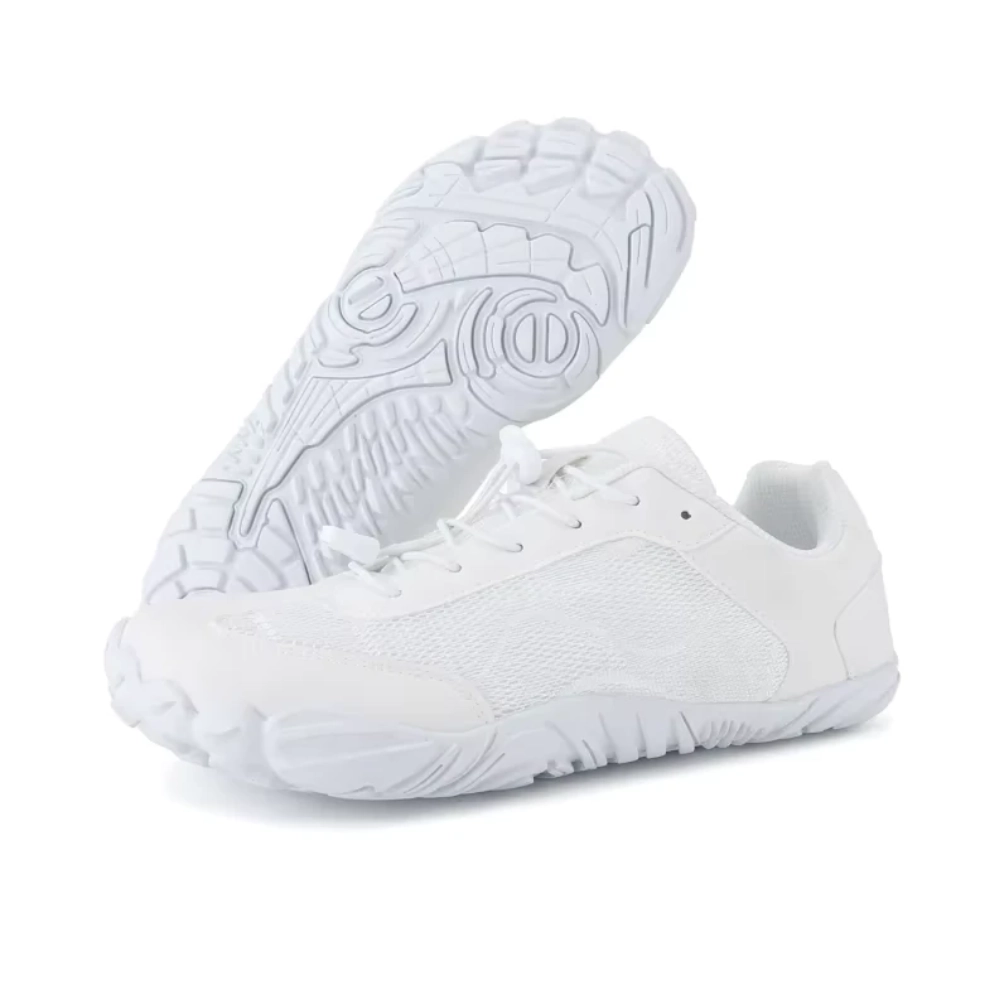
The HYKES Origin gives your foot a wide toe box and a zero-drop sole so it can spread and roll the way it's meant to.
★★★★★
HYKES Nomad — Zero-Drop Barefoot Shoes
WIDE TOE BOX · ZERO-DROP · TRAIL-READY
The HYKES Nomad is a flexible, foot-shaped hiking shoe with a wide toe box that lets your toes splay and grip naturally over uneven terrain. Its thin, zero-drop sole keeps your foot close to the ground for real trail feedback and a balanced, connected stride, whether you're covering rocky paths or logging easy miles.
- Wide toe box for natural toe spread
- Zero-drop sole for balanced alignment
- Thin, flexible sole for ground feel
- Foot-shaped design that moves with you
- Breathable material for all-day wear
- Goes anywhere — trail, work, or errands
WHAT MAKES A TOE BOX "WIDE"
What Is a Wide Toe Box?
A toe box is the front section of a shoe that holds the toes. A wide toe box gives that section extra width and height so toes can move freely instead of being pressed into a point.
Standard shoes taper toward the front. This narrows the space around the toes and forces them to overlap or angle inward. The toes no longer spread on each step.
A wide toe box is not the same as a "wide" shoe. A shoe labeled wide often just adds width across the whole foot while still tapering at the toes. A true wide toe box lets toes stay side by side, with the ball of the foot free instead of pressed at a point.
FROM POINTED TOES TO FOOT-SHAPED DESIGN
A Short History of the Wide Toe Box
Foot health experts have studied shoe shape for over a century.
Early observations. In the early 1900s, doctors noticed a pattern. Patients who wore narrow shoes developed foot problems more often than people who walked barefoot.
Fashion took over. Through the 20th century, fashion drove shoe design more than comfort. Pointed, narrow toes became standard. Raised heels pushed toe splay off the table.
The minimalist shift. In the early 2000s, runners and researchers began questioning thick cushioning and narrow toe boxes. Toe box width became just as central as sole thickness.
Where things stand today. Wide toe box shoes have moved well beyond niche running circles. HYKES builds around this shape for everyday wear, not just exercise.
WHAT SEPARATES A REAL WIDE TOE BOX FROM A LABEL
Key Technical Features to Look For
Not every shoe marketed as "wide" earns the same fit. A few features separate a real wide toe box from a marketing term.
Toe box width. The shoe should hold your foot's widest point with no pressure against the sides.
Toe box shape. The front should stay rounded, not taper to a point.
Toe splay allowance. Toes need room to spread while walking. This supports balance and shock absorption.
Zero or low drop. A zero-drop sole keeps heel and forefoot level.
Flexible sole. A thin, flexible sole lets the foot bend and move. A rigid sole cancels out the benefit.
Material structure. The upper should stretch slightly at the toe box, so stiff material doesn't create pressure points.
Volume and height. The toe box needs vertical room too, or toes press against the upper anyway.
Sizing consistency. Some brands only widen their largest sizes. Check width specs at your own size.
"I used to buy a half size up in every shoe just to get some width up front, and my feet still ached by the dinner. The first time I tried on something with an actual wide toe box, I could feel my toes flatten out and just relax. I didn't realize how much they'd been curving until they finally didn't have to."
— Renata S.
Our Top Pick
Where Every One of These Specs Comes Together
Width, shape, toe splay, drop height, sole flex, material — the HYKES Nomad is built to check every spec above at once, rather than trading one off against another.
★★★★★
HYKES Nomad — Zero-Drop Barefoot Shoes
WIDE TOE BOX · ZERO-DROP · TRAIL-READY
The HYKES Nomad is a flexible, foot-shaped hiking shoe with a wide toe box that lets your toes splay and grip naturally over uneven terrain. Its thin, zero-drop sole keeps your foot close to the ground for real trail feedback and a balanced, connected stride, whether you're covering rocky paths or logging easy miles.
- Wide toe box for natural toe spread
- Zero-drop sole for balanced alignment
- Thin, flexible sole for ground feel
- Foot-shaped design that moves with you
- Breathable material for all-day wear
- Goes anywhere — trail, work, or errands
WIDE VS. STANDARD, SIDE BY SIDE
How the Two Shapes Compare
This table lines up a wide toe box against a standard toe box.
|
FEATURE |
WIDE TOE BOX |
STANDARD TOE BOX |
|---|---|---|
|
Toe shape allowed |
Straight, natural splay |
Tapered, toes angle inward |
|
Pressure on toes |
Low |
Higher, especially pinky and big toe |
|
Toe splay during walking |
Allowed |
Restricted |
|
Common sole type |
Zero-drop, flexible |
Raised heel, stiffer sole |
|
Best for |
Daily wear, foot health, and comfort |
Formal looks, narrow feet |
|
Bunion/hammertoe risk over time |
Lower |
Higher |
|
Balance and ground feel |
Improved |
Reduced |
Neither shape is universally right for every situation. The best choice depends on foot shape, daily activity, and any existing foot conditions.
Less Toe Pain
Toes aren't forced into a point, so pressure points never get the chance to form.
Lower Bunion Risk
The big toe stays straight instead of angling inward.
Better Balance
A wider splay gives the foot a wider base of contact.
Stronger Feet
Foot muscles engage again when toes can move independently.
All-Day Comfort
A wide toe box adjusts as feet swell over the day.
Fits More Foot Shapes
Naturally wide feet don't need to size up for width.
WHO SEES THE BIGGEST DIFFERENCE
Matching the Shoe to the Foot
Runners and walkers. People who put in the most mileage feel the difference first.
People with naturally wide feet. Standard shoes pinch them regardless of size.
People with bunions or hammertoes. Less friction and pressure on toes that are already sensitive.
Older adults. Feet widen and lose padding with age, so a wide toe box adapts to that shift.
People who stand for long shifts. Nurses, retail staff, and similar jobs benefit from low toe pressure across a full day.
WHAT NARROW SHOES CAUSE OVER TIME
Conditions Linked to Narrow Shoes
- Bunions — a bony bump at the base of the big toe, sped up by shoes pushing the toe inward.
- Hammertoes — toes curl into a claw shape when cramped toe boxes stop them from lying flat.
- Neuromas — thickened nerve tissue between the toes, often worsened by compression.
- Corns and calluses — hard skin from friction against tight toe boxes.
- Ingrown toenails — pressure from narrow shoes pushes the nail into surrounding skin.
A wide toe box doesn't reverse these conditions, but it removes the pressure that keeps making them worse.
FIT, SIZING, AND A SAFE TRANSITION
Fit, Sizing, and a Safe Transition
A proper fit starts before the shoe even arrives.
- Measure your foot at its widest point, not just its length.
- Trace your foot on paper and compare it to the shoe's toe box shape.
- Wiggle your toes inside the shoe; they should move freely.
- Bend the shoe by hand — it should flex easily at the ball of the foot.
- Try the shoe with bare feet and thin socks, since fit can shift slightly.
- Walk before buying, since pinching or sliding forward signals the wrong size.
Then ease into daily wear:
- Wear the new shoes one to two hours a day at first.
- Add more time each week as your feet adjust.
- Expect some muscle fatigue as toes start spreading again.
- Watch for rubbing, since a different shape can feel unfamiliar at first.
MAINTENANCE AND CARE
Maintenance and Care
Care extends the life of the flex, stretch, and wide toe box shape that gives these shoes their benefit.
- Skip harsh detergents — they break down stretch fibers in the toe area.
- Air dry away from heat — direct heat can warp thin, flexible soles.
- Store properly — keep shoes cool and dry, away from stacked heavy items.
- Rotate pairs — alternating pairs gives soles time to recover their shape.
- Check the sole for wear — barefoot-style soles wear faster at the forefoot.
- Condition leather uppers — use a conditioner made for soft leather.
Our Top Pick
Built to Hold Its Shape, Wear After Wear
Shape retention keeps a wide toe box actually wide across the life of the shoe. The HYKES Nomad holds up under daily wear without losing the shape that made it worth buying in the first place.
★★★★★
HYKES Nomad — Zero-Drop Barefoot Shoes
WIDE TOE BOX · ZERO-DROP · TRAIL-READY
The HYKES Nomad is a flexible, foot-shaped hiking shoe with a wide toe box that lets your toes splay and grip naturally over uneven terrain. Its thin, zero-drop sole keeps your foot close to the ground for real trail feedback and a balanced, connected stride, whether you're covering rocky paths or logging easy miles.
- Wide toe box for natural toe spread
- Zero-drop sole for balanced alignment
- Thin, flexible sole for ground feel
- Foot-shaped design that moves with you
- Breathable material for all-day wear
- Goes anywhere — trail, work, or errands
FAQ
No. A wide shoe size widens the whole shoe, but many still taper at the toe. A true wide toe box keeps the front rounded.
No. They ease the pressure that makes these conditions worse, but they don't reverse one that has already formed.
Most people adjust within two to four weeks, starting with a few hours a day.
Yes. A wide toe box supports natural development in growing feet, which are still forming their shape.
A thin, flexible sole between 4mm and 8mm pairs well, since it lets the whole foot move together.
Yes. A rounded toe box still lets narrow feet sit comfortably without pinching.
Final Verdict
A wide toe box changes the relationship between your foot and your shoe. Instead of forcing your foot into a fixed shape, it lets your foot's own shape lead.
Check the toe box specs before buying, not just the size label. Wide toe box shoes give your feet the room they need without costing everyday comfort.
Room to move. Pressure that eases. Feet built to last. 🦶