
Barefoot Shoes vs Regular Shoes

"Regular shoes squeeze your toes and lift your heel. Barefoot shoes let your foot move the way it was built to move. This guide compares both designs side by side. It covers history, construction, and daily comfort. You will learn which style fits your feet, your terrain, and your daily miles."
Foot health drives a growing debate among runners, hikers, and office workers. Should a shoe control the foot, or should it free the foot? Barefoot shoes and regular shoes answer that question in opposite ways. This guide breaks down the difference between them. It uses facts, not opinions, to help you decide.
Regular shoes use a raised heel, a narrow toe box, and thick cushioning. These features limit how your foot moves. Barefoot shoes remove that control instead. They use a zero-drop sole and a wide toe box to let the foot work on its own. Your toes spread, your arch flexes, and your foot grips the ground with every step.
Wide Toe Box
ROOM TO SPREAD NATURALLY
Zero-Drop Sole
LEVEL HEEL AND FOREFOOT
Ground Feel
THIN SOLE FOR FEEDBACK
Both shoe styles serve real purposes. Regular shoes protect the foot in rough conditions and heavy use. Barefoot shoes build foot strength and improve balance over time. The right choice depends on your feet, your terrain, and your goals.
Our Top Pick
Start Your Barefoot Transition
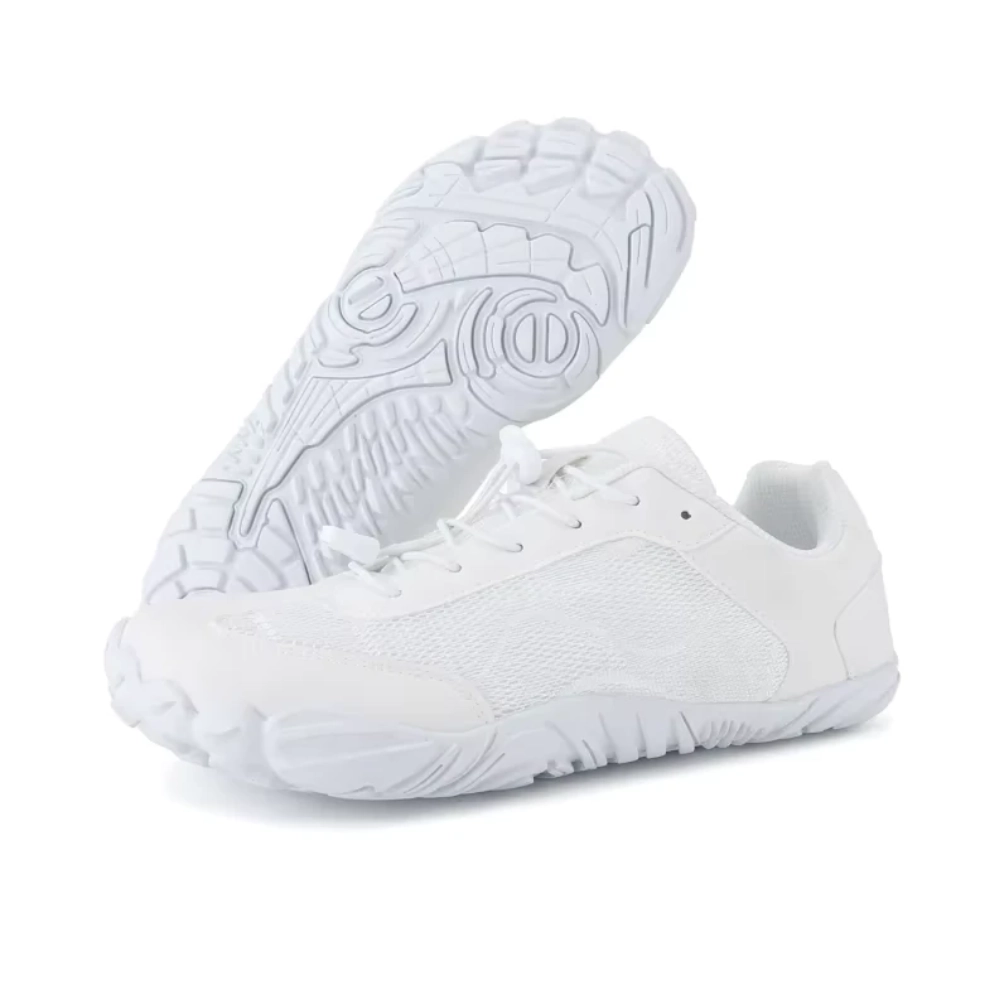
The HYKES Nomad gives new barefoot users a wide toe box and a thin, flexible sole. It works well for hikers who want ground feel without giving up trail traction.
★★★★★
HYKES Nomad — Zero-Drop Barefoot Shoes
WIDE TOE BOX · ZERO-DROP · TRAIL-READY
The HYKES Nomad is a flexible, foot-shaped hiking shoe with a wide toe box that lets your toes splay and grip naturally over uneven terrain. Its thin, zero-drop sole keeps your foot close to the ground for real trail feedback and a balanced, connected stride, whether you're covering rocky paths or logging easy miles.
- Wide toe box for natural toe spread
- Zero-drop sole for balanced alignment
- Thin, flexible sole for ground feel
- Foot-shaped design that moves with you
- Breathable material for all-day wear
- Goes anywhere — trail, work, or errands
THE CORE DESIGN DIFFERENCE
What Is a Barefoot Shoe?
A barefoot shoe copies the shape of a natural foot. It has a wide toe box, a thin sole, and no raised heel. The sole bends easily in your hand. Your foot senses the ground through it, and your toes move freely inside it.
A regular shoe works the other way. It narrows toward the toes, raises the heel above the forefoot, and adds thick, stiff cushioning. This structure limits foot motion and absorbs impact for you instead of letting your foot absorb it.
FROM BARE FEET TO BUILT-UP SOLES
A Short History
Humans walked and ran barefoot or in thin sandals for most of history. Early footwear, like Roman sandals and Native American moccasins, protected the sole without changing foot shape or motion.
Modern athletic shoes changed that pattern in the 1970s. Brands added heel lift and heavy cushioning to reduce impact on hard surfaces. The barefoot movement pushed back in the early 2000s. Runners and researchers began asking whether thick, structured shoes weakened natural foot function, and demand for minimal, foot-shaped shoes grew from there.
Natural Alignment
Your foot lands the way it was built to land.
Stronger Feet
Foot muscles work harder without a rigid shell.
Ground Feedback
Nerves in your sole sense the surface below you.
Toe Freedom
Toes spread and grip with each step you take.
Better Balance
A flat, thin sole keeps your center of gravity steady.
Trail Versatility
One shoe handles trail, street, and errands equally well.
"I switched to barefoot shoes for hiking, and my feet feel less cramped after long days on the trail. My balance on loose rock improved within a few weeks."
— Jordan M.
SOLE, DROP, AND FIT
Key Technical Differences
Five specs separate barefoot shoes from regular shoes:
- Sole thickness — Barefoot soles run 3–8mm thick. Regular soles run 20–40mm thick.
- Heel-to-toe drop — Barefoot shoes sit at zero drop. Regular shoes carry a 8–12mm drop.
- Toe box shape — Barefoot shoes follow the natural, splayed shape of the foot. Regular shoes taper toward a point.
- Flexibility — A barefoot sole folds in half by hand. A regular sole resists bending.
- Weight — Barefoot shoes weigh less because they use less material overall.
WHO THIS FITS BEST
Who Should Wear Barefoot Shoes?
Barefoot shoes fit some lifestyles better than others. Hikers who want direct trail feedback benefit most from a wide, flexible sole. Walkers who log daily miles on flat ground also adapt quickly and often notice better balance within weeks.
Minimalist runners use barefoot shoes to strengthen the foot and lower leg over a slow training block. Office workers who stand or walk often during the day choose them for wide-toe comfort. Anyone starting on hard, uneven, or wet terrain should size up traction and grip first, since a thin sole reduces cushioning against sharp rocks and gravel.
Regular shoes still fit better for heavy manual labor, cold-weather work, and jobs that require steel-toe or slip protection. Match the shoe category to the task, not just personal preference.
Our Top Pick
Built for Uneven Ground
The HYKES Nomad pairs a zero-drop sole with rugged, grippy traction. It suits hikers who want barefoot feel on rocky, root-covered, or wet trails.
★★★★★
HYKES Nomad — Zero-Drop Barefoot Shoes
WIDE TOE BOX · ZERO-DROP · TRAIL-READY
The HYKES Nomad is a flexible, foot-shaped hiking shoe with a wide toe box that lets your toes splay and grip naturally over uneven terrain. Its thin, zero-drop sole keeps your foot close to the ground for real trail feedback and a balanced, connected stride, whether you're covering rocky paths or logging easy miles.
- Wide toe box for natural toe spread
- Zero-drop sole for balanced alignment
- Thin, flexible sole for ground feel
- Foot-shaped design that moves with you
- Breathable material for all-day wear
- Goes anywhere — trail, work, or errands
STACK HEIGHT AND STRUCTURE
Barefoot Shoes vs Regular Shoes at a Glance
The table below lines up the core differences. Use it to compare both styles by the numbers.
|
Feature |
Barefoot Shoes |
Regular Shoes |
|---|---|---|
|
Toe Box |
Wide, foot-shaped |
Narrow, tapered |
|
Heel Drop |
0mm (zero drop) |
8–12mm |
|
Sole Thickness |
3–8mm |
20–40mm |
|
Flexibility |
Folds by hand |
Resists bending |
|
Arch Support |
Minimal or none |
Built-in structure |
|
Break-In Time |
2–6 weeks |
Minimal |
Regular shoes suit heavy loads, cold weather, and rough job sites. Barefoot shoes suit hiking, walking, light training, and daily wear once your feet adapt to them.
Weight matters on long hikes and daily wear alike. A lighter shoe reduces leg fatigue over many hours on your feet. Sole thickness also changes how you feel the trail — a thick sole hides small rocks and roots, while a thin sole reports every change in the surface underfoot. Neither trait makes one shoe universally better; it only changes what your foot notices with each step.
CARE THAT EXTENDS SHOE LIFE
Maintenance Tips
Barefoot shoes need simple, regular care because thin soles show wear faster than thick ones:
- Air them out after each wear to remove moisture and odor buildup.
- Remove the insole and let it dry separately from the shoe.
- Hand-wash the upper with mild soap and cool water, never hot.
- Skip the dryer and heaters — heat cracks thin soles and warps the shape.
- Rotate between two pairs if you wear them daily, so each pair fully dries.
- Check the sole for cuts or thin spots every few weeks on rocky trails.
CHOOSING THE RIGHT PAIR
How to Select Your Shoes
Follow these steps to pick the right shoe for your feet:
- Measure your foot width, not just its length.
- Match the toe box shape to your natural foot shape.
- Pick your terrain first — trail, road, or daily wear.
- Start with short walks if you are new to zero-drop shoes.
- Check the sole flexibility by bending it in your hands.
- Confirm the return policy before you commit to a pair.
- Try the shoe on with the socks you actually plan to wear.
Our Top Pick
Ready to Make the Switch
The HYKES Nomad offers a simple entry point into barefoot footwear. It suits hikers and walkers who want a wide toe box and true ground feel.
★★★★★
HYKES Nomad — Zero-Drop Barefoot Shoes
WIDE TOE BOX · ZERO-DROP · TRAIL-READY
The HYKES Nomad is a flexible, foot-shaped hiking shoe with a wide toe box that lets your toes splay and grip naturally over uneven terrain. Its thin, zero-drop sole keeps your foot close to the ground for real trail feedback and a balanced, connected stride, whether you're covering rocky paths or logging easy miles.
- Wide toe box for natural toe spread
- Zero-drop sole for balanced alignment
- Thin, flexible sole for ground feel
- Foot-shaped design that moves with you
- Breathable material for all-day wear
- Goes anywhere — trail, work, or errands
FAQ
No. Barefoot shoes let foot muscles work more, which can improve strength over time when you transition slowly.
Most people need two to six weeks. Start with short walks and add distance each week.
Yes. Many runners use them, but a slow transition matters more for running than for walking.
Yes. A grippy, flexible sole like the HYKES Nomad's gives good traction on trails while keeping ground feel.
Sole life varies by brand and use. Thin soles wear differently than thick soles, not necessarily faster.
Sizing varies by brand. Check the toe box width and length together, not length alone.
Final Verdict
Barefoot shoes and regular shoes solve different problems. Barefoot shoes free the foot to move, flex, and grip on its own terms. Regular shoes protect the foot and add structure for heavy loads or rough conditions.
Pick barefoot shoes if you want natural motion, better balance, and stronger feet over time. Pick regular shoes if you need heavy protection or extra support right away. Either way, match the shoe to your feet, your terrain, and your daily routine.
Your feet were built to move — give them the room to do it. 🦶